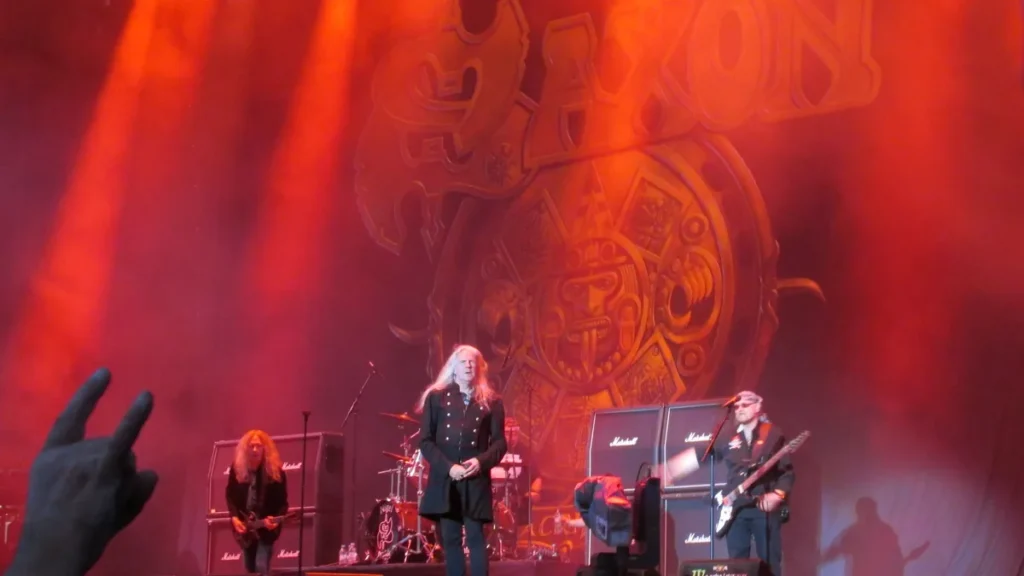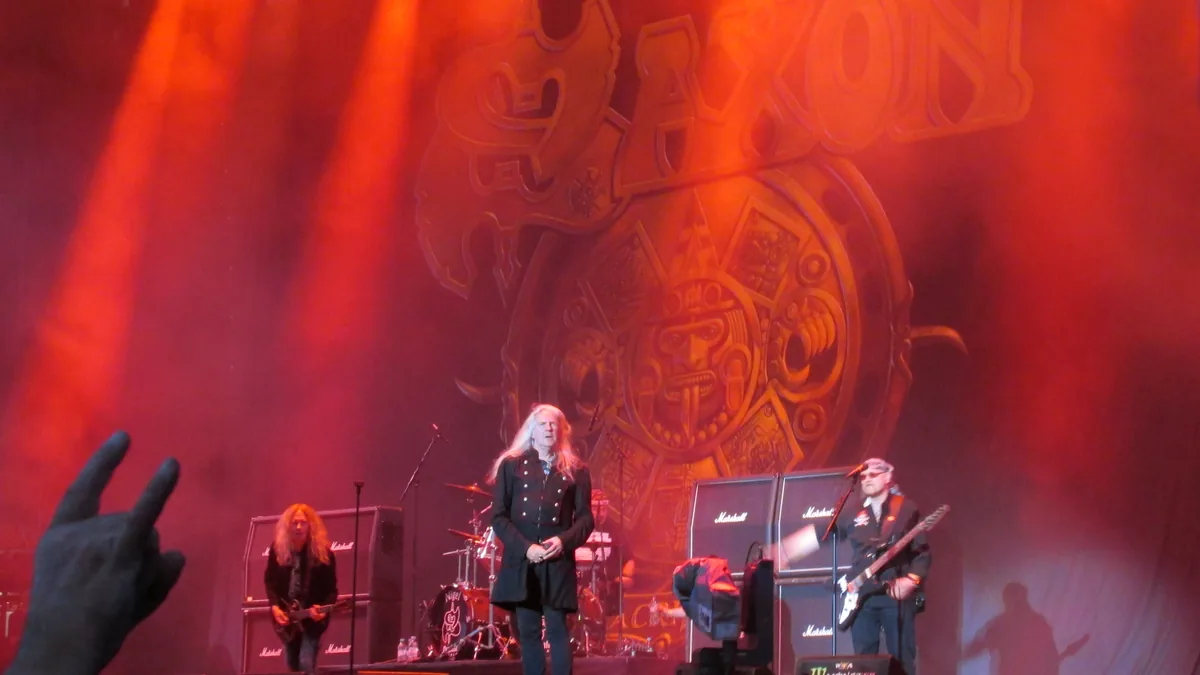
Nigel Durham, the former drummer of British heavy metal band Saxon, has died at 61. The band announced his death on October 24, 2026. Durham is credited on the band’s 1988 album Destiny. Here is what the band has said so far.
Saxon announced the death in a post on 24 October 2026. The post did not give a cause or place of death. It sends sympathy to his wife, Lauretta, his daughter, Gemma, his grandchildren and family. Saxon is a long-running British heavy metal band.
For Saxon fans, the band’s 1988 album Destiny is the release Durham played on.
Durham joined Saxon in 1987, replacing Nigel Glockler, and played on Destiny (1988). In 1999 he joined Son of a Bitch, a band with Graham Oliver and Steve Dawson that later became Oliver/Dawson Saxon, a separate act from Saxon. He was its drummer from 2000 to 2010. For more on the band’s albums, see Saxon album history.
False reports of his death circulated on social media in April 2026. On 14 July 2026, Durham posted on his personal Facebook account that he could assure everyone he was “still alive & kickin.” A hoax is a false story presented as true. Three months later, the band announced his death.
What was Nigel Durham’s cause of death? The band’s announcement on October 24, 2026 did not give a cause of death.
Durham posted in July that he was alive, after false reports in April. Three months later, the band announced his death.
The band announced on October 24, 2026 that former Saxon drummer Nigel Durham had died at 61. The announcement gave no cause or place of death. He played on Destiny, the band’s 1988 album.