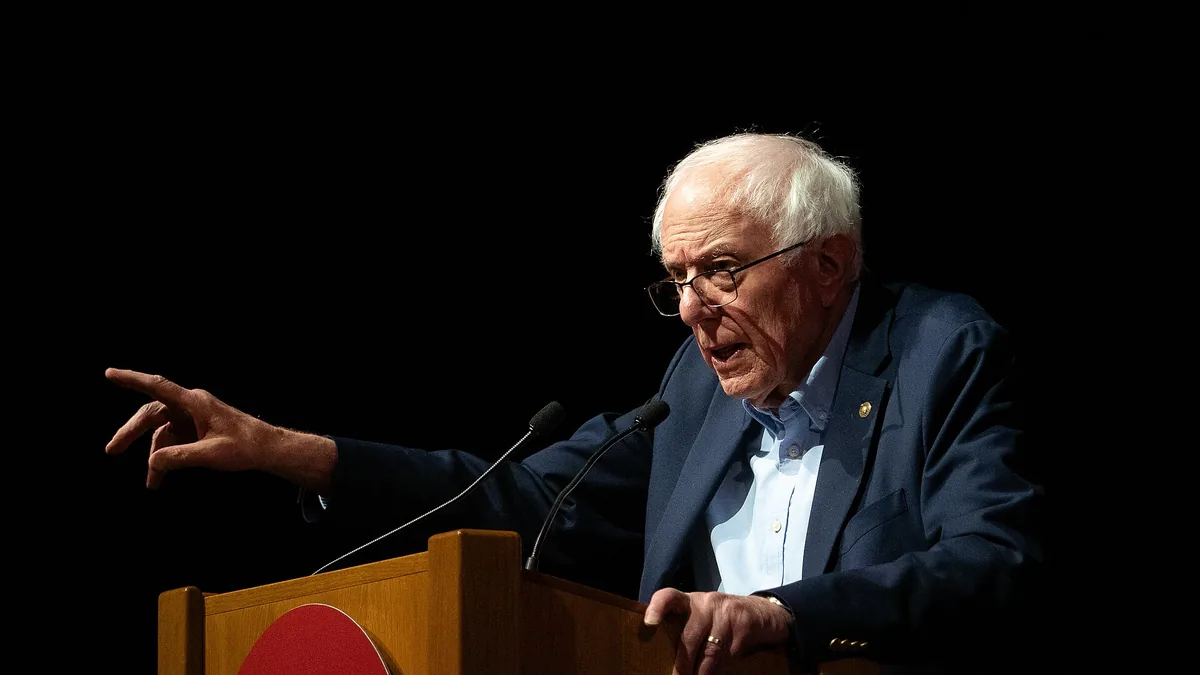
Sen. Bernie Sanders says he will not support Chuck Schumer as the Senate’s Democratic leader, a public break with the man who just led the party to a midterm majority and the clearest sign yet that the new Congress opens with a leadership fight.
Sanders, the independent from Vermont, made the announcement at a Capitol news conference on Tuesday, standing alongside Sen. Elissa Slotkin of Michigan. “The time is now for change,” Sanders said. “And I will not be supporting Chuck to be reelected as the Democratic leader.” Slotkin said she is not seeking the job herself, but wants every candidate to present a full plan for the new majority. “I’m a no until and unless I see that from anyone,” she said. Several incoming Democratic senators have sent the same signal, according to the Associated Press.
The practical effect is a leadership vote Schumer can no longer treat as settled. He needs only a majority of the Senate Democratic caucus to win, and he said he is confident he will. But two sitting senators are now on the record against him, and more Democrats are expected to join when the caucus meets. The result is a contest that could run for weeks into a Congress that has yet to be sworn in.
Why the challenge surfaced now
The showdown has been building since Democrats marched across the Senate map and flipped Republican-held seats in states that were not initially competitive. The party now holds the majority after a sweep that also gave it the House, with pickups from South Carolina to Texas. Schumer recruited well-known candidates who helped secure that result, including Sen.-elect Sherrod Brown of Ohio and Sen.-elect Roy Cooper of North Carolina.
His preferred candidates also lost primaries in Michigan and Maine, and the progressive candidates who replaced them went on to win their general elections. Michigan Sen.-elect Abdul El-Sayed and other progressives have pushed for Sen. Chris Van Hollen of Maryland as an alternative. Van Hollen, who has said he is considering a presidential run in 2028, is now weighing a leadership bid as well. “I am in the process right now of calling my colleagues,” he told reporters this week.
What makes the moment unusual is the speed. Sanders and Slotkin went public within days of an election that was supposed to unite the party. The complaint from the progressive wing is not about the outcome. It is about who controls the agenda once the new majority takes office.
Can Schumer still win? Yes, and the math favors him. Schumer needs a majority of the caucus, not unanimity, and Sen. Kirsten Gillibrand of New York, the Democratic Senatorial Campaign Committee chair, has already defended him publicly. “This caucus is grateful for the work of Senator Schumer,” she said. The open question is how many Democrats are willing to vote against him once the roll call begins.
Schumer, 75, has shown few signs of stepping aside. He told the Associated Press his focus is on governing. “The focus has got to be on getting things done,” he said. Democratic Senate elections are expected later this month, and the leadership vote will follow. The new majority also plans an oversight agenda that has already drawn a public warning from the White House. For now, the party that just won the majority is arguing about who gets to lead it.