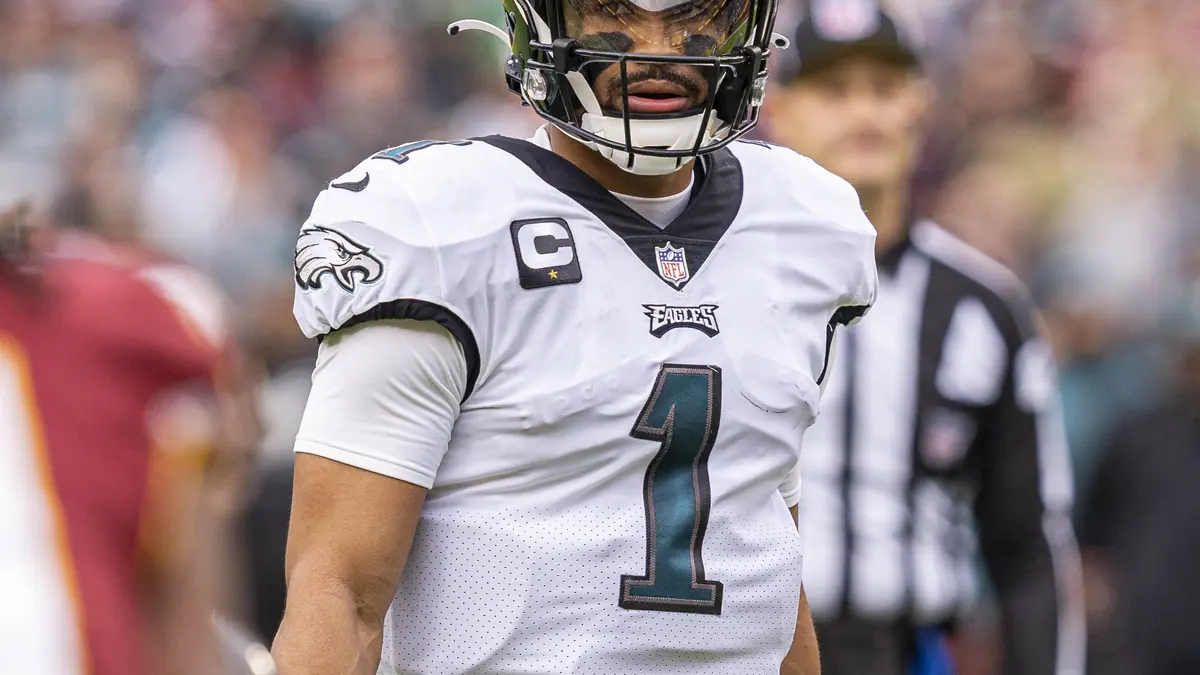
Philadelphia Eagles quarterback Jalen Hurts has been diagnosed with pulmonary blood clots — a condition that began when a blood clot was found in his calf after he took a cleat to the leg during the Eagles’ Week 5 game in London, and escalated after a follow-up scan showed the clot had moved. If you follow Philadelphia’s playoff race or manage a fantasy roster, here is what the diagnosis means, why his return timeline extends well into 2027, and what an NFL Network analyst got wrong in the days before the full diagnosis was confirmed.
Hurts has been diagnosed with bilateral pulmonary embolisms — blood clots in both lungs — alongside deep vein thrombosis (DVT), a clot in the lower leg. The Eagles placed him on injured reserve on Monday, with league sources and NFL Network reporting he is expected to miss the remainder of the 2026 NFL season. Hurts has been placed on anticoagulant medication. The initial clot was discovered via ultrasound before the Eagles’ Week 5 London game against Jacksonville; a follow-up ultrasound during the following week showed the clot had shifted, prompting the team to rule him out for the Week 6 game against Carolina. Expanded testing subsequently confirmed the more serious DVT and bilateral pulmonary embolism diagnosis. NFL Network analyst and former fullback Michael Robinson drew immediate criticism after implying on air that Hurts may have been avoiding football — suggesting “if I’m Jalen Hurts, I’m saying, ‘Well, if everybody’s hurt, I’m hurt too'” — and issued a public apology once the blood clot diagnosis was confirmed.
For fantasy managers, plan for a complete quarterback change — Hurts is unavailable for 2026. For the Eagles, the offensive structure must now operate without its starter through a division race. The Eagles’ team statement says Hurts cannot participate in contact activities while on blood thinners. Medical reporting from ESPN indicates the treatment course requires at least three months before any return-to-activity assessment, pushing any return-to-conditioning timeline into the 2027 offseason.
Why a Calf Clot Becomes a Lung Emergency
DVT forms when blood pools in the deep veins of the lower leg, typically triggered by localized trauma or extended periods of reduced movement. In athletes, a calf injury can restrict circulation enough to initiate clot development — particularly when the athlete continues to travel and compete while the limb is not fully immobilized. When a clot breaks free and moves through the venous system into the pulmonary arteries, it becomes a pulmonary embolism. Bilateral means clots reached both lungs, which represents a more serious clinical presentation than a single vessel blockage.
The Eagles’ medical staff confirmed that ahead of the Week 5 London game, doctors concluded that activity and mobility were important and that Hurts could safely play despite the initial superficial clot finding. The expanded diagnosis came after subsequent scanning during the week that followed. Anticoagulants prevent clots from growing and reduce the risk of new clots forming, but they also mean any hard collision carries a significant risk of internal bleeding that cannot be easily managed. That is why the Eagles’ statement specifies that Hurts cannot participate in contact activities until the blood-thinning treatment concludes and medical staff have reviewed his status.
The broadcast incident involving Robinson revealed something about how vascular injuries present in professional sports. A torn ligament produces an immediate, visible physical collapse. A pulmonary embolism produces symptoms that, in a high-pain-tolerance professional athlete, can be mistaken from the outside for reluctance. The Eagles confirmed Hurts is clinically stable, making the visible discrepancy between his condition and the severity of his diagnosis all the more striking from the broadcast perspective.
Anticoagulants require athletes to avoid contact activities, as any traumatic impact while on blood thinners carries a risk of serious internal bleeding. ESPN’s medical reporting indicates that an assessment of whether Hurts can return to non-contact conditioning typically occurs at a minimum of three months into treatment. That timeline holds regardless of how well cardiovascular function recovers, because the treatment regimen — not the embolism alone — determines when contact can resume. The recovery process for DVT in professional athletes typically involves regular hematology check-ins to monitor clot resolution before any physical activity discussion begins.
Can you play contact sports on blood thinners?
No. Athletes diagnosed with pulmonary embolisms must stop all contact activities while on anticoagulants. Any hard impact to the body during a blood-thinning medication course carries a significant risk of internal bleeding. Players must remain off collision drills entirely until the treatment course concludes and medical staff have confirmed clot resolution — regardless of cardiovascular fitness level.
The Eagles now face a full quarterback transition for the remainder of 2026. A formal update on Hurts’ return-to-activity timeline will come from the team’s medical staff as treatment progresses. The Eagles have not announced a scheduled review date, and any public update will follow internal medical assessments.