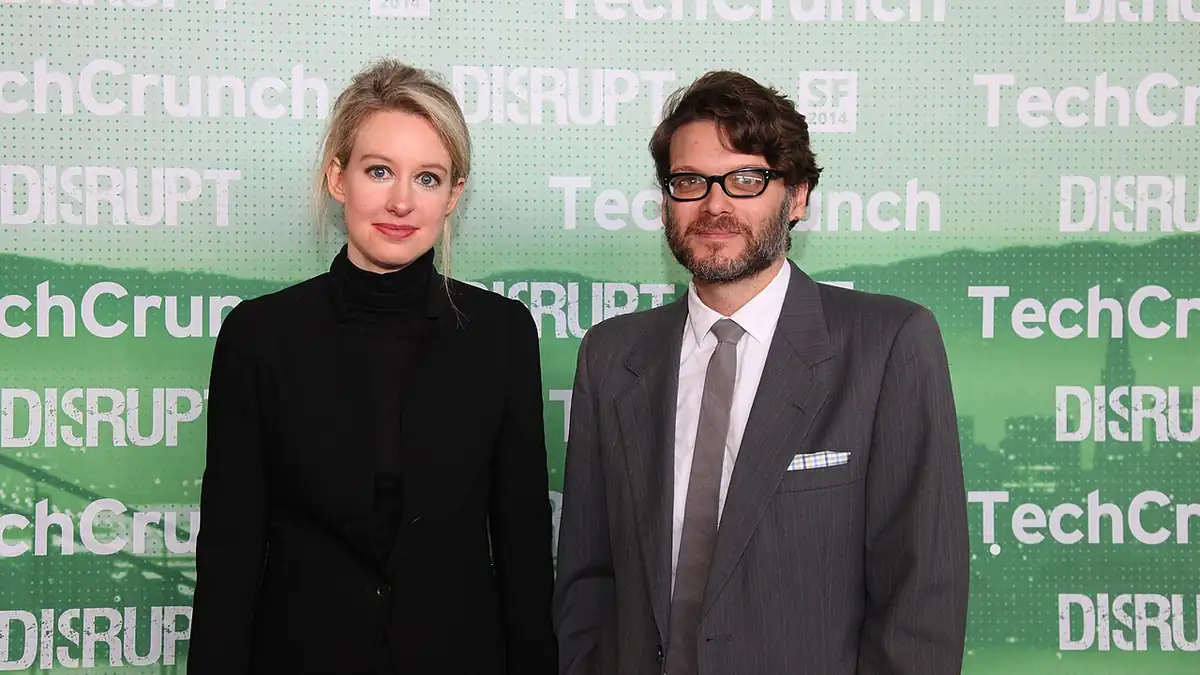
For three straight hours, Elizabeth Holmes looks directly into Nathan Fielder and Lance Oppenheim’s camera and tells them she has never told a lie in her life. She says this in footage filmed in 2023, in the weeks before she reported to federal prison in Texas — before the Ninth Circuit upheld her conviction in February 2025. You Can See Everything is generating early Oscar buzz — and Theranos whistleblower Tyler Shultz wants viewers to know what the film doesn’t show.
You Can See Everything is co-directed by Nathan Fielder and Lance Oppenheim and runs 174 minutes. The documentary follows Elizabeth Holmes during her final weeks of freedom before she reported to federal prison in Texas. Holmes raised more than $900 million from investors including Rupert Murdoch, Richard DeVos, and Robert Kraft for her blood-testing company Theranos, and was convicted of investor fraud. The Ninth Circuit upheld that conviction on February 24, 2025, also affirming the $452 million restitution order. In the film, filmed in 2023 before the appeal was decided, Holmes tells Fielder she has never committed a crime and has never lied. The documentary had a $15 million opening weekend in wide theatrical release — the second-highest opening for a documentary. Awards-season analysts are naming it an early contender for the 2027 Academy Award for Documentary Feature.
Before you spend three hours watching You Can See Everything, know that this is not a true-crime rehash of blood-testing machines — it’s a psychological stress test on you, the viewer. By letting Holmes control the frame in her final weeks before prison without a narrator correcting her claims, Fielder and Oppenheim leave audiences questioning their own empathy, which is why whistleblower Tyler Shultz warns viewers about what the film leaves out.
What Whistleblower Tyler Shultz Said — and Why It Matters
Tyler Shultz worked at Theranos and became the primary whistleblower who exposed the core fraud to regulators. In a review published in STAT News following the documentary’s release, Shultz raised a pointed objection: the device Holmes demonstrates on camera to Nathan Fielder is not the Edison blood-testing system that was actually used on patients. The Edison is the machine that failed and was secretly replaced with third-party analyzers. Shultz argues the film’s format allowed Holmes to present a version of events — and a version of the technology — that omits the core of what went wrong and who was harmed.
Clinical psychologist Dr. Sabrina Romanoff analyzed Holmes’ behavior in commentary tied to the documentary’s release, describing the interview footage as a textbook example of impression management: Holmes presenting herself as a devoted mother, thoughtful entrepreneur, and wrongly convicted idealist in a format that gave the directors no obvious opportunity to challenge her without appearing cruel.
The February 2025 Ninth Circuit ruling is the detail that gives the film an extra layer. Holmes filmed her insistence that she committed no crime in the weeks before she reported to prison in 2023 — before the appeal was decided. Audiences watching in 2026 carry the knowledge that her conviction was upheld and her sentence confirmed. Holmes did not have that outcome when she spoke.
The broader argument Fielder and Oppenheim seem to be building is about how Holmes convinced Silicon Valley’s investor class in the first place. The billionaires who collectively contributed to more than $900 million raised by Theranos — Murdoch, DeVos, Kraft, and others — were experienced businesspeople who saw the same performance the film’s audience sees and concluded she was telling the truth. Watching You Can See Everything is, in that sense, a controlled reproduction of the exact mechanism the fraud depended on. That’s the quality making awards-season analysts take it seriously as an Oscar contender.
Frequently Asked Questions
What is Nathan Fielder’s ‘You Can See Everything’ about? Directed by Nathan Fielder and Lance Oppenheim, You Can See Everything is a 174-minute 2026 documentary that follows disgraced Theranos founder Elizabeth Holmes during her final weeks of freedom before reporting to federal prison in Texas. In the film, Holmes maintains she never lied or committed a crime — footage shot in 2023 before the Ninth Circuit upheld her conviction in February 2025.
What did Theranos whistleblower Tyler Shultz say about the documentary? In a review in STAT News, Shultz argued that the device Holmes shows on camera is not the Edison blood-testing system that was actually used on patients — the machine that failed and was secretly replaced with third-party analyzers. He cautioned audiences about what the film’s format allows Holmes to omit.
Is Elizabeth Holmes still in prison in 2026? Yes. Holmes is serving her sentence at a federal facility in Texas. The Ninth Circuit upheld her conviction and sentence on February 24, 2025.
You Can See Everything is in wide theatrical release. The 2027 Oscar Documentary Feature shortlist is typically announced in late 2026. Check back for nomination updates.