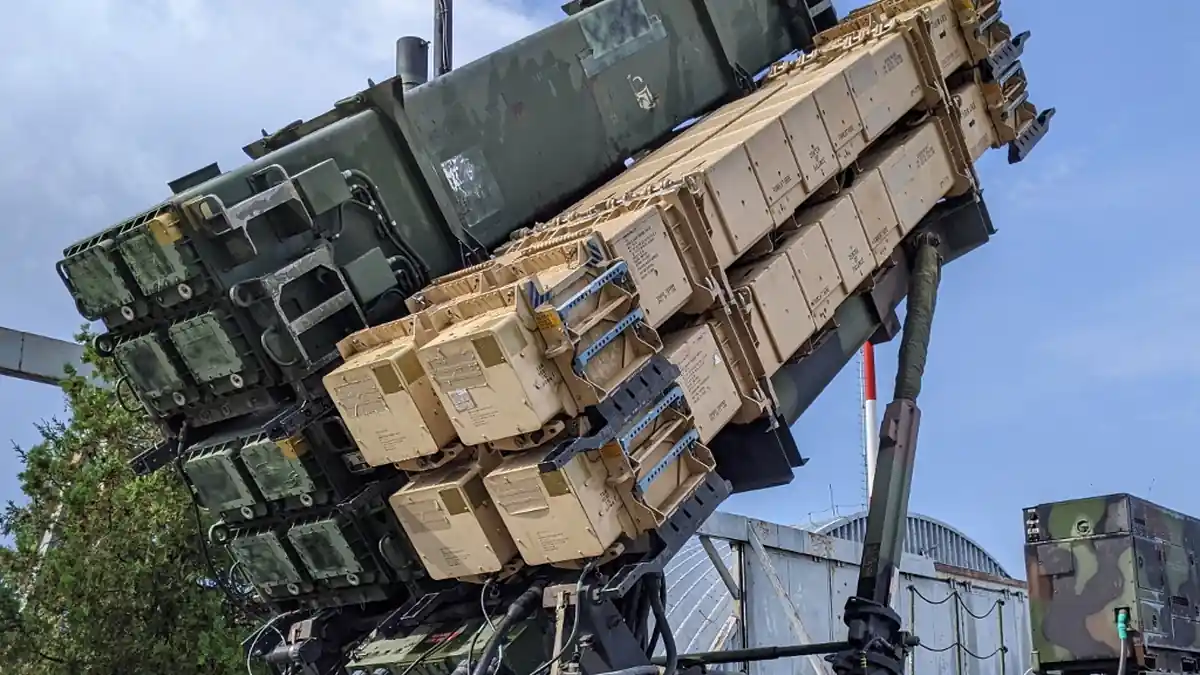
US Approves 500 PAC-3 Patriot Missiles for Ukraine — But Production Bottleneck Means Years-Long Wait
Section 1: Hook
Ukraine’s newly approved $2.1 billion missile purchase tells a hidden story in its numbers: 500 PAC-3 missiles ordered against a global production run of roughly 600 per year. That arithmetic—83 percent of global annual capacity in a single order—exposes the real constraint on Western air defense support. Money cleared. Weapons didn’t.
Section 2: Core Facts
The U.S. State Department approved the sale of 500 PAC-3 Patriot missiles to Ukraine in late October 2026, manufactured by Lockheed Martin. The $2.1 billion price tag carries no U.S. government funding—Ukraine will draw on JUMPSTART, the allied burden-sharing mechanism. No American taxpayer dollars are directly allocated to this tranche. President Zelensky has warned that deliveries will take “several years,” reflecting both production constraints and the logistical complexity of scaling international arms transfers. These are new-build missiles, not drawn from existing stockpiles.
Section 3: Consequence Paragraph
For a Lockheed Martin shareholder or NATO logistics planner, this sale is a production-line allocation signal, not a supply solution. At 600 PAC-3 missiles annually, Ukraine’s 500-unit order consumes 83 percent of global output. Every interceptor shipped to Kyiv is one diverted from U.S. Army modernization or other allied air-defense programs. The JUMPSTART mechanism proves allies will fund, but money doesn’t manufacture missiles faster. Winter air defense gaps remain unfilled. The bottleneck is the factory floor, not the State Department.
Section 4: Depth Block
The Production Line Is the Bottleneck
The PAC-3 missiles Ukraine has prioritized are manufactured by Lockheed Martin. Current production capacity stands at approximately 600 units annually—a figure constrained by manufacturing throughput, skilled labor availability, and supply chain dependencies. Expanding production significantly would require substantial capital investment and facility upgrades spanning many months.
Ukraine has requested around 1,000 PAC-3 interceptors to meet its air defense requirements, according to Kyiv Independent. The scale of demand far exceeds current global production capacity. Ukraine faces acute pressure as Russia intensifies air strikes, including more than 30 attacks on power infrastructure in a two-week period. The 500-unit approval represents progress on the long-term gap, but does not address the immediate crisis. Every month of manufacturing delay compounds the deficit. Ukraine’s air defense challenges have deepened as Russian strikes escalate.
The approval demonstrates U.S. commitment to Ukraine’s survival, particularly as diplomatic discussions continue. The timing—accelerating lethal aid while signaling interest in eventual negotiations—reflects the competing priorities of Western support for Ukraine’s defense capabilities. This echoes earlier Trump administration pledges of Patriot missiles to Ukraine that highlighted the gap between announcements and delivery timelines.
Section 5: Irreplicable Observation
This sale is a political signal masquerading as a tactical solution. The approval demonstrates U.S. commitment to Ukraine’s survival beyond the 2027 election. But the production math reveals an uncomfortable truth: even in a fully mobilized Western defense-industrial base, the quantity demanded by Ukraine cannot be supplied on the timeline required. The bottleneck is not diplomatic—it is thermodynamic.
Section 6: Priority PAA Answer
How long does it take to build a PAC-3 Patriot missile? Manufacturing a single PAC-3 interceptor involves motor assembly, guidance-system integration, and quality-assurance testing. However, production throughput depends on the capacity of manufacturing lines and available supply-chain resources. At current global capacity of approximately 600 missiles annually, the 500-unit order will require roughly 10 months of dedicated production time, with deliveries staggered across 2027-2028 and beyond.
Section 7: Closure
The 500-missile tranche is the first of an expected multi-year program. Watch for the next announcement on additional tranches—expected within months—which may signal either accelerated production commitments or an extended timeline. Lockheed Martin’s public statements and capital spending plans will determine whether the production bottleneck persists or narrows. The NATO defense spending debate adds further pressure on constrained production capacity.