The Justice Department on Tuesday unsealed an eight-count superseding indictment charging three Iran-backed operatives with nearly 20 terrorist attacks and attempted attacks across Europe and the United States, including a September 2026 plot against a British air base that housed American bombers and troops.
The charges name Mohammad Baqer Saad Dawood al-Saadi, a dual Iranian-Iraqi national; Mohsen Mohajeri, an Iranian national; and Mohammad Ali al-Hassani, an Iraqi national. All three are accused of acting in support of Kata’ib Hizballah and Iran’s Islamic Revolutionary Guard Corps (IRGC), two groups the U.S. government has designated as foreign terrorist organizations.
Only al-Saadi is in custody. He was arrested abroad on May 1 and transferred to the United States, where he has been held without bail since. Mohajeri and al-Hassani are not in custody, two sources familiar with the matter told CBS News.
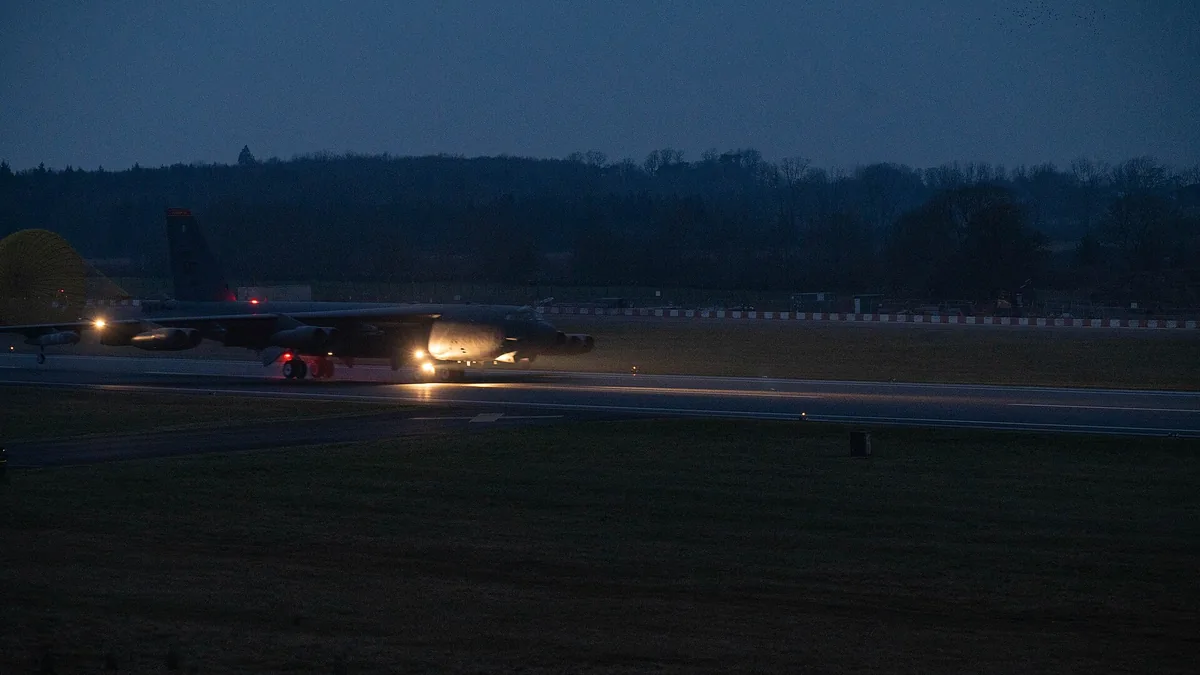
The indictment reaches into a base the U.S. Air Force has used for decades. RAF Fairford, about 100 miles west of London, hosts American bombers during Middle East operations. After the September plot was disrupted, the U.S. withdrew its bombers from the base and redeployed them to home stations in the United States, the PBS NewsHour reported. The case lands in the middle of a wider Iran conflict that has already split Congress, as our coverage of the Senate vote rejecting an Iran war powers resolution showed.
What the indictment says about the RAF Fairford plot
According to the Justice Department press release, al-Hassani allegedly directed and paid associates in the United Kingdom to prepare the attack. On Aug. 22, he paid one person to conduct pre-operational surveillance of the base perimeter and received videos of the area.
In September, he allegedly tasked several people with procuring vans and barrels of fuel, researching chemical accelerants including potassium chloride, and buying metallic objects that could be used as shrapnel. At his urging, the group commissioned custom decals to make the vans look like a fuel delivery business and a swimming pool supply business.
On Sept. 26, three vans carrying barrels of fuel drove toward RAF Fairford. At least two encountered a security roadblock and were turned away. In the early hours of Sept. 27, British authorities recovered three white vans with the fuel-company decals and arrested the occupants.
Five men were detained after midnight on Sept. 27 on suspicion of explosives and terrorism offenses. A sixth suspect, a British-Iranian dual national, was arrested several days later. All were released on bail.
Coded messages from a New York jail
Prosecutors allege that al-Saadi ran part of the network from a federal jail cell in New York, where he was awaiting trial on separate terrorism charges. In phone calls with family members in Iraq, he used coded language to pass messages to Mohajeri and al-Hassani.
In one July call, al-Saadi asked his sister to pass along messages to Mohajeri about “work,” a term prosecutors say he used for terrorist activity. He asked whether some of that work had been cancelled or put on pause. His sister replied that “it isn’t cancelled.”
On Sept. 24, three days before the Fairford plot, al-Saadi asked about al-Hassani, whom he called “Ali,” and told his family to “give him money so we can do it,” according to the indictment.
A wider campaign across Europe
The indictment also details a string of attacks in Europe in the spring of 2026 that were claimed by a group calling itself Harakat Ashab al-Yamin al-Islamiya (HAYI), which prosecutors describe as a front for Kata’ib Hizballah. Of 18 attacks claimed by HAYI, seven took place in the United Kingdom, the most of any European country.
The attacks involved arsons, explosives, and a near-fatal stabbing in London of two Jewish men, one of whom was a dual U.S.-British citizen. In April, al-Hassani and Mohajeri met in Iraq with a map of London on a computer screen. In a video of that meeting, al-Hassani told Mohajeri, “we need to get focused on London.”
Days later, the three men allegedly directed an attack in real time over a FaceTime call, with al-Hassani instructing the person carrying it out to “light one in your hand” and “throw the fourth one.” In a separate call, al-Hassani allegedly told an attacker to “light it up like a Christmas tree” before an improvised explosive was thrown at a London synagogue.
What happens next
Al-Saadi faces up to life in prison on two counts, including attempted acts of terrorism transcending national boundaries and conspiring to bomb a place of public use. All three defendants face up to 20 years on counts of providing material support to a foreign terrorist organization.
Attorney General Todd Blanche said “anyone who plans a terrorist plot on a military base housing American servicemembers will be prosecuted by the United States government.” FBI Director Kash Patel said the FBI has disrupted more than 1,300 terrorists and made nearly 7,000 foreign terrorist organization-related arrests over the last 21 months.
The case adds to a cluster of Iran-related investigations that have reached the Pentagon and the White House in recent weeks, including the firing of a Pentagon official over classified Iran war leaks. A superseding indictment is an allegation. All defendants are presumed innocent until proven guilty beyond a reasonable doubt.
Is the RAF Fairford plot connected to the wider Iran conflict?
Prosecutors say yes. The indictment describes the European attacks as retaliation for U.S. and Israeli military action against Iran, and it ties the three defendants to Iran’s IRGC and Kata’ib Hizballah. The September plot at Fairford, where American bombers were stationed, is the most direct alleged attempt to strike U.S. forces on foreign soil. For more on the political fallout, see our report on JD Vance’s claim that the GOP lost ground because voters wanted the Iran war to end.