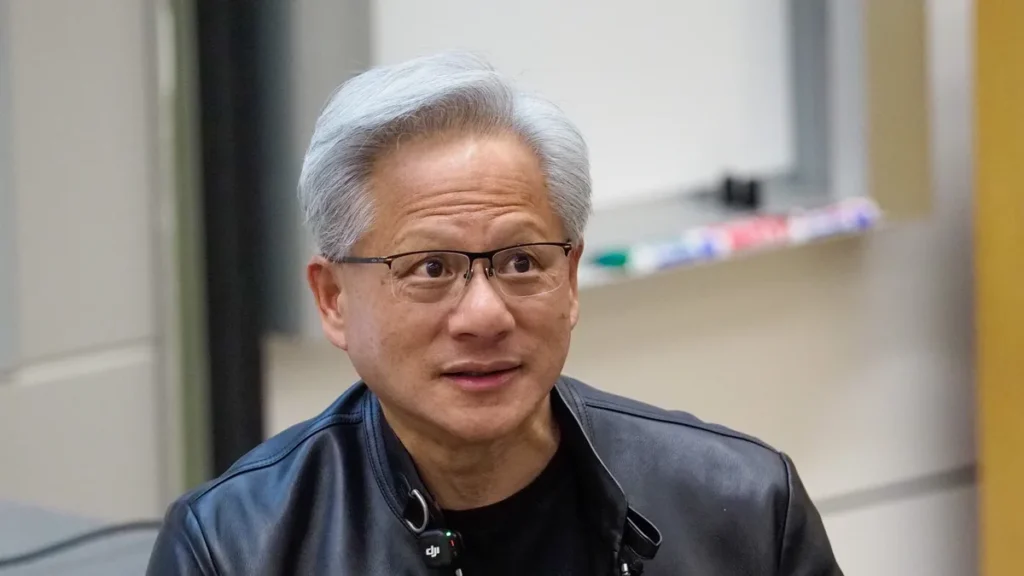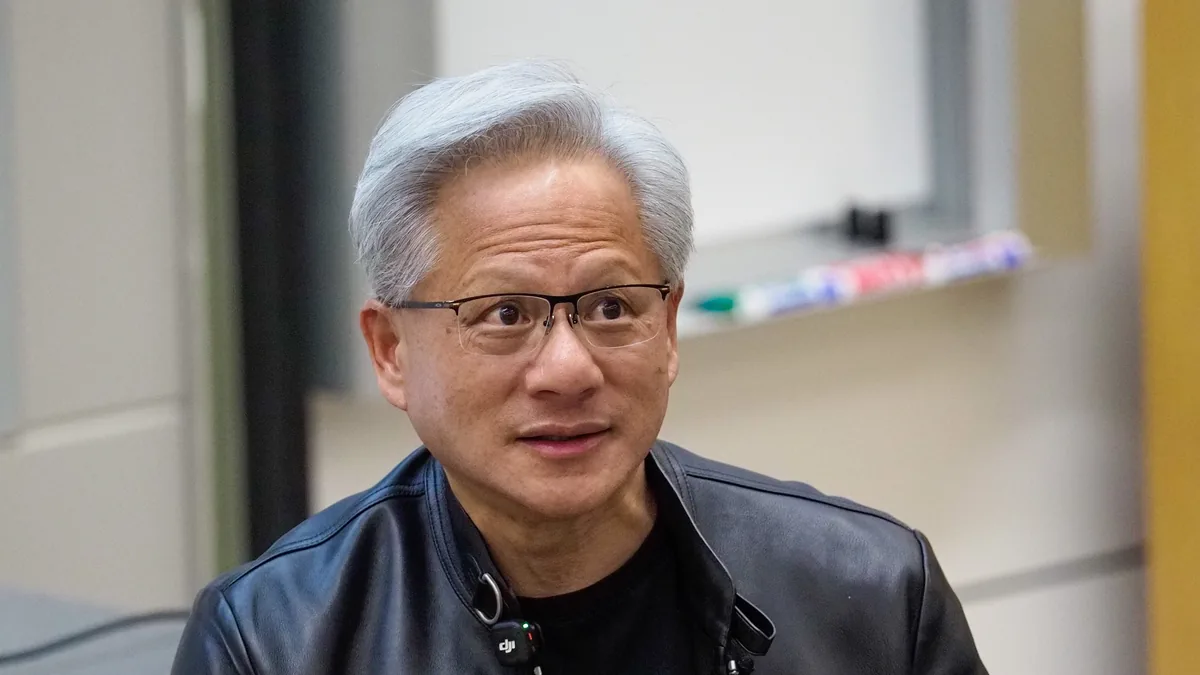
Jensen Huang is out at Nvidia. The chief executive who built the chip designer into the world’s most important supplier of artificial-intelligence hardware resigned on Thursday, November 12, after a week of scandal. Within hours, lawmakers on Capitol Hill moved to question him — and the Cabinet secretary who oversees the export rules at the center of the fight.
Nvidia’s board said Huang resigned as president, chief executive officer, and a board member, effective immediately. Colette Kress, the company’s executive vice president and chief financial officer, became interim CEO and will keep her finance role until a permanent successor is named. The board has begun a search and will consider internal and external candidates. Harvey C. Jones, a longtime director and former Synopsys CEO, became the board’s first chair.
The resignation followed a series of reports about Huang’s personal conduct. The New York Times reported a second extramarital affair with an Nvidia employee; earlier coverage described an alleged affair with a woman believed to be a Chinese spy. Nvidia’s independent directors had already retained Joon H. Kim, a former acting U.S. attorney for the Southern District of New York, and his firm Wachtell, Lipton, Rosen & Katz to investigate, according to the board’s November 10 statement.
The fallout reached the market. Nvidia shares fell 4.34% on Thursday, erasing roughly $182 billion in value, and are down about 5% from their October 6 record high — a loss of roughly $1.76 trillion. The drop extends a brutal stretch for chip stocks, weeks after Intel’s shares fell nearly 30% in their worst day since 1974.
What it means for you: the chips that train AI models now sit at the center of a national-security argument in Washington. The hearings will decide whether export controls on China were weakened, and who in government knew about it. Nvidia’s stock, and the AI supply chain that depends on it, will react to every answer.
Congress moves on two tracks
Senate Banking Committee Chair Tim Scott, a South Carolina Republican, sent letters on Thursday evening asking Huang to testify on December 3 and Commerce Secretary Howard Lutnick on December 10. A Commerce Department spokesperson, Kristen Eichamer, said Lutnick “has proactively agreed to appear voluntarily before the Banking Committee to address their questions,” according to NBC News.
Scott’s letter to Lutnick cites “recent public reports about NVIDIA and the Department of Commerce’s role that raises national security concerns” and says the department’s control over export rules makes his testimony “essential” to the committee’s oversight, as first reported by Politico. The letter to Huang says reports about his relationship with a potential Chinese spy raise national security concerns and threatens a subpoena if he does not appear voluntarily.
Three House committees went further. They sent Huang a joint letter summoning him to a closed-door, transcribed interview on December 1 and gave him until Friday evening to accept — or face a subpoena. The move echoes other oversight fights in a Congress that has already clashed with the White House over investigations and impeached a Cabinet secretary this month.
The scrutiny of Lutnick is bipartisan. Sen. Richard Blumenthal, a Connecticut Democrat, told reporters he wants to know: “Were export controls relaxed?” Sen. Jim Banks, an Indiana Republican, said Lutnick should testify “ASAP.” Reporting has said the Commerce Department halted a chip inquiry after Nvidia intervened, and that Lutnick stalled a crackdown on the diversion of Nvidia chips to China — a dispute that recalls earlier fights over U.S. restrictions on Chinese telecom equipment.
President Donald Trump spoke with Huang this week and encouraged him to fight calls to step down, according to a person familiar with the calls. Trump said it was not yet clear whether the woman at the center of the spy allegations was in fact a spy.
The timing stands out. Huang resigned on the same day House chairmen set a Friday deadline for him to accept an interview, and the Senate letters went out that same evening. Nvidia will report quarterly earnings on Tuesday, November 17, in the first public test of investor confidence under Kress.
Were export controls relaxed on Nvidia chips? That is the question lawmakers keep asking. The Commerce Department has not publicly confirmed any change to the rules. Scott’s letter argues the department’s role in issuing and enforcing export controls makes the secretary’s testimony necessary. Blumenthal put it directly: “Were export controls relaxed?” The answer is expected to shape the December hearings.
Huang built Nvidia over 33 years into the world’s leading AI chip company. Kress, who joined in 2013 after nearly 25 years at Cisco and Microsoft, now runs it while the board searches for a permanent CEO. The House interview is set for December 1, the Senate Banking hearings for December 3 and 10, and Nvidia’s earnings call for November 17.