A United Nations court will rule Thursday on a Rohingya genocide case that could reshape international law. The judgment asks a simple but monumental question: did Myanmar’s military commit genocide when it drove 730,000 Rohingya from their homes in 2017? The International Court of Justice in The Hague will announce its decision at 10:00 local time, 09:00 GMT, and the reading is expected to last up to 90 minutes. Unlike most court decisions, this one cannot be appealed.
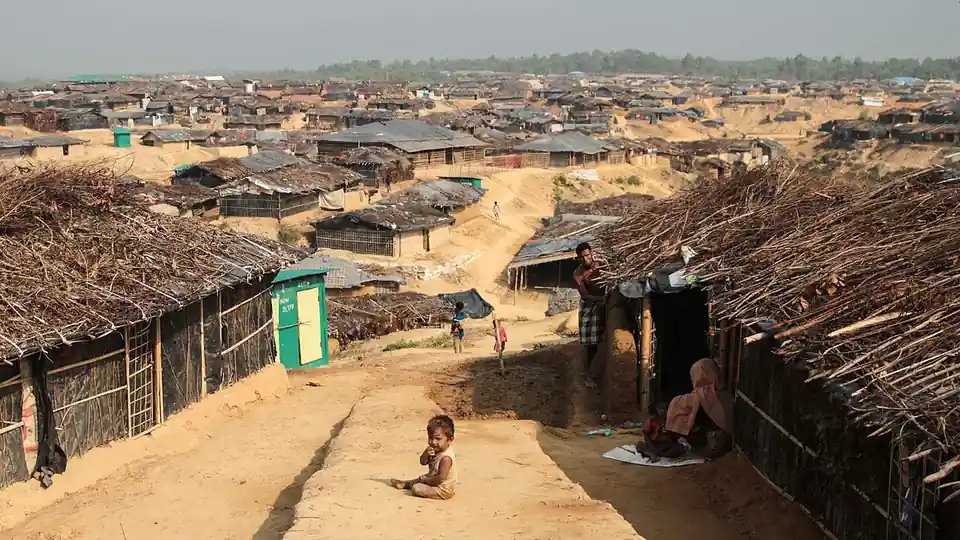
For the 1.2 million Rohingya now living in refugee camps in Bangladesh, Thursday’s ruling offers the first real chance at international accountability. Another 550,000 remain in Myanmar under severe restrictions. They cannot move freely, access proper healthcare, or earn livelihoods. For them, this case is about whether the world will finally acknowledge what happened to them.
How Myanmar’s Military Campaign Unfolded
In 2017, Myanmar’s military launched a campaign in Rakhine State. The government called it a counterinsurgency response to attacks by armed groups. Survivors described mass killing, soldiers shooting unarmed families, rape used as a weapon, and villages burned to ash. The United Nations sent investigators to the region. Their conclusion was stark: the campaign included genocidal acts.
The Gambia, a West African country backed by the Organisation of Islamic Cooperation, filed the case in November 2019. Its legal argument is direct: Myanmar bears state responsibility for genocide. The question the court must answer is whether the government intentionally sought to destroy the Rohingya as a people.
The court settles disputes between states. It does not try individuals, which is the role of the International Criminal Court. Under the 1948 Genocide Convention, genocide requires proof of one element above all else: the specific intent to destroy a group, whether defined by nationality, ethnicity, race, or religion. The difference between crimes against humanity and genocide is not scale but intent.
Myanmar denies genocide outright. The government says its soldiers were reacting to attacks by armed groups, not trying to wipe out a population, and that there is no direct evidence anyone ordered the destruction of an entire group.
The court has never before held a state responsible for genocide. In 2007, it examined the Srebrenica massacre in Bosnia, where more than 8,000 Muslim men and boys were killed by Bosnian Serb forces. The court found that Serbia failed to prevent the massacre but ruled that Serbia did not itself commit genocide. That decision shows how high the bar is for proving state responsibility.
The Gambia has asked the court to order Myanmar to prosecute those responsible, make reparations, and ensure the safe return of the Rohingya. Myanmar disputes The Gambia’s right to seek reparations on their behalf.
Judges at the court have taken unusual steps in preparing for this ruling. Reports say they sought advice on protecting their personal assets from potential US sanctions. The United States has already sanctioned judges at the International Criminal Court. The Gambia appointed Navi Pillay, a South African lawyer who won the Nobel Peace Prize in October, as an ad hoc judge in the case.
What a ruling would mean for international law is vast. Israel’s actions in Gaza are already being examined in a separate genocide case brought by South Africa. That case will watch this judgment closely. A precedent for holding states accountable for genocide would reshape how the world responds to mass atrocities.
Mohammed Nowkim was driven from the Rakhine town of Buthidaung in 2017 and now lives in Canada. He said: “This is like formal recognition of our suffering. For the Rohingya, this trial is a moment of acknowledgement of our suffering after years of denial. The Rohingya have been waiting for justice for decades.”
Melanie O’Brien, a professor of international law at the University of Western Australia, said a genocide ruling would give Rohingya refugees recognition and validation and could influence how other cases are decided.
The ruling is final. If Myanmar ignores it, The Gambia could ask the UN Security Council to enforce it. But for many Rohingya scattered across refugee camps and countries worldwide, Thursday’s announcement itself may be the first time their suffering receives formal recognition in a courtroom of international law.