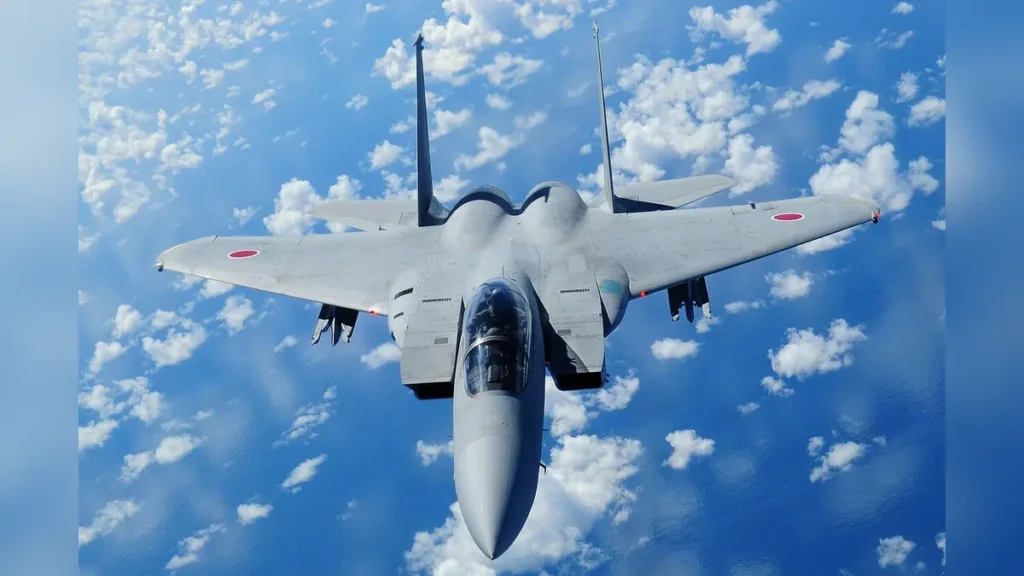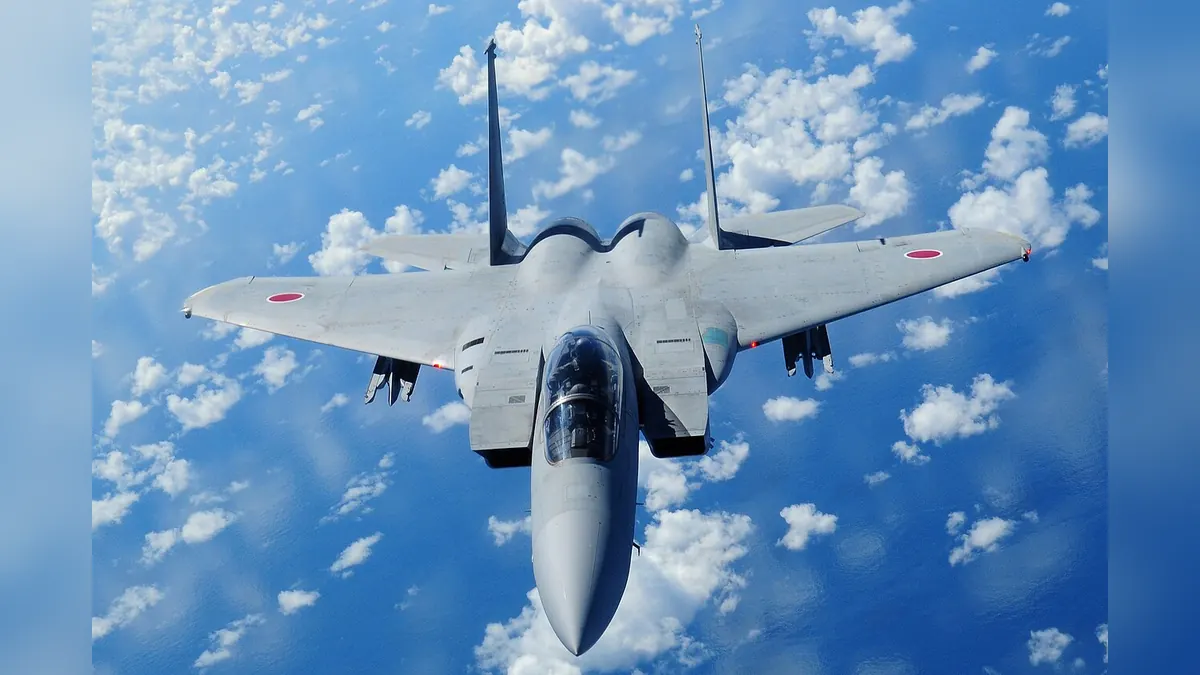
Japan scrambled fighter jets on Tuesday after two suspected Russian aircraft entered its airspace near the island of Okinoshima, and lodged a “very stern protest” with Moscow. The breach, at about 4:00 am local time, lasted around three minutes for each aircraft.
Top government spokesman Minoru Kihara said the Japanese jets sent warnings to the aircraft. He called the incursion a grave infringement of Japan’s sovereignty and a threat to its security, and said it was “completely unacceptable”.
For readers following Japan’s defence build-up, the incident is the sharpest sign yet that the country’s northern and western approaches are under regular pressure. It also lands in the middle of a diplomatic week, with leaders gathering in China.
What happened in the sky
The two aircraft entered Japan’s airspace close to Okinoshima, in the southwestern area of Fukuoka, shortly after 4:00 am, Kihara said. They travelled through the Tsushima Strait and passed between Yonaguni island and Taiwan before heading out to the Pacific.
Japan’s Air Self-Defense Force scrambled fighters to intercept. Each aircraft stayed in Japanese airspace for about three minutes.
The incursion was not limited to Japan. South Korea said it deployed fighter jets and carried out tactical manoeuvres after several Russian military aircraft entered its air defence identification zone over the East Sea. Seoul said the Russian aircraft did not violate its sovereign airspace. Taiwan said it detected two Russian military aircraft near the island in the early morning and monitored the situation.
An air defence identification zone is a buffer area, not sovereign airspace. Japan’s case was different: the aircraft entered its actual airspace.
Russia and Japan have a decades-old dispute over the status of a string of islands in the Pacific Ocean. Their relations have soured further in recent weeks, and Tuesday’s incursion adds a military edge to a diplomatic argument that was already tense.
The timing matters. Russian President Vladimir Putin and Japanese Prime Minister Sanae Takaichi are both due at an Asia-Pacific summit in the Chinese city of Shenzhen this week. Japanese media reported that Tokyo had asked for a meeting, and the Kremlin said on 16 November it had not ruled out talks.
The Hindustan Times and the Straits Times both reported the incursion, citing the same government account. The Hindu carried the Reuters version of the protest.
What the incursion means: Japan lodged a “very serious protest” in 2024 after a Russian patrol plane entered its airspace three times, the first confirmed incursion since 2019. Tuesday’s breach suggests the pattern is quickening.
Relations were already strained. Russia’s FSB security service arrested a Japanese journalist, Yuki Imai of the Hokkaido Shimbun, in October on espionage allegations. Moscow has also seized assets belonging to Japan Tobacco, and Tokyo protested Putin’s visit to the disputed Kuril islands.
The immediate question is whether the Shenzhen summit produces a meeting between Takaichi and Putin, and whether that meeting lowers the temperature. Japan has demanded measures to prevent a recurrence and has said the breach was a threat to its security. The answer will shape how quickly the two sides can step back.