President Donald Trump says the United States will not allow American companies to build artificial intelligence data centres in other countries, and that companies which do so will face what he calls a tremendous tax. He made the threat at a White House press briefing on Friday 20 November 2026, after returning from a trip to China.
Speaking at a White House press briefing on Friday 20 November 2026, Trump said his administration will not allow American companies to construct AI data centres overseas. Trump pledged to hit firms with what he described as a tremendous tax. He said: “We’re not going to allow our companies to build data centers outside of our country.” Trump warned: “China will take all of them, and we’re not allowing that to happen.” He added: “If they do that, they can. But we’re going to put a tremendous tax on them.” Trump also said: “We’re going to put tremendous penalties on companies that try and do it.”
Policy gaps and corporate reactions
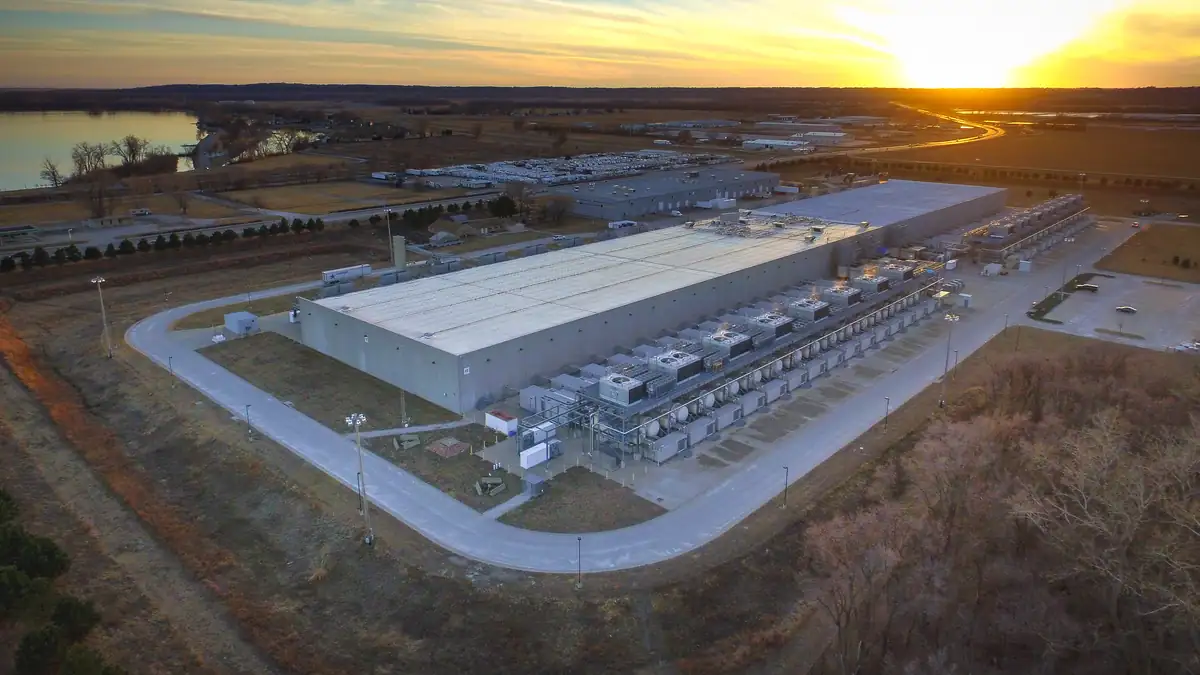
For India, direct consequences threaten foreign capital and equipment feeding national AI plans. US hyperscalers already operate inside India’s cloud market. A policy penalising foreign facilities could slow projects supplying computing power for IndiaAI Mission programs. Nothing has been formally drafted yet. However, this threat is now on record from a sitting president. Companies building that infrastructure will inevitably price penalties into future contracts.
Trump admitted his own administration had received no prior briefing before Friday’s announcement. He told reporters: “I don’t know if that’s a breaking story… I haven’t even said that to my people. But I’m telling them now.” He did not specify tax rates, targeted companies, legal authority, or implementation dates. The White House referred Newsweek to his remarks. Microsoft declined to comment. Trump mentioned a proposed data centre in Finland, where Google has announced a major investment, though he did not name the company. Google announced an investment of 13 billion euros, roughly 15 billion dollars, in September. That plan spans 2027 and 2028 across Hamina, Kajaani, Muhos, and Vaala as Google’s largest single European investment. Trump previously criticised that plan on Truth Social and in an interview with Time on 26 September.
Domestic development versus global expansion
Trump urged American towns to extract revenue from developers rather than blocking construction. He told local leaders: “Make them pay you, make them pay your community, but don’t shut them off.” Josh Levi, president and chief executive of Data Center Coalition, defended domestic industry investments. Levi said member companies invest hundreds of billions of dollars across America, supporting over 5.5 million jobs. Meanwhile, public sentiment remains cautious. A September CNN poll found 87% of respondents felt more concerned than excited about AI facility growth.
Ministry of Electronics and Information Technology figures reported by Press Information Bureau highlight India’s rapid rise. India expanded operational capacity from 375 megawatts in 2020 to about 1,575 megawatts in 2026. Officials target nearly 8 gigawatts by 2030, with 70 billion dollars underway and 90 billion dollars announced. The IndiaAI Mission holds an approved outlay of Rs 10,371.92 crore. Over 45,000 graphics processing units are onboarded for a common computing facility. Empanelled providers include Google Cloud India, Oracle India, Microsoft India, and AWS India alongside local firms like Jio Platforms and TCS.
China competition and diplomatic balance
Trump delivered two opposing messages in one appearance. He told communities to extract payments from developers while threatening penalties on companies that build abroad.
No, Trump has not imposed a tax on data centres built abroad. His remarks at a White House press briefing represent an executive threat rather than enacted law. The administration has issued no executive order, formal regulation, or legislative proposal to create this tax. He also conceded that his own staff had not worked on details before his public remarks.
Trump framed the proposal as part of the competition with China and said he and President Xi Jinping had agreed on joint safeguards for the AI sector. For now the tax exists only as a statement from the president. The question is whether it becomes an executive order, and how the companies building that capacity respond.