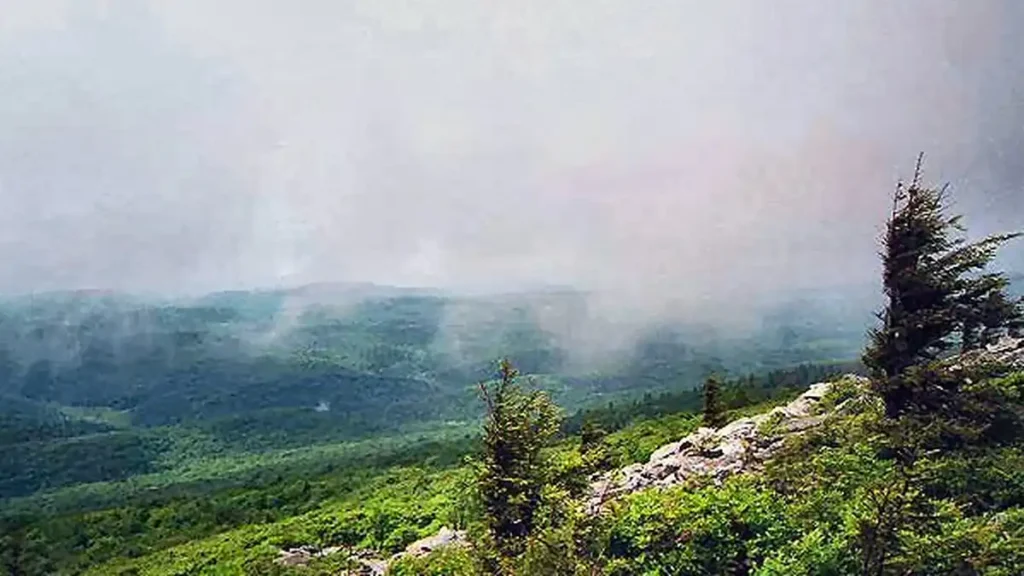
In May 2025, NPR and other public radio stations reported on the data center boom threatening rural West Virginia communities. The Tucker County Fundamental Data project has generated substantial local and regional coverage. But here’s the precision gap: Spruce Knob is not officially designated by the International Dark-Sky Association. In October 2021, the International Dark-Sky Association designated three West Virginia sites: Watoga State Park, Calvin Price State Forest, and Droop Mountain Battlefield State Park. Watoga serves as the hub for dark sky programming across all three areas, collectively covering 19,869 acres in Pocahontas County. This gap between headlines and actual legal status reveals a larger problem: the state’s environmental review process failed to answer hard questions about protection and harm.
The project involves Fundamental Data, a company planning a 785-megawatt power plant and data center facility near Thomas, Tucker County, in the heart of West Virginia’s outdoor recreation economy. The West Virginia Department of Environmental Protection issued an air quality permit on August 15, 2025. Over 1,600 public comments were submitted during the review period. In August 2026, the state’s Intermediate Court of Appeals dismissed environmental groups’ legal challenge on technical grounds, ruling the case belonged in the state Supreme Court, not the Intermediate Court of Appeals. Environmental groups—Tucker United, Friends of Blackwater, the Sierra Club, and the WV Highlands Conservancy—have indicated they plan to appeal to the state’s highest court.
For Tucker County residents whose livelihoods depend on tourism, the Fundamental Data project is a bet that industrial jobs will outweigh ecosystem losses. The state’s environmental review withheld emissions data from public scrutiny, and the appeals process stalled on jurisdiction rather than addressing the core question: can dark sky tourism coexist with large-scale data center operations? The answer will shape whether West Virginia’s next industrial boom builds on natural assets or erases them.
Why the Regulatory Process Failed to Answer the Hard Questions
At the heart of this debate lies a transparency crisis. When Fundamental Data applied for its air quality permit, the company classified certain emissions data as “confidential business information” and asked DEP to withhold it from public review. DEP agreed. Environmental groups challenged the redaction, but the state’s Air Quality Board upheld DEP’s decision in September 2025. The problem is structural: the board dismissed the appeal on procedural grounds rather than evaluating whether the redaction was justified. This means the public still cannot see what was hidden or judge whether DEP’s reasoning is sound. Transparency advocates point out this is not just local opposition—it’s a methodological failure. How can the public trust a regulatory process that locks away the data needed to evaluate the decision itself?
Multiple news outlets describe Spruce Knob as a “dark sky site” in danger. The language implies protection. The fact is different. The International Dark-Sky Association’s official directory lists no such designation for Spruce Knob. In October 2021, the International Dark-Sky Association designated three West Virginia sites: Watoga State Park, Calvin Price State Forest, and Droop Mountain Battlefield State Park. Watoga serves as the hub for dark sky programming across all three areas, collectively covering 19,869 acres in Pocahontas County. Spruce Knob does appear on West Virginia Tourism pages as an “official Dark-Sky Site,” suggesting a state-level designation rather than a federal one. This distinction matters legally. IDA sites have international recognition and formal conservation frameworks. State-level designations typically offer weaker legal protections when industrial projects loom. No outlet covering this story has interrogated the difference. In some cases, the data center threatens empirical sky quality—the actual darkness you see on a clear night. In other frames, the threat is to official protected status. These are not the same argument, and conflating them weakens both.
Fundamental Data has never disclosed how many permanent jobs the Ridgeline facility will create. Similar projects in other parts of West Virginia cite 125-plus permanent positions alongside 1,000-plus construction jobs. Here’s the catch: construction jobs are temporary, lasting months or a few years. Permanent operations jobs are different. They stay and build community wealth. News coverage often conflates the two, misleading readers about the economic impact. WVU economist John Deskins has commented on data center opportunities in West Virginia generally. Analysis of specific employment impacts at the Bedington facility remains pending. Until these analyses are completed and until Fundamental Data commits to specific hiring plans, residents cannot know whether the trade-off—losing tourism income for data center wages—is actually a fair exchange.
One more gap: who exactly is Fundamental Data? A company called Fundamental announced a funding round in February 2026 including approximately $255 million (comprising a $30 million seed round and $225 million Series A from investors including Kindred Ventures), valued at approximately $1.4 billion, focused on AI-driven data analysis. But no news outlet has confirmed whether this is the same company building the Ridgeline facility in West Virginia. The confusion matters because it affects accountability. Who is the end customer? What are the company’s financial obligations? When corporate identity is unclear, it breeds doubt about whether Fundamental Data will stay, deliver on promises, or vanish if economics shift.
The IDA maintains a public directory of all designated dark-sky sites. Search it for Spruce Knob and you find nothing. Search for the October 2021 West Virginia designations and you find three sites: Watoga State Park, Calvin Price State Forest, and Droop Mountain Battlefield State Park, collectively covering 19,869 acres in Pocahontas County. Yet headlines across the country refer to Spruce Knob as a “dark sky site” threatened by this facility. The gap between what the headlines claim and what the designation records show is the real story. It exposes a chain of imprecision: inaccurate framing by news outlets, a regulatory process that never clarified the distinction, and a public left confused about what is actually at stake.
Is Spruce Knob a dark-sky protected area? No. Spruce Knob is not officially designated by the International Dark-Sky Association. In October 2021, the International Dark-Sky Association designated three West Virginia sites: Watoga State Park, Calvin Price State Forest, and Droop Mountain Battlefield State Park. Watoga serves as the hub for dark sky programming across all three areas, collectively covering 19,869 acres in Pocahontas County. Spruce Knob does appear on West Virginia Tourism pages as an “official Dark-Sky Site,” which suggests a state-level designation. The distinction matters. IDA designation comes with international recognition and a formal conservation framework. State designation offers weaker legal tools. If the story is about losing empirical sky quality—the darkness you actually see—that’s one argument. If it’s about losing protected status, that’s another. A full regulatory process should have clarified which before approval.
Environmental groups will appeal to West Virginia’s Supreme Court, expected to file in the first quarter of 2027. The case will force a reckoning: Can West Virginia build the industrial infrastructure that AI data centers demand without erasing natural assets—dark skies, wilderness, tourism—that make the region valuable? The Ridgeline project is the test case. How courts rule will determine whether future projects face the same regulatory gaps or whether West Virginia finally gets serious about asking hard questions before saying yes.
Frequently Asked Questions
Is Spruce Knob a dark-sky protected area?
No, Spruce Knob is not officially designated by the International Dark-Sky Association. In October 2021, the International Dark-Sky Association designated three West Virginia sites: Watoga State Park, Calvin Price State Forest, and Droop Mountain Battlefield State Park. Watoga serves as the hub for dark sky programming across all three areas, collectively covering 19,869 acres in Pocahontas County. Spruce Knob does appear on West Virginia Tourism pages as an “official Dark-Sky Site,” suggesting a state-level designation. The distinction is important: IDA designation carries international recognition and conservation protections, while state designation offers fewer formal protections against industrial projects.
What is the Fundamental Data project in West Virginia?
The Ridgeline facility is a proposed 785-megawatt power plant and data center complex near Thomas, Tucker County, spanning thousands of acres. The West Virginia Department of Environmental Protection issued an air quality permit in August 2025. Over 1,600 public comments were submitted during review. The project is designed to operate as part of West Virginia’s microgrid development program, which aims to attract large data center investment to the state.
What did the court rule in the lawsuit?
In August 2026, the state’s Intermediate Court of Appeals dismissed environmental groups’ lawsuit on jurisdiction grounds. The court ruled that air quality permit appeals must be filed in the state Supreme Court, not the Intermediate Court of Appeals. The decision did not address the merits of the environmental claims. Environmental groups have signaled they will appeal to the state Supreme Court, with filing expected in the first quarter of 2027.
How many permanent jobs will the project create?
Fundamental Data has not specified. Similar projects in West Virginia cite 125-plus permanent positions, but these come alongside 1,000-plus temporary construction jobs. The company has not committed to a staffing plan or disclosed local hiring practices. WVU economist John Deskins has commented on data center opportunities in West Virginia generally, though analysis of specific employment impacts at other facilities remains pending.