Mining investors holding BHP shares want to know how the resources giant plans to fund expansion without repeating past missteps. South Australian communities living near the operations also wonder how large industrial developments will affect regional water supplies. Copper has taken center stage as the miner looks to expand its footprint in the Gawler Craton. BHP has now outlined a multi-billion-dollar roadmap.
BHP plans to spend between US$13.6 billion and US$17.4 billion in South Australia. The spending aims to lift annual copper output to about 650,000 tonnes by 2040. The miner describes the area as the world’s richest copper-bearing region outside Chile. The first phase targets 500,000 tonnes a year by 2035. That initial stage carries a projected internal rate of return of 14% to 17%. Capital intensity is projected at US$18,000 to US$23,000 per tonne of copper.
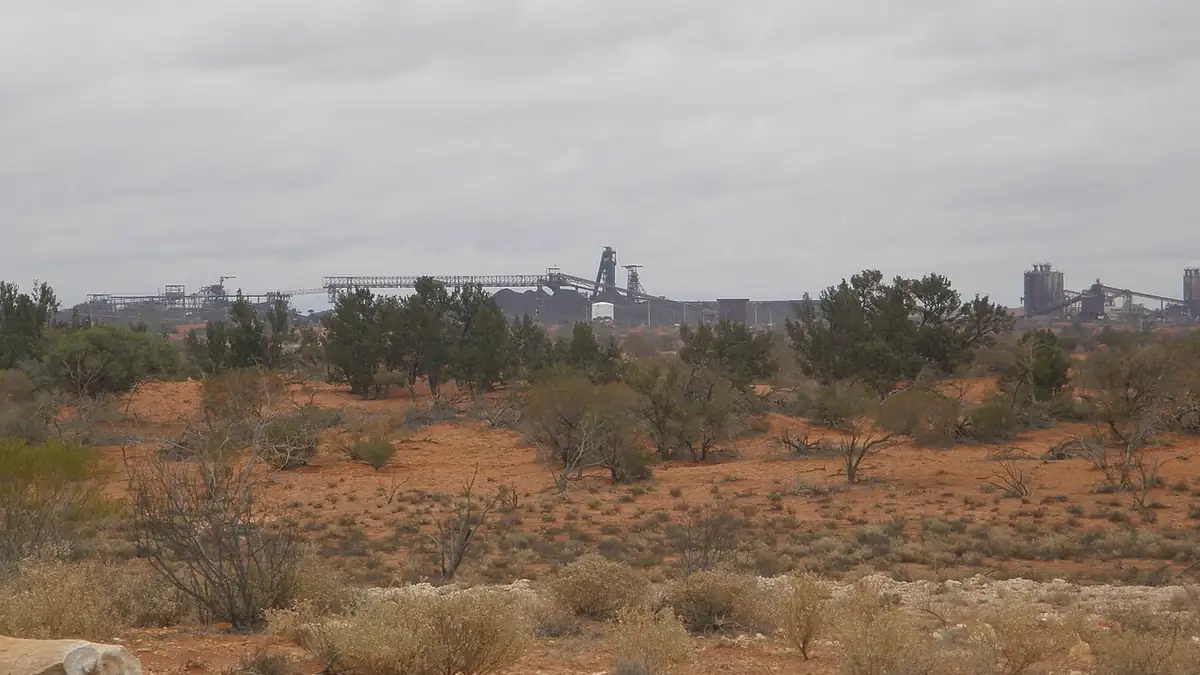
The multi-decade plan integrates several major assets. It combines the Olympic Dam mine and smelting complex with the Ankata deposit. It also brings in mines from BHP’s A$9.6 billion purchase of OZ Minerals in 2023, including Carrapateena and Prominent Hill.
For investors, this roadmap is not an immediate green light. The company will make its final investment decision in the first half of 2027. Until board members approve the proposal, no capital is officially locked down. If approved, the spending will be committed in stages across multiple mines and processing plants.
Inside the South Australia Copper Strategy
Why is BHP pushing copper so hard? In fiscal 2026, copper generated more value for BHP than iron ore, its traditional mainstay, for the first time. Global copper demand is projected to rise 30% by 2040 to more than 45 million tonnes a year. BHP aims to produce 2 million tonnes of copper annually by the mid-2030s. That figure rises to 2.5 million tonnes when including byproducts. The South Australian expansion would provide about one-third of BHP’s planned copper production growth through 2035.
BHP expects its South Australian operations to rival its stake in Escondida in production by 2040. Escondida in Chile is the world’s largest copper mine. South Australia is not BHP’s only copper frontier. In Chile, the company has outlined plans to spend up to US$14 billion expanding copper operations. That Chilean program targets an additional 430,000 to 540,000 tonnes of annual production.
Geraldine Slattery, BHP’s head of Australian operations, praised the company’s financial base. She said: “We start from a strong position as the world’s largest copper producer, with a sector-leading growth pathway that can be funded from existing copper cash flows.”
To reduce operating costs, BHP plans to use block caving alongside two-stage smelting. Block caving is a bulk underground extraction method that lowers handling expenses. Processing will also extract valuable secondary metals from the ore bodies. The expansion would roughly double uranium processing capacity to between 5,000 and 6,000 tonnes a year. Gold output would climb 45% to more than 570,000 troy ounces a year.
Water security remains a key environmental consideration for the energy transition. The operations lie in the Gawler Craton and currently draw water from the Great Artesian Basin. This extraction has raised concerns among traditional owners, including the Arabana people. BHP is counting on the proposed Northern Water project to secure water supply. That plan includes a seawater desalination plant at Cape Hardy on South Australia’s Spencer Gulf. The plant would produce 260 megalitres of water daily, requiring pipelines hundreds of kilometres long.
Delivering these long-term targets will test BHP’s operational discipline. UBS analysts note that operational instability, complex metallurgy, and limited water and power infrastructure have previously constrained performance across these assets. History also warrants caution for investors. BHP has twice abandoned development plans in South Australia in previous decades. In both instances, high costs and weak commodity markets prompted the company to stop work.
While BHP is positioning South Australia to rival its massive Chilean assets, the company’s biggest test may be its own corporate memory. Walking away twice before shows that long-term mining plans remain vulnerable when commodity prices drop or construction costs escalate. Execution will depend on whether new mining methods can finally tame the region’s complex geology.
How much is BHP spending on South Australia copper? The company plans to spend between US$13.6 billion and US$17.4 billion across its South Australian operations through 2040. This capital commitment will be deployed in stages across multiple mines and processing plants, rather than in a single upfront payout.
BHP has laid out an ambitious program to double South Australian copper output by 2040 and meet rising global demand. The project promises major scale, but execution hurdles and water supply questions remain. Investors and local communities now await the final investment decision in the first half of 2027 to see if the spending moves forward.