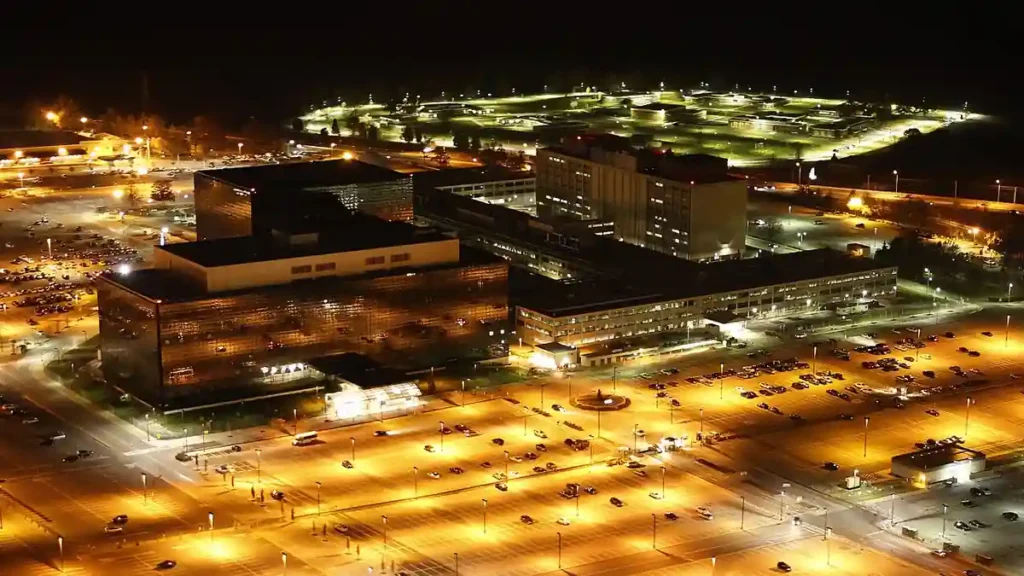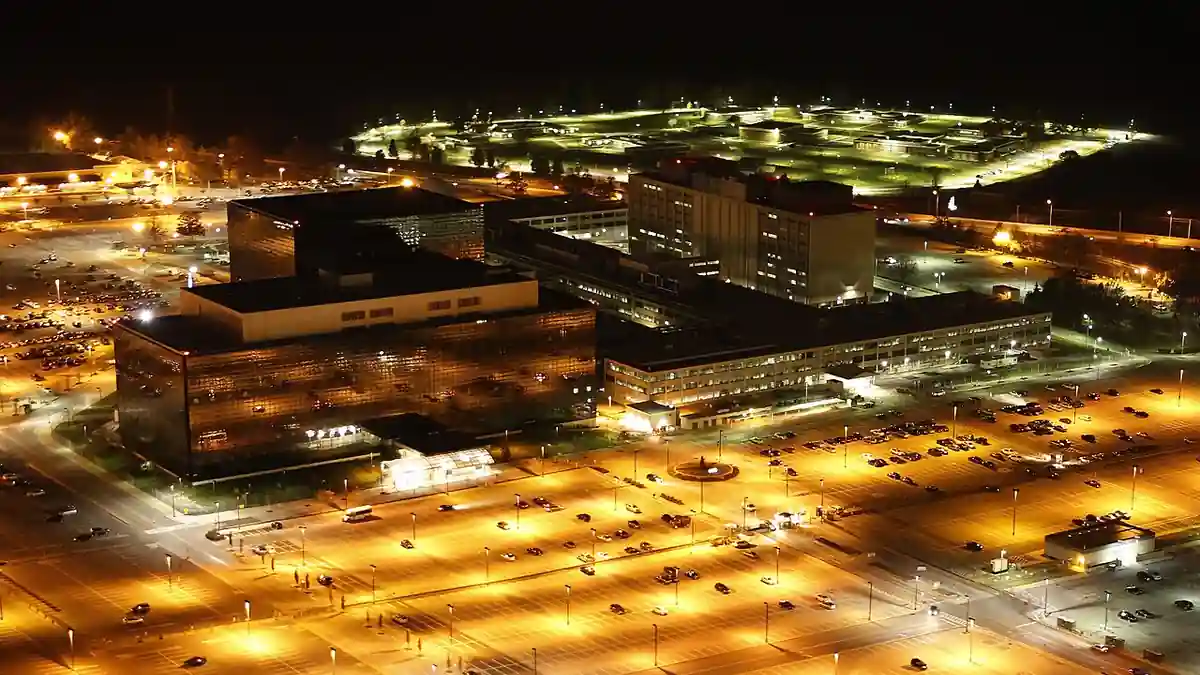
The US National Security Agency’s classified internal communications network went down on Tuesday, 17 November 2026, disrupting work at the agency’s Fort Meade headquarters in Maryland. The network, known as NSANet, lets NSA staff share classified material, including top-secret intelligence. A US official said the failure occurred during scheduled routine maintenance and that there was no indication it was an attack.
The agency said in a statement that it “experienced temporary degradation during scheduled routine maintenance.” It added: “While some internal systems were affected, mission-critical capabilities remain fully operational and our ability to defend National Security continues.” The Wall Street Journal, citing a person familiar with the situation, reported that the outage followed a software update intended to patch the system and that the network would be down only temporarily. Indian Express, citing the CNN report, said the NSA was working to understand the scope of the problem and that there was no evidence of a cyberattack.
For readers asking whether this was a hack or a leak of intelligence, the reporting points the other way. Officials and the agency’s own statement describe a technical failure during maintenance, not an intrusion. The NSA has not said how long the classified network stayed degraded or how much work was delayed.
A maintenance window, not an intrusion
The outage landed in the middle of a difficult week for American technology. A nationwide ground stop grounded flights. A Microsoft outage hit email and Teams. Banks including JPMorgan Chase and Wells Fargo faced service disruption, and United Airlines was also affected. Officials have said none of those failures has been tied to a cyberattack, though the cause of some is still unexplained.
The NSA disruption carried its own details. The New York Times reported that the agency told staff at Fort Meade to arrive in staggered shifts while it assessed the problem, and that a recorded message on an employee information line described a “code yellow” — the second-highest level in a three-tier alert system — for the day shift. Non-emergency staff were told not to come in before noon. Emergency personnel reported as scheduled.
James Lewis, a former senior government official and cybersecurity expert, said an outage of this kind was “a little unusual” for the NSA but “fairly common” across government, and he pointed to software that is complicated and not always up to date. Emily Harding, a former CIA analyst now at the Center for Strategic and International Studies, said government systems “are highly redundant, so an outage like this won’t stop the work of national security,” but added that they are generally outdated and in need of repair.
President Donald Trump, speaking in Manila during his Asia trip, played down the run of outages rather than the NSA case itself. “Things like that happen,” he said. “It’s fine.” Hakeem Jeffries, the House Democratic leader, called for the administration to send officials to brief lawmakers on Capitol Hill about the recent nationwide technical and infrastructure outages, saying the public deserved more transparency.
Was the NSA outage a cyberattack? No. The agency attributes the degradation to scheduled maintenance, and officials said there was no sign of a cyberattack or other malicious activity. What remains unclear is how long NSANet stayed down and whether any intelligence work was affected.
The outage is the latest in a run of failures across aviation, banking and email that has renewed debate about the age and resilience of the systems daily life depends on. The NSA has not given a timeline for its internal review.