If you struggled to book a flight, send emails, or check your bank account recently, you felt the fallout directly. Millions of people faced sudden disruptions across normal daily routines this week as essential digital infrastructure failed. Flights stopped and basic computer systems went dark across the country.
Now, the fallout has reached the top levels of government. Sean Cairncross, the US cyber director overseeing policy and strategy across the federal government, was ousted from his job on Thursday, 19 November 2026. A person close to the White House told Reuters about the termination. “The president fully supported firing Sean Cairncross from his position,” said the person, who spoke on condition of anonymity.
Axios first reported the departure. Anonymous officials told Axios that White House chief of staff Stephen Miller pushed for the change. Miller argued that Cairncross “lacked the strong cyber credentials to perform the job.” Cairncross declined to comment on his departure.
Leadership turmoil at the highest cyber office matters because modern life relies entirely on uninterrupted digital infrastructure. When communications networks, airlines, and commercial banks fail, government agencies must coordinate in lockstep. The sudden removal of the top federal coordinator creates immediate uncertainty. The public needs confidence that federal agencies can safeguard routine financial transactions, flight schedules, and personal accounts from further disruptions.
A week of widespread digital disruptions
The firing followed several days of severe technological turmoil across the United States. Federal authorities and private companies grappled with multiple unrelated technical breakdowns that crippled essential services within hours of each other.
A nationwide halt to US air travel occurred when the Federal Aviation Administration issued an urgent ground stop. Around the same period, a major Microsoft outage struck commercial email services, leaving workers unable to access basic business communications. Disruptions also spread to consumer banking systems, preventing account holders from completing routine electronic payments.
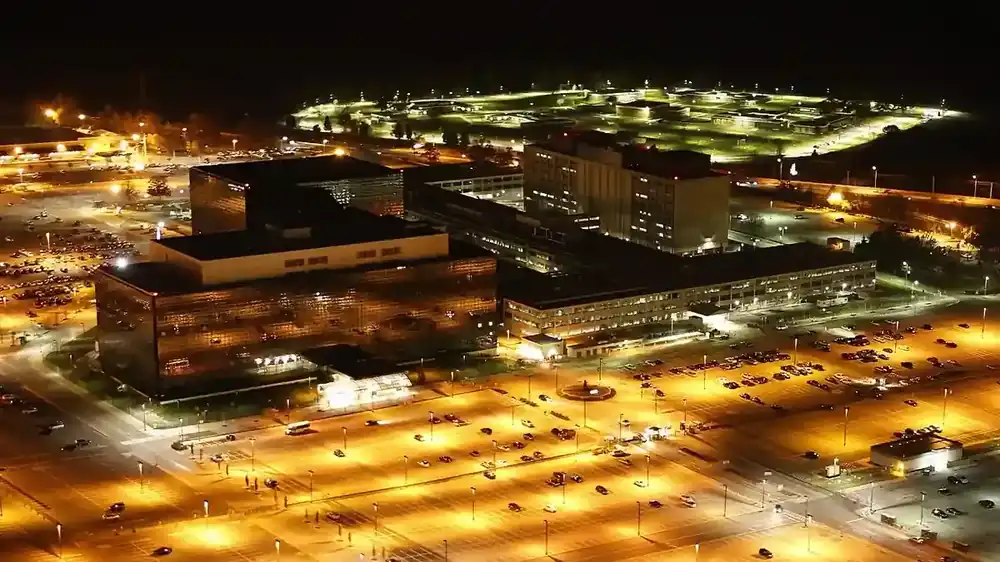
Even the highest levels of national intelligence suffered setbacks. The National Security Agency experienced a temporary disruption to its internal network. While the NSA said the incident happened during routine maintenance and that mission-critical capabilities remained operational, CNN reported a deeper problem. Citing five people familiar with the matter, CNN reported that the agency’s classified internal communications network, NSANet, had gone down.
Technical glitches or hostile action
Senior national security leaders publicly rejected claims of an enemy strike.
Director of National Intelligence Jay Clayton addressed public concern on Wednesday. Clayton said the disruptions to critical systems over the past week were separate service outages associated with maintenance and technical changes. He stated clearly that the events were not a coordinated or state-sponsored attack.
Clayton explained the specific cause behind the intelligence agency failure. He attributed the NSA disruption to software patches deployed to address a vulnerability in PHP, a widely used programming language. Security teams identified the vulnerability with the help of AI.
Other cabinet members supported that view. Secretary of State Marco Rubio and Transportation Secretary Sean Duffy said there was no evidence that the week’s outages were linked. Officials maintained that routine maintenance issues simply happened to occur during the same few days.
Succession hurdles and political background
Cairncross held deep political ties within the Republican Party prior to his appointment. He worked as an executive at the Republican National Committee and served as the RNC’s chief operating officer during the 2016 election cycle. Later, he served as a White House insider during Donald Trump’s first term.
White House chief of staff Stephen Miller questioned his specialized technical knowledge. After senior officials ousted him from his post, the White House turned to a defense official to manage operations.
Department of Defense chief information officer Kirsten Davies will assume the position temporarily. Because Davies is already Senate-confirmed in her Pentagon post, she can take over federal cybersecurity coordination immediately without waiting for congressional approval.
Selecting a permanent replacement presents a difficult political obstacle. Any permanent successor nominated by the president must secure confirmation from the Senate. That confirmation fight will take place before a chamber that Democrats will control starting in January.
Officials repeatedly stated that the week’s widespread outages were separate, unlinked service failures rather than a coordinated attack. Yet only days after those assurances, the administration abruptly removed the person responsible for overseeing the federal cyber response. That rapid personnel decision looks like public accountability, even while the true technical explanation remains unresolved for ordinary citizens.
Who is replacing Sean Cairncross as federal cyber director?
Department of Defense chief information officer Kirsten Davies will serve as acting national cyber director. She is already Senate-confirmed, so she can step into the post at once to maintain operational continuity. Meanwhile, any permanent successor nominated by the president will need confirmation in the Senate, a chamber that Democrats will control beginning in January.
Sean Cairncross was ousted from his post after a turbulent week that disrupted travel, banking, and government networks nationwide. White House officials maintain that the system failures stemmed from technical maintenance rather than hostile foreign attacks. The immediate focus now turns to Kirsten Davies as she takes temporary control. Observers will watch closely in January when the new Senate convenes to evaluate a permanent nominee.