TV Review · Entertainment · March 2026
The Campus Gets Messy Again — Vladimir & Rooster Are Television’s Most Provocative Week in Years
Netflix’s eight-part adaptation of Julia May Jonas’s darkly brilliant novel arrives alongside HBO’s lighter campus comedy. Together they ask: what do we actually want from stories about professors behaving badly?
This week, television serves up not one but two new dramedies in which faculty members behave like children — while their students, supposedly the coddled ones, emerge as the more emotionally functional party. Set at fictional liberal arts colleges with leafy, sun-dappled quads, Netflix’s Vladimir and HBO’s Rooster arrive at a peculiar cultural moment: a post-#MeToo landscape where institutions are still renegotiating the ethics of power, and where audiences are hungry for stories about aging, desire, and the slow collapse of authority that tenure was supposed to protect.
They couldn’t be more different in tone. Vladimir is a dark, acidic piece of literary television — a morally slippery study of obsession adapted from Julia May Jonas’s celebrated 2022 debut novel. Rooster, meanwhile, is a heartfelt farce, a campus comedy that leans into emotional warmth. The two series make for an unexpectedly illuminating double feature — a week that tells you everything about where television thinks “difficult adults” belong right now.

None of us is pure in motive, clear in conscience, or honest with ourselves — and whatever young people think now, they will learn this too. Probably sooner than they would like. — Lucy Mangan, The Guardian, reviewing Vladimir
Vladimir (Netflix): Desire, Obsession, and a Very Divisive Ending
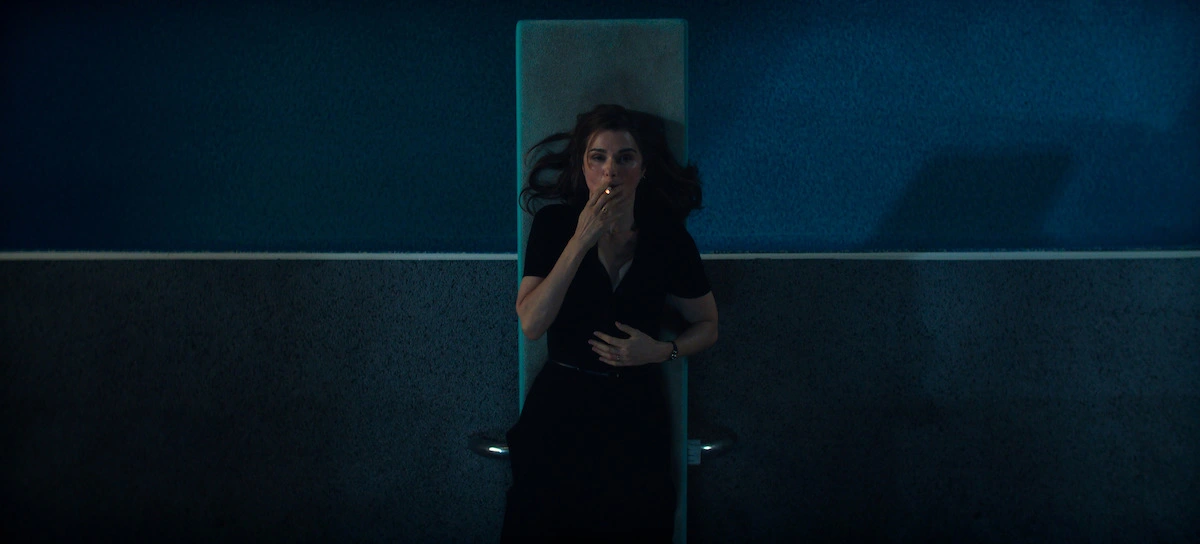
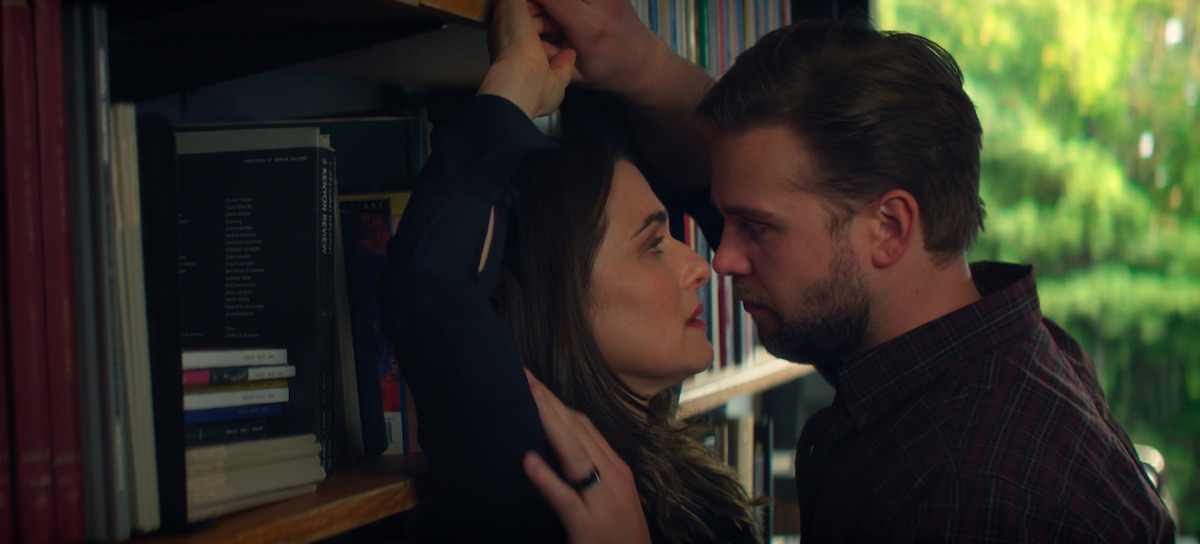
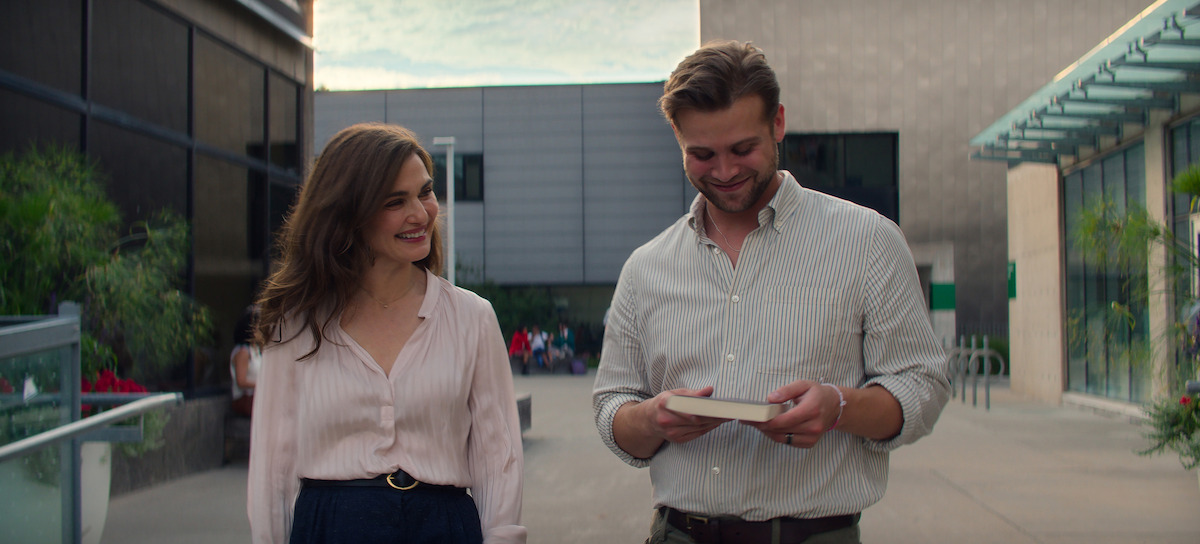
Vladimir is built around a single, unsettling premise: an unnamed tenured English professor — credited only as “M.” and played by Rachel Weisz — develops an all-consuming obsession with a new hire, Vladimir (Leo Woodall), a handsome novelist whose modest literary celebrity has given him a particular kind of glow. Her husband John (John Slattery, playing his one part and playing it impeccably) is simultaneously facing a Title IX investigation for past affairs with students. His defense: it was a different era. His wife’s position: complicated, shifting, quietly furious.
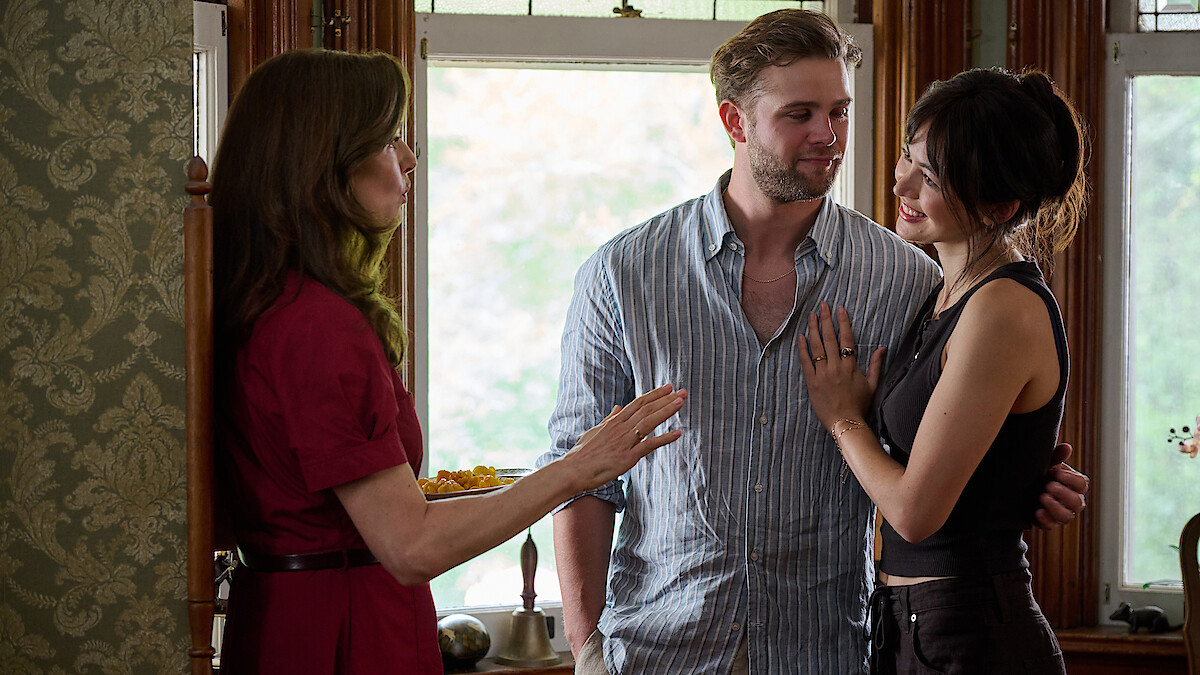
Jonas, who wrote half the episodes and created the series, has made significant structural decisions in translating her novel to screen. In the book, Vladimir is present for barely fifteen percent of the narrative — the obsession is intensely internal, a hyperintelligent woman applying all her analytical powers to a fixation she cannot logic her way out of. The Netflix version expands Woodall’s screen time substantially, allowing a genuinely flirtatious — if ambiguous — dynamic to develop on screen. This works both for and against the adaptation.
What the Novel Did That the Series Can’t Quite Replicate
The first significant problem is also the most visible one: Weisz, at 55, is simply too physically commanding for the role as written. The novel’s unnamed narrator is fixated on her own aging body with the acuity of someone who understands exactly how ridiculous she’s being — and cannot stop. “I felt desperation at the idea I would never captivate anyone again,” she thinks. The book makes that terror legible and specific. The series tries to adapt it into a direct-to-camera speech, but when the character is played by one of cinema’s most magnetic presences, the insecurity doesn’t land.
The show’s strongest device — and one that works far better than it has any right to — is direct address. M. frequently breaks the fourth wall, speaking to us in asides that echo Fleabag in construction but feel tonally distinct: drier, more brittle, less confessional. Jonas, who wrote four of the eight episodes and serves as creator, showrunner, and executive producer, has structured the series around literary references; each episode is named after a canonical work by a woman writer, culminating in the final episode, titled “Against Interpretation” — a nod to Susan Sontag that doubles as an instruction to the audience about how to receive the show’s deliberately ambiguous conclusion.
The Literary Easter Eggs
Jonas has woven the series through with academic winks that reward close reading. The title nods to Nabokov’s Lolita, pointedly reversing the power dynamic so the obsession is told from the older woman’s perspective. The show’s fictional college town is named Ramsdale — Humbert Humbert’s destination in the novel — and the local bakery bears the name Charlotte Haze. These touches are playful without being self-congratulatory, and they establish a clear intellectual framework: this is a show that wants you to think about the canon it’s drawing from.
The Ending: Bold Revision or Betrayal?
The adaptation most radically departs from its source in the final episode. In Jonas’s novel, the climax is punishing and grounded: a fire at the lake cabin leaves the protagonist and her husband with serious burns, requiring months of rehabilitation. Vladimir later publishes a novel containing thinly veiled, unflattering descriptions of the narrator’s aging body — a deflating final confirmation that desire does not transcend the way the world sees you. The narrator loses her manuscript in the fire. She starts another one. About a lady pirate.
The television ending is altogether more flattering. Vladimir confesses mutual attraction. He asks for a weekly arrangement at the cabin. M. lunges to save her yellow legal pads rather than assist the men with a stuck door, then breaks the fourth wall to assure us she called 911 and everyone survived — leaving open the distinct possibility that she may not entirely be telling the truth. Rachel Weisz explained to Netflix’s Tudum that “her libido awakens her creativity, and she chooses to save her novel in the fire.” It is a choice. Whether it is the right one divides critics evenly.
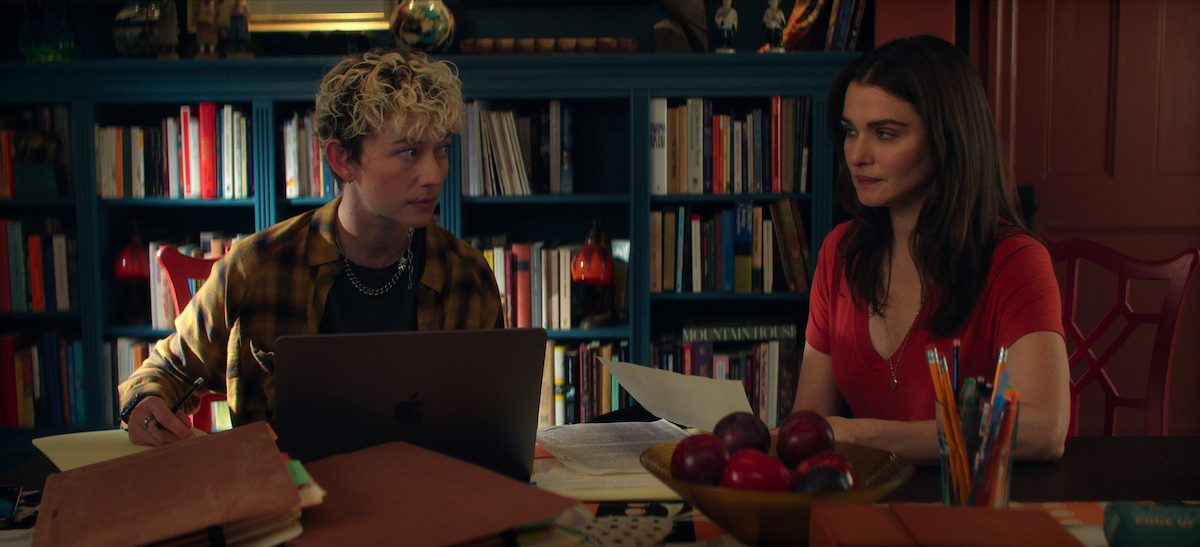
Context: Faculty Misconduct & Title IX (Current Framework)
The suspension and investigation at the center of Vladimir reflect how American universities actually handle these cases today. The Biden administration’s 2024 Title IX Final Rule was vacated nationwide by a federal district court in Kentucky on January 9, 2025 (Tennessee v. Cardona), and is legally unenforceable. As a result, institutions across the United States are currently required to operate under the 2020 Title IX regulations, which mandate strict formal grievance procedures including live hearings and cross-examination rights for both parties.
Disciplinary steps for tenured faculty also implicate shared-governance protections. The American Association of University Professors (AAUP) advises careful procedural safeguards when suspending tenured professors, recognizing that the process is rarely as swift or clean as drama requires.
Academic research indicates that while strong faculty-student relationships can boost engagement, boundary violations correlate with measurable harm to student wellbeing and institutional trust. (Frontiers in Psychology, 2024)
Rooster (HBO): The Lighter Side of Campus Chaos
Where Vladimir wallows in moral complexity, HBO’s Rooster — premiering Sunday, March 8 — offers something genuinely warmer: a campus comedy about a famous author who takes a teaching post primarily to be near his daughter, played by Charly Clive, whose own marriage is disintegrating after her husband (Phil Dunster, delivering a perfectly pitched subversion of the smarmy charm he perfected as Jamie Tartt in Ted Lasso) leaves her for a graduate student.
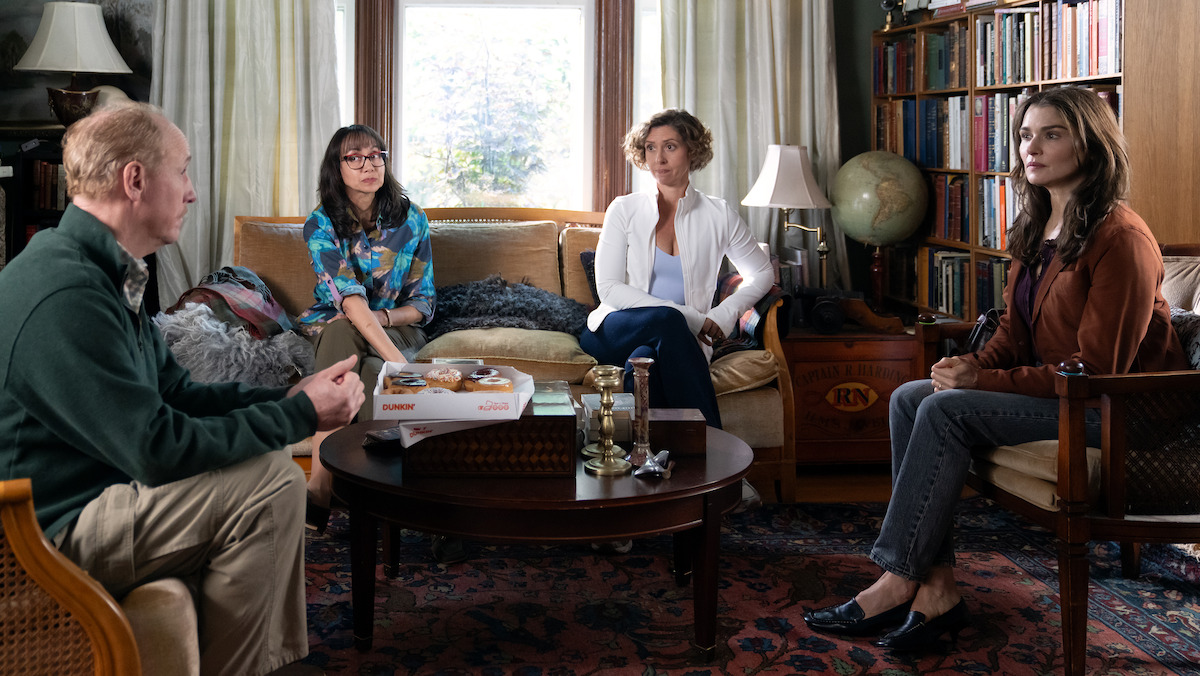
Rooster was created by Bill Lawrence, whose track record runs from Scrubs to Ted Lasso, and Matt Tarses. The cast includes Connie Britton and Danielle Deadwyler alongside John C. McGinley, whose casting as the college president gives Lawrence fans a genuine reunion. Early reviews describe Carell as capturing the “fish out of water” energy with exactness — oscillating between slapstick and genuine pathos as a father who understands large emotional situations only once they’ve already gone badly. The official HBO press release confirms campus filming at the University of the Pacific.
The show is less interested in power and misconduct than in the specific embarrassments of middle age: the moment you realize you are the reason your children are in therapy, delivered with warmth rather than condemnation. Where Vladimir asks its audience to sit with discomfort, Rooster offers the gentler proposition that incompetent adults are also, finally, lovable ones.
At a Glance: Two Campus Dramas, Two Very Different Campuses
| Element | Vladimir (Netflix) | Rooster (HBO) |
|---|---|---|
| Tone | Dark, literary, morally slippery | Warm, comedic, emotionally grounded |
| Central relationship | Obsessive one-sided fixation | Father-daughter repair |
| Misconduct angle | Title IX hearing at the center | Adjacent (daughter’s husband leaves for a grad student) |
| Creator | Julia May Jonas (from her novel) | Bill Lawrence & Matt Tarses |
| Notable device | Fourth-wall direct address | Physical comedy + pathos |
| Critical consensus | Weisz praised; ending divisive | Carell praised; tone-balancing highlighted |
| Source | Novel (Simon & Schuster, 2022) | Original screenplay |
The Bigger Picture: Why Campus Stories Are Having a Moment
The simultaneous arrival of these two shows is not coincidental. The campus-set drama has evolved significantly over the past decade. The traditional coming-of-age story — Animal House, PCU, The Social Network — has given way to the midlife-crisis campus satire: stories focused on the anxieties of tenured faculty navigating an institutional landscape reconfigured by changing cultural norms and the long aftershocks of the #MeToo movement.
The “older woman, younger man” dynamic has simultaneously seen a significant commercial resurgence — see Babygirl, The Idea of You, A Family Affair — suggesting that audiences are genuinely interested in female desire as a subject of serious drama rather than comic relief. Vladimir sits in that lineage, though it is more interested in what the desire reveals about its protagonist’s relationship with her own aging and irrelevance than in the desire itself. That is a harder and more rewarding proposition, even if the adaptation doesn’t fully honor it.
Both shows also engage — directly in Vladimir‘s case, obliquely in Rooster‘s — with the question of what institutions actually owe students who have been harmed by the people trusted to educate them. Real-world controversies involving professor misconduct at American universities have made these fictions feel newly urgent. The fictional hearing in Vladimir is recognizable not because it exaggerates but because it doesn’t.
Meanwhile, on Real Campuses
The academic world both shows satirize is itself under significant pressure from directions the shows don’t examine. Universities across the United States are actively rethinking pedagogy in response to AI — a transformation that raises questions about the role of the professor that go well beyond the ethics of attraction. The authority that tenure was supposed to protect is being renegotiated on multiple fronts simultaneously.
The Verdict
Vladimir is essential viewing, with qualifications. Rachel Weisz’s performance is extraordinary — precise, funny, frightening in its self-knowledge — and the series is one of the more genuinely literary things streaming television has attempted. Bergen’s screenplay honors Jonas’s voice in the details even when the structural changes weaken the architecture. The ending will divide audiences who have read the novel from those who haven’t, and that division will be the correct response to a show that was always going to be more complicated than the platform housing it.
Rooster is something rarer: a campus comedy that remembers campus comedies are supposed to make you feel something. Bill Lawrence’s gift for tone — the ability to hold a joke and an ache in the same breath, as Scrubs and Ted Lasso demonstrated — is fully on display. It will not win awards that Vladimir might. It will be watched more.
Taken together, the two series represent something genuinely interesting about where television is in 2026: willing to put difficult adults in institutional settings and ask the audience to reckon with them, rather than simply root for them. That is, in its way, progress.
Television in 2026 is putting difficult adults in institutional settings and asking the audience to reckon with them rather than root for them. That, in its way, is progress. — CruxBuzz Analysis