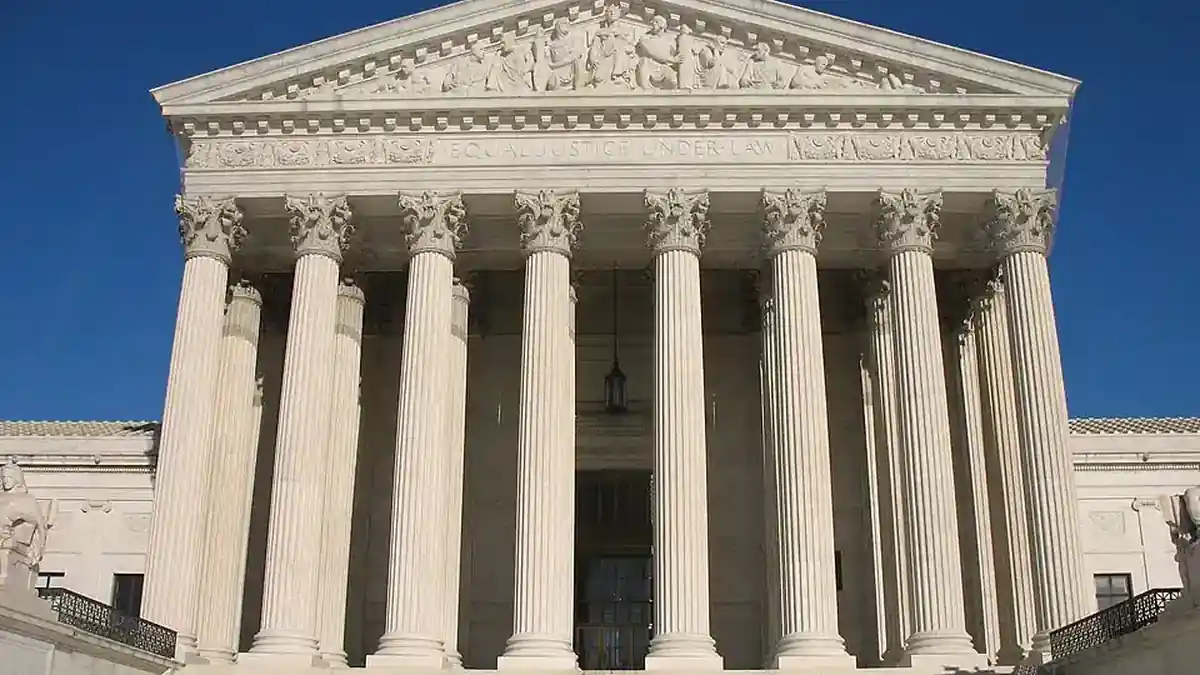
The Supreme Court on October 19 declined to hear appeals seeking to restore plea agreements in the September 11 military commission case. The decision leaves in place a lower-court ruling allowing former Defense Secretary Lloyd Austin to withdraw the agreements that would have spared the accused the death penalty.
The official order list denied No. 26-13, Mohammad, Khalid S., et al. v. United States, and a related petition from Walid bin Atash, No. 25-1335. Justice Brett Kavanaugh took no part in considering or deciding No. 26-13.
For readers following Khalid Sheikh Mohammed’s prosecution, the distinction is important: the justices declined review rather than deciding guilt or punishment. Their order did not impose a death sentence or direct an execution. It left the appellate ruling in place without a reasoned opinion on the merits of the plea dispute.
The government’s Supreme Court filing describes how the agreements were reached. Mohammed and Mustafa al Hawsawi submitted signed pretrial offers in July 2024. They offered guilty pleas in exchange for the government not pursuing the death penalty.
Susan Escallier, the military commission’s convening authority, accepted and signed their agreements on July 31, 2024. She also signed an agreement for bin Atash. Austin announced that he was reclaiming authority over the agreements and withdrawing from them on August 2, two days later.
A military judge ruled in November 2024 that the agreements could be enforced. The ensuing litigation concerned executive authority over the commission and whether the defendants had begun performing promises under the agreements. It was not a general ruling that officials may withdraw any accepted plea deal at will.
The DC Circuit ruled for the government on July 11, 2025. According to the Supreme Court docket, rehearing was denied on January 6, 2026. The petition for Supreme Court review was filed on June 5 and denied on October 19.
The government filing is one party’s account and argument, separate from the court’s own order. The order records the refusal to review the case; it does not adopt every argument in that filing.
The withdrawal therefore remains effective under the appellate ruling. The October 19 action resolves these requests for Supreme Court review, not the defendants’ guilt or an eventual sentence.