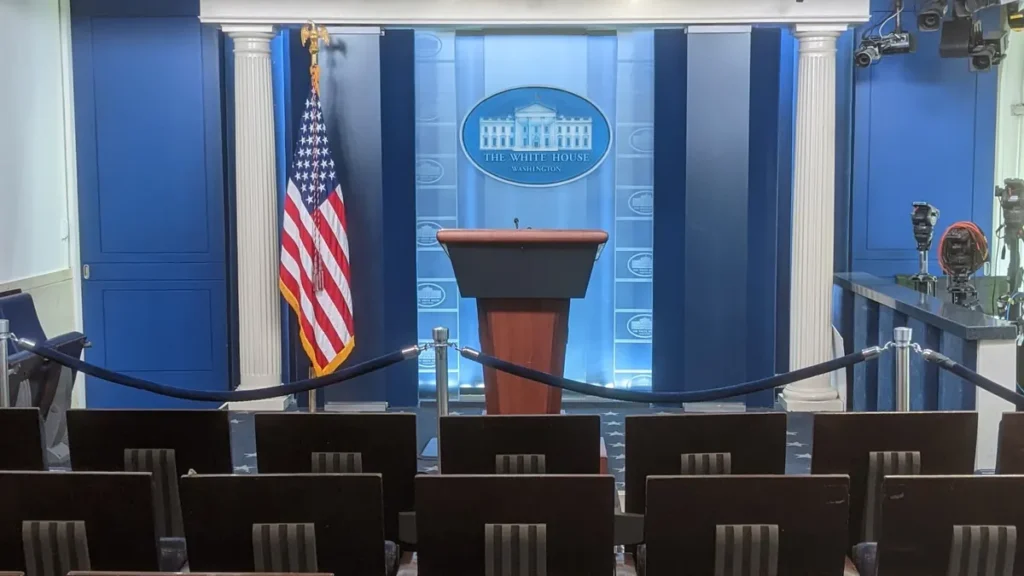
Hunter Morgen has been a lobbyist long enough to know how the game works. You build relationships. You attend the dinners. You make the donations. Then, when your client needs a favor, you call the person who owes you one. Last week, that calculus collapsed. The new White House chief of staff, Stephen Miller, issued a one-page memo that effectively closed the front door to K Street. No more drop-ins. No more courtesy callbacks. Every meeting with a registered lobbyist now requires written sign-off from the Office of White House Counsel. For the lobbying industry, the message was unambiguous: the relationship economy is over. The policy-outcome economy has begun.
This shift arrives as Trump delays Medicaid work requirements and prepares for a trilateral meeting with Xi and Putin, signaling a White House betting on executive action over legislative negotiation.
What the Memo Actually Requires
The one-page memo, issued under Miller’s chief of staff letterhead, establishes a new clearance chain: any White House staffer who wants to meet with a registered lobbyist on the White House complex must first secure written approval from the Office of White House Counsel. The rule applies specifically to meetings related to government policy. The Office of Public Liaison remains the designated entry point for external stakeholders, but it no longer operates as an open door.
Miller’s directive also reaffirms that staff time belongs to the president’s agenda. “No President in history has fought more relentlessly, selflessly or courageously for the American People than President Trump,” the memo reads. “Following his example, White House staff are expected to dedicate their time unwaveringly to the working people of the nation.”
The practical effect is immediate. A lobbyist who previously could schedule a 15-minute sit-down with a deputy assistant to the president now faces a paper trail. The counsel’s office reviews the request, the lobbyist’s registration, and the policy relevance before granting or denying access. There is no public appeal process.
The Wiles Contrast: Relationships vs. Outcomes
Susie Wiles, Miller’s predecessor, built her chief-of-staff tenure on relationship maintenance. A veteran lobbyist herself — formerly of Ballard Partners and Mercury Public Affairs — Wiles attended Rose Garden dinners, Christmas parties, and donor events. She met directly with CEOs, including Anthropic’s Dario Amodei during the administration’s AI feud. She traveled to Capitol Hill to push Senate Republicans on Trump’s legislative priorities, a strategy that echoes the Trump-Thune Senate strategy for the 2026 midterms.
Miller’s background offers no such lubrication. His non-government income comes from America First Legal, the litigation nonprofit he founded, and his political consulting firm. He has no client list on K Street. “He doesn’t operate based on relationships. He operates based on policy outcomes that will advance the president’s agenda,” said Hunter Morgen, a lobbyist at Ballard Partners who worked with Miller during the first Trump administration.
The distinction matters. Under Wiles, a trade association CEO could call the chief of staff’s office and expect a callback. Under Miller, that same CEO is told to route requests through the Domestic Policy Council or the National Economic Council — or to cultivate a direct line to Trump himself. One trade association chief executive told Politico that Miller’s elevation makes a direct Trump connection “more important than ever.”
Lobbyists Adapt: Direct Lines and Workarounds
K Street is not surrendering access. A dozen GOP lobbyists described three emerging strategies. First, bypass the chief of staff entirely. Trump remains a relationships-oriented president; corporate-sponsored events like the UFC fight and the Easter Egg Roll still put CEOs in the room with him. Second, work the policy councils. The Domestic Policy Council and National Economic Council remain staffed by officials who need outside input. Third, accept the new friction. “He’s impossible to lobby, no one can do it, not even the people that you would think are closest,” one lobbyist said. “I think he’s more reasonable than he’s being portrayed, but he’s not swayed by lobbying.”
Ballard Partners, the firm where Wiles built her lobbying career and where her daughter is now a partner at Continental Strategy, is on track to earn more than $100 million this year — four times its 2020 revenue. Brian Ballard, a close Trump ally, recently defended the firm against allegations of improper access to Wiles. The firm called the claims “inaccurate and baseless.”
The Katie Miller Factor
An unusual dynamic shadows the transition. Katie Miller, Stephen’s wife, previously worked with Elon Musk on the Department of Government Efficiency (DOGE) effort and for SpaceX. She launched a podcast that hosted high-ranking administration officials. She also lobbied privately for her husband to get the chief of staff role, according to The Atlantic.
Stephen Miller recused himself from matters involving his wife’s financial interests. He did not work on Paramount issues because of a potential podcast deal and avoided issues around Musk’s companies. On Sunday, Katie Miller announced she would stop recording new podcast episodes.
The recusal is clean on paper but unprecedented in practice: a chief of staff walling off the president’s most disruptive outside adviser (Musk) and a media venture because his wife profits from them. It also means Miller cannot formally engage on DOGE — the very initiative Trump has championed as his government-efficiency flagship.
Democratic Investigations Loom
Democrats, now controlling Congress, have signaled Miller is a top investigative target. His role in the administration’s immigration enforcement, his involvement in the 2020 election challenges, and his management of the DOGE recusal all draw congressional scrutiny. The lobbyist memo itself may become exhibit A in hearings about whether the White House is obstructing legitimate petitioning of government. The new Democratic majority, confirmed by the Senate flip to 51-49, has subpoena power Miller cannot ignore.
For now, the memo stands. Lobbyists adjust. Policy councils absorb the traffic. And Stephen Miller, the 41-year-old architect of the administration’s hardest edges, settles into the gatekeeper role he never wanted — on his own terms.
What does the Stephen Miller lobbyist memo require? The memo requires White House staff to obtain prior written approval from the Office of White House Counsel before meeting with registered lobbyists on the White House complex for policy-related discussions. The Office of Public Liaison remains the primary contact for external stakeholders, but it no longer grants automatic access.
Stephen Miller’s first week as chief of staff has rewritten the rules of engagement between the White House and K Street. The lobbyist memo is not a temporary pause — it is a structural shift toward policy outcomes over relationship maintenance. Whether it survives Democratic investigations or Trump’s own relational instincts remains the next story.