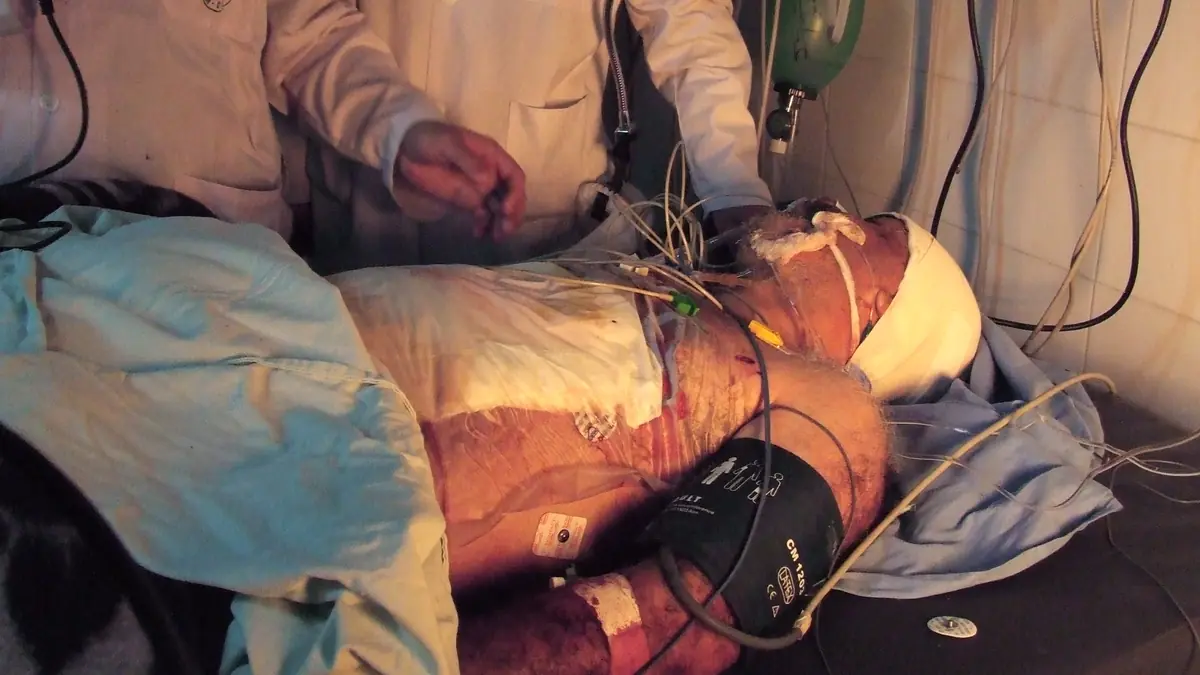
A Palestinian-American physician in Michigan wakes to the news that a Nasser Hospital strike has hit the facility their family in Khan Younis depends on for dialysis and trauma care. The operating theatres they counted on are now rubble.
Israeli forces struck Nasser Hospital in Khan Younis overnight, killing six people and wounding roughly 28 to 30 others. The dead include surgeon Dr. Rizq Abu Shaira (also spelled Rezik Abushira per Times of Israel) and a 13-year-old boy. Four other victims remain unnamed. Surgical wards and the intensive care unit suffered heavy damage. The Israeli military and Shin Bet say they carried out a precision strike targeting Muhammad Abu Ismail, commander of the Hamas Khan Younis Brigade, and other operatives they say were using the hospital as a headquarters. Hamas and the Gaza Health Ministry condemn the attack as a war crime, deny any military use of the facility, and say no warning was given. Nasser Hospital is the largest medical centre in southern Gaza, serving about one million people. This is the seventh strike on the facility since the war began. The World Health Organization has documented 1,056 attacks on Gaza healthcare since October 2023, with 1,010 deaths and 1,725 injuries.
For the one million people in southern Gaza, Nasser Hospital was the last functioning surgical backbone. Its operating theatres are now rubble. The next major trauma centre is approximately 40 km away and access is severely restricted. A perforated appendix, a complicated birth, a child hit by shrapnel: conditions that are routine emergencies anywhere else become death sentences when the only surgeon who could operate is buried in the same strike that destroyed his operating room.
When does a hospital lose protection?
Geneva Convention IV Article 18 and Article 19 set a three-part test. A hospital loses protection only if it is used to commit acts harmful to the enemy outside its humanitarian duties — and only after due warning with a reasonable time limit — and the attack must be proportionate. Israel says it warned Hamas repeatedly. Hamas denies any warning was given. Independent verification is blocked by Israel’s ban on international media in Gaza. Legality hinges on unverified facts. The Geneva Conventions hospital protection framework becomes a tactical liability when one side systematically embeds in medical facilities, forcing the other side to either accept impunity or strike protected sites.
The commander, the hostages, and the 7-hour silence
IDF and Shin Bet statements identify Abu Ismail as commander of the Khan Younis Brigade, involved in the October 7 attacks, and say he held hostages from Kibbutz Nahal Oz at Nasser Hospital. His fate remains “under review.” Hamas has not commented on his status. Previous strikes on Nasser include an August 2025 attack that killed 22 people, including five journalists; Doctors Without Borders suspended activities citing armed men inside the hospital. The US-backed Board of Peace called this strike evidence for implementing the Trump peace plan. The IDF took seven hours to comment while international media reported the strike overnight — an initial confirmation at 7am, target details at 10am. The IDF Spokespersons’ Unit often waits for strike results before commenting on high-profile protected-site strikes. Healthcare infrastructure functions as a contested resource; WHO documents systematic degradation, and water and electricity disruption compounds the surgical collapse documented in the Gaza healthcare collapse and Khan Younis humanitarian crisis.
The IDF’s seven-hour silence while international media broadcast the strike globally, followed by a two-stage statement — 7am: strike occurred; 10am: target details — reveals a decision-making bottleneck. Either legal review of proportionality and precaution delayed the first comment, or political leadership held the statement for coordination with Washington, analysts assess. The IDF Spokespersons’ Unit often waits for strike results before commenting on high-profile protected-site strikes. The delay itself is operational intelligence: it indicates internal disagreement or legal scrutiny not visible in the final statement.
Is it a war crime to bomb a hospital? Under Geneva Convention IV Article 18, hospitals lose protection only if “used to commit, outside their humanitarian duties, acts harmful to the enemy” — and only after due warning with a reasonable time limit, and the attack must be proportionate. Israel says it warned Hamas repeatedly; Hamas denies warning. Independent verification is blocked by Israel’s ban on international media in Gaza. Legality hinges on unverified facts.
Nasser Hospital’s surgical capacity is degraded. One million people in southern Gaza now depend on a severely restricted journey for emergency surgery. The IDF says it targeted a Hamas commander; Hamas says it is a war crime. The legal test requires warning, time, and proportionality — none independently verified. The Board of Peace links the strike to US postwar planning. An official investigation or IDF battle-damage assessment may clarify the commander’s fate. Check back for updates.