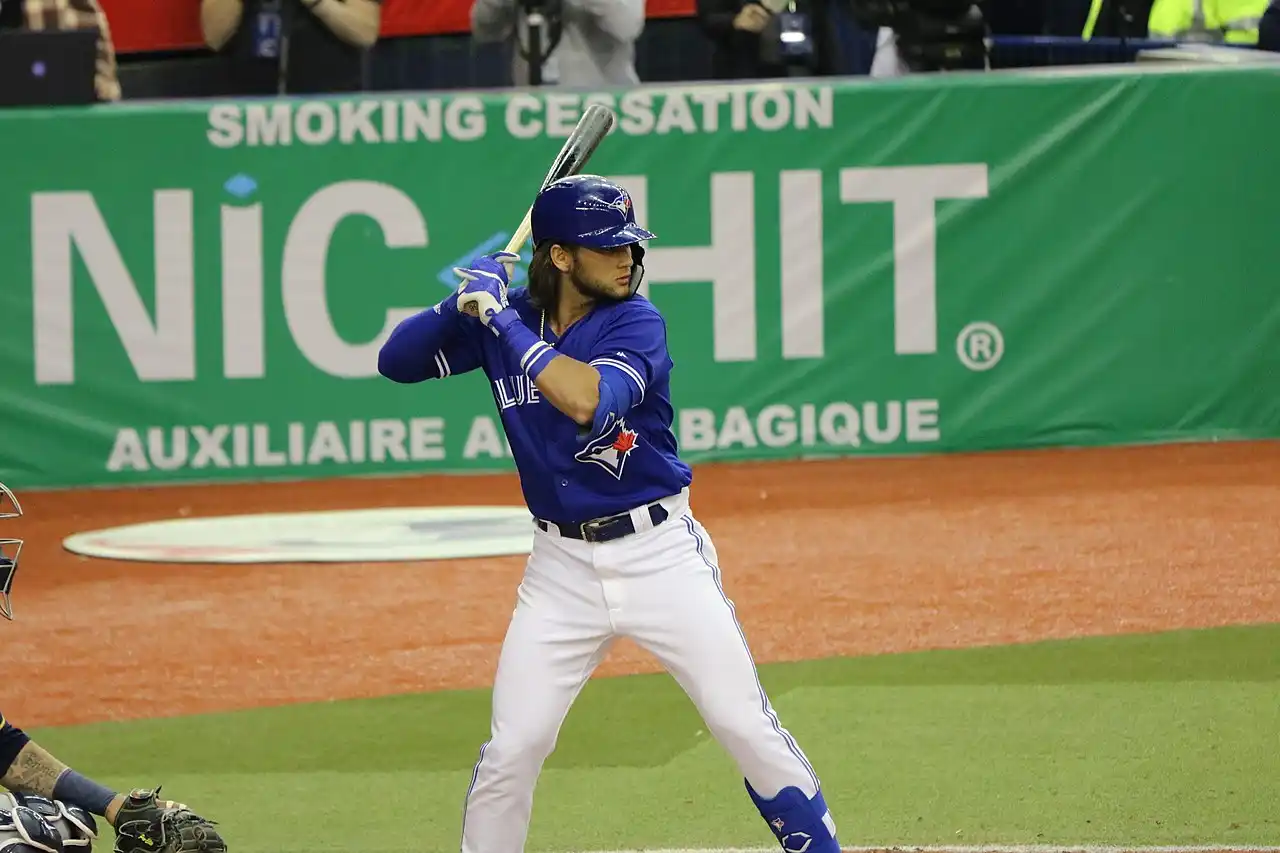
In January 2026, the New York Mets rapidly shifted their free agency strategy after missing out on outfielder Kyle Tucker. The organization agreed to sign infielder Bo Bichette to a three-year, $126 million contract, according to MLB.com. The deal includes two player opt-out clauses and no deferred money, giving Bichette an average annual value of $42 million. This move positions the Mets’ payroll at approximately $345.7 million, surpassing the competitive balance tax threshold of $304 million as reported by Baseball Savant and MLB official records. The signing carries substantial draft penalties due to Bichette’s rejection of Toronto’s qualifying offer, but the Mets prioritized offensive production to fill gaps left by earlier departures.
The following breakdown examines the contract terms, free agency timeline, team impact, and defensive considerations surrounding this significant transaction.
Free Agency Timeline: What Happened and When
Kyle Tucker Chooses the Dodgers
The Los Angeles Dodgers secure outfielder Kyle Tucker on a 4-year, $240 million contract, according to ESPN. Reports indicate the Mets offered $220 million over four years, but Tucker signed with the Dodgers. Mets owner Steve Cohen posts on X (formerly Twitter): “Let me know when you see smoke,” referencing the Vatican Papal election, signaling continued activity.
Mets Act with Speed on Bichette
Approximately 12–18 hours after the Tucker decision, the Mets announce an agreement with infielder Bo Bichette. The contract terms are finalized and pending a physical. Reports indicated Philadelphia’s Phillies were among the top pursuers, making them notable competitors for Bichette.
Realmuto’s Re-signing Follows
Hours after the Bichette announcement, the Philadelphia Phillies quickly secure catcher J.T. Realmuto to a 3-year, $45 million contract with an additional $5 million in annual bonuses, according to MLB.com. The immediate reaction suggests regrouping after Bichette’s departure.
League Impact Develops
The deals trigger broader roster shifts. The Toronto Blue Jays will receive a compensatory draft pick after the fourth round. The Mets face draft pick forfeiture and international pool reductions. Playoff-contending teams reassess remaining targets.
How the Deals Compare: Contract Breakdown
Contract Value Comparison
Understanding the Opt-Out Structure
Bo Bichette’s agreement with the Mets includes player opt-out clauses after the first and second seasons. This structure allows the infielder to re-enter free agency if he performs at an elite level. According to Major League Baseball official records, this arrangement has become more common among premium free agents. The Mets’ decision to include two opt-outs reflects a strategic approach: if Bichette performs well, the team acknowledges he may seek a longer deal elsewhere; if he declines or faces injury, the Mets retain flexibility.
Explore how this strategy compares to other recent signings in coverage on contract structures in MLB.
Impact on Teams and Players
New York Mets
The signing addresses offensive gaps left by departures of Pete Alonso, Brandon Nimmo, Edwin Diaz, and Jeff McNeil. Bichette projects to bat third behind Juan Soto and Francisco Lindor, providing right-handed lineup protection. However, the transition to third base—a position he has never played professionally—introduces defensive uncertainty. His 2025 defensive metrics placed him among the lowest-grading shortstops (DRS approximately –12, OAA approximately –10).
Philadelphia Phillies
The Phillies miss their primary target to a division rival. While they re-sign Realmuto, the loss of Bichette leaves a short-term void. The team remains focused on competitive balance tax management while seeking remaining veteran talent. Related context: NL East competitive dynamics.
Toronto Blue Jays
The Blue Jays lose a homegrown talent but receive a compensatory draft pick (after the fourth round) due to Bichette’s qualifying offer rejection. The organization shifts focus to remaining free agents as they pursue a World Series breakthrough after coming close in 2025.
Los Angeles Dodgers
The Dodgers’ acquisition of Kyle Tucker reinforces their status as the National League’s premier franchise. The $240 million investment reflects the organization’s aggressive approach and financial capacity relative to other teams. Tucker’s 2025 defensive metrics show modest decline (OAA –2, DRS –1) but his offensive profile remains elite.
Draft Pick Forfeiture Explained
When a player with a qualifying offer (QO) signs with a new team, specific draft penalties apply. Bo Bichette rejected Toronto’s $22.025 million qualifying offer, triggering these consequences per MLB official rules:
Mets’ Penalties:
- Forfeiture of 2nd-highest draft pick in 2026
- Forfeiture of 5th-highest draft pick in 2026
- $1 million reduction from international signing bonus pool
- These penalties apply because the Mets exceeded the competitive balance tax (CBT) threshold in 2025, per Cot’s Baseball Contracts
Blue Jays’ Compensation:
- Toronto receives a compensatory draft pick after the fourth round
- This offsets the loss of their long-time shortstop to free agency
The Mets’ projected payroll now stands at approximately $345.7 million, surpassing the top CBT threshold of $304 million. This means the organization pays both the salary and accepts draft penalties—an expensive but strategically calculated investment. For more on how the Mets navigate salary constraints, see contract negotiations and payroll management context.
The Position Transition Challenge
Bo Bichette will transition from shortstop to third base with the Mets—a position he has not played at the major-league level. According to player career records, Bichette did play second base for the first time in the 2025 World Series (a single appearance), but he has zero career innings at third base. His 2025 defensive metrics (DRS approximately –12, OAA approximately –10) ranked among the lowest for regular shortstops, grading him as one of the weaker defensive shortstops in baseball last season.
The Mets’ concurrent signing of infielder Jorge Polanco—who is also moving to a new position (first base)—compounds the defensive risk. Brett Baty, the incumbent third baseman who batted .291 with a .829 OPS in 55 games in the second half of 2025, may shift to left field, a position where he has limited experience. This defensive reshuffling will be closely monitored during Spring Training and the regular season.
Why Bichette’s 2025 Rebound Matters
Bichette’s 2025 season tells a recovery story. After a difficult 2024 marked by injuries, the Toronto Blue Jays infielder rebounded to hit .311 with 18 home runs and an .840 OPS across 139 games. His plate discipline improved significantly, and he ranked second in the American League in hits (181) during 2025. He led the American League in hits in 2021 (191 hits) and 2022 (189 hits).
The World Series performance crystallized his value: batting .348 with a .923 OPS, Bichette delivered clutch hits, including a three-run homer off Shohei Ohtani in Game 7 (the Blue Jays lost 5–4 in 11 innings). At age 27, Bichette represents an offensive force with proven bat-to-ball skills and elite contact ability—factors that drove both the Mets’ and Phillies’ pursuit. As a two-time All-Star (2021, 2023) with a career .294 batting average, his offensive credentials are established, per MLB Statcast data.
What This Deal Means for Baseball in 2026
The Bo Bichette signing reflects modern MLB free agency: rapid pivots, calculated risk-taking, and short-term optimization. The Mets’ decision to pursue a premium bat despite defensive concerns and accept draft penalties illustrates owner Steve Cohen’s willingness to invest aggressively. The opt-out structure reflects broader market trends where elite players negotiate flexibility into agreements. Bichette’s transition from shortstop to an untested third base role introduces a unique storyline for the 2026 season. The Mets believe his offensive output justifies the risk; results will determine whether the three-year, $126 million agreement delivers value. The Blue Jays will receive compensatory draft compensation, the Phillies pivot to veteran depth, and the Dodgers reinforced their National League standing with Tucker. These transactions collectively shaped the competitive landscape heading into the 2026 regular season.