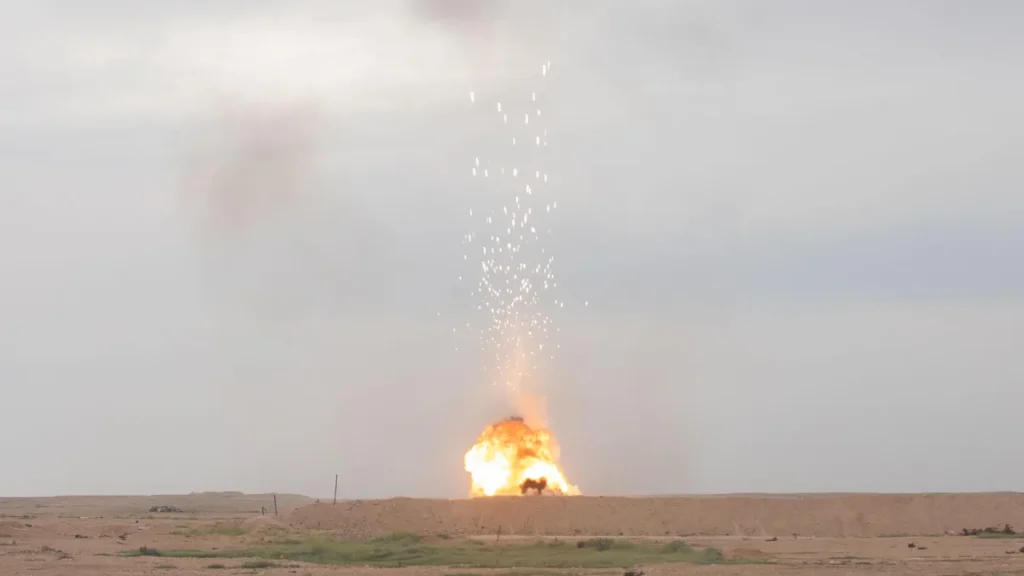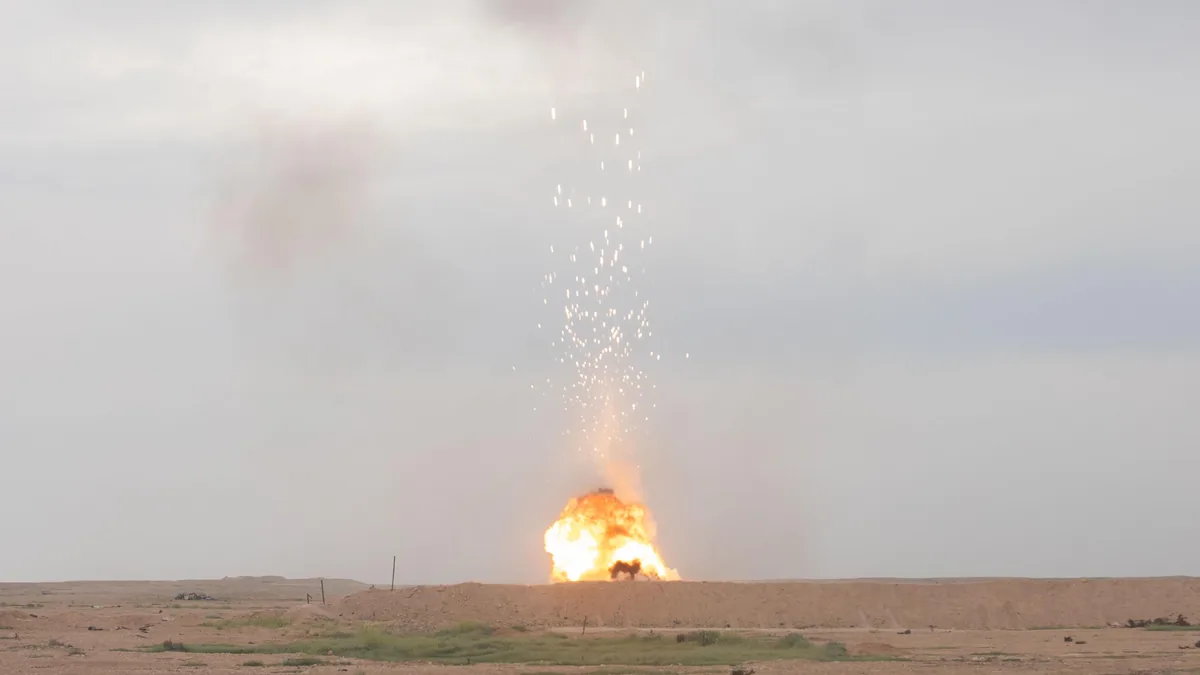
The U.S. Army plans a controlled lead azide detonation at the Iowa Army Ammunition Plant in Middletown on Wednesday morning. The blast will destroy about 5 tons of degraded material. Army officials say the choice is between a planned blast now and an uncontrolled explosion later. Residents near the plant are being told to leave.
The Army will detonate 68 barrels of lead azide at 9 a.m. Central Time. An Army inspection in March found that the material had partially crystallized. Crystallized lead azide is more sensitive to friction and cold. The Army says the barrels can no longer be moved or opened safely, so the material will be destroyed in place. The Environmental Protection Agency issued an emergency permit on November 13. FEMA recommends that people in Middletown and within 5 miles southwest of the plant relocate temporarily. Residents 5 to 20 miles southwest are advised to shelter in place.
The detonation happens Wednesday at 9 AM CT. If you’re within 5 miles southwest of Middletown, FEMA urges you to leave — they’ll provide transport, hotel through Friday, and food. But the lead dust doesn’t vanish: Army models show 148 square miles receiving 5+ micrograms per square foot. That’s measurable lead on crops, in playgrounds, with the Mississippi River in the plume’s projected path. No federal cleanup plan has been announced. If you have kids under 6 or are pregnant, HHS says evacuate. This is the country’s entire lead azide stockpile — 5 tons transferred from Texas in 2009 — being vaporized because the barrels crystallized and can’t be moved. The EPA approved the emergency permit without fully evaluating alternatives, environmental groups charge.
The Army’s environmental assessment lays out the option it rejected. Neutralizing the material in place would take 7 to 22 days. The assessment warns of a “drastically increasing probability of accidental, fatal detonation during handling.” The Army judges that risk to be higher than the risk of a controlled blast.
Col. Aaron Teller of the 71st Explosive Ordnance Disposal unit has described how quickly the barrels changed. He said they deteriorated rapidly past eight months in storage. The crystallized material on the outside of the barrels stops crews from moving or opening them.
The plume is the second problem. The Army says it will issue a final estimate of the affected area. Its own model projects lead dust over 148 square miles. Lucy Giehl lives about 4 miles from the plant. She says she is “deathly afraid” for her health and for her animals. Pam Munce, who lives in Burlington, Iowa, described her reaction after the notice arrived. “I called my daughter and said, ‘I’m coming to Chicago,'” she said.
Iowa Gov. Kim Reynolds issued a disaster proclamation covering three counties. She deployed 100 National Guard members to support the response. The permit has also been tied up in court. An appeals court stayed the permit, and that stay was later lifted. Readers can follow the legal fight in our report on the US Army Iowa lead azide detonation court order. The EPA’s Middletown plant page covers the emergency permit.
Why this lead azide detonation is different
Maj. Gen. Eric Shirley, who leads the operation, put the Army’s position plainly: “Inaction is no longer an option.” The Army’s view is that an uncontrolled explosion carries more risk than a planned one. The Army calls the operation a “controlled, mitigated detonation” in its public safety advisory.
FEMA administrator Cameron Hamilton has said relocation support covers transportation and lodging through November 27. Food and water are also provided to people who leave. Residents who choose to stay should keep windows and doors shut and follow local alerts.
The Army’s own environmental assessment reveals a catch-22: the very degradation that makes lead azide too dangerous to move also makes it too dangerous to leave. Crystallized lead azide on 68 barrel exteriors means any human handling risks instantaneous detonation. Yet the controlled detonation guarantees lead contamination across 148 square miles of farmland. The nation’s entire stockpile of a WWI-era detonator is being vaporized over Iowa because there is no Plan B — and the EPA’s emergency permit was issued without fully evaluating alternatives, per the environmental groups’ lawsuit. This is not an accident; it’s a deferred maintenance crisis becoming a public health experiment.
When is the Iowa Army Ammunition Plant detonation scheduled?
The controlled detonation of 5 tons of lead azide is scheduled for Wednesday, November 25 at 9:00 AM Central Time at the Iowa Army Ammunition Plant in Middletown. FEMA emergency alerts were sent to cell phones in the area Tuesday. The recommended evacuation zone covers Middletown and a 5-mile cone extending southwest, with support available through Friday, November 27.
Residents who need help should contact local emergency management or FEMA. The Army has not yet released its final estimate of the affected area. Check your county’s emergency alerts before you leave, and keep your phone on. CruxBuzz will update this story as lead dust measurements come in.