SpaceX Catches Starship Upper Stage in Historic First
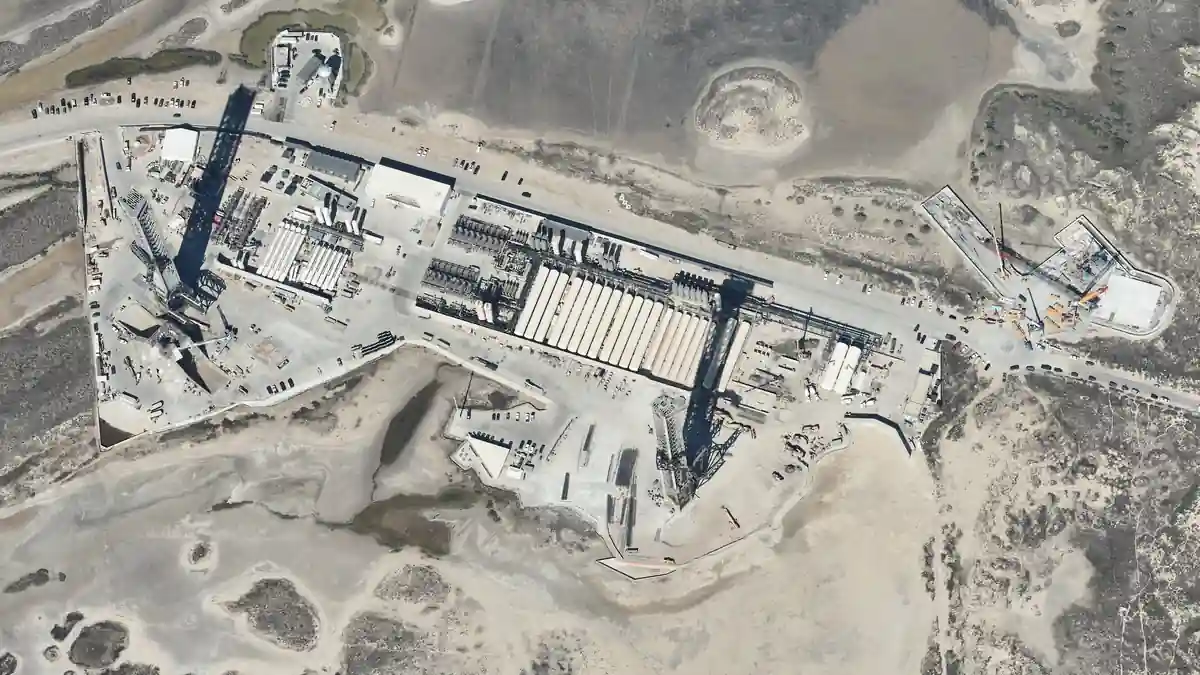
SpaceX did what no one else has: caught a returning orbital spacecraft with mechanical arms at the launch tower. The company’s Starship upper stage — Ship 42 — returned from 14 orbits around Earth and settled into the “chopstick” arms of the Mechazilla launch tower at Starbase, Texas, on November 14, 2026. It is the first time any orbital spacecraft has been caught rather than landed on a runway or splashed down in the ocean.
Core Facts: IFT-15 Mission Profile
The 15th Integrated Flight Test (IFT-15) lifted off from Starbase on November 13 at 5:47 p.m. ET. The vehicle — Booster 22 and Starship 42 — completed 14 orbits over roughly 24 hours before the upper stage returned to the launch site. At 4:20 p.m. EST (21:20:02 UTC, per astronomer Jonathan McDowell), the tower arms closed around Ship 42. The catch followed a controlled reentry through the atmosphere, with the vehicle’s thermal protection tiles holding up through peak heating.
The Super Heavy booster, however, did not return to the tower. Minutes after liftoff, its guidance system determined the booster was not in the correct position for a tower catch and automatically diverted it to a splashdown in the Gulf of Mexico. SpaceX is investigating the root cause. The company has successfully caught three Super Heavy boosters previously — on IFT-5, IFT-7, and IFT-8 — but this was the first attempt to catch the second stage after an orbital mission.
The mission also deployed 26 Starlink V3 satellites, the largest version of SpaceX’s internet constellation to date. These satellites are too large for Falcon 9 and require Starship’s wider payload fairing. Future Starship flights will carry Starlink V3 and, eventually, orbital data centers as primary cargo.
Why Full Reusability Changes the Economics of Orbit
For anyone watching the future of spaceflight, this catch changes the economics of getting to orbit. A fully reusable Starship — both stages returning to the launch tower — means SpaceX can refly the same hardware in days, not months. That drives down the cost per kilogram to orbit, which matters for everything from Starlink internet deployment to NASA’s Moon missions and eventually Mars settlement. The catch proves the “chopstick” recovery system works for the ship, not just the booster, closing the last major technical loop for full reusability.
NASA Administrator Jared Isaacman congratulated SpaceX on the achievement, calling it “almost magic” and “one step closer to the Moon.” The agency holds a contract with SpaceX to develop a Human Landing System (HLS) version of Starship for Artemis missions starting in 2028. That variant requires in-orbit cryogenic refueling — a capability SpaceX has not yet demonstrated but which the IFT-15 profile supports through extended orbital operations.
Artemis III, now targeting 2027, will test rendezvous and docking between the Orion capsule and a standard Starship in lunar orbit. The crew will not enter that Starship but will test docking with Blue Origin’s competing Blue Moon MK2 lander as well. Each successful orbital flight builds data for those missions.
The Culture Behind the Hardware
The catch timestamp — 4:20 p.m. EST — aligns with Starship 42’s number. In Douglas Adams’ “Hitchhiker’s Guide to the Galaxy,” 42 is the “Answer to the Ultimate Question of Life, the Universe, and Everything.” The book’s catchphrase, “Don’t Panic,” is inscribed on the side of this Starship. Elon Musk has long referenced Adams as an influence. The coincidence underscores the culture driving this program: ambitious engineering wrapped in a layer of intentional playfulness.
SpaceX envisions thousands of Starship launches per year from at least three sites: Starbase in Texas; Kennedy Space Center in Florida, where the first Florida Starship could launch this year; and a newly announced site in Vermilion Parish, Louisiana. When fully operational, Starship will be the first completely reusable orbital spacecraft. The closest historical comparison is NASA’s Space Shuttle, which returned from orbit 133 times over 30 years — but only the orbiter and solid rocket boosters were reusable, not the core stage.
What Comes Next
SpaceX moves to operational flights. The next Starship could launch from Kennedy Space Center this year. The tower catch is no longer experimental — it’s the new standard. Each flight will test refinements: booster return reliability, in-orbit refueling demonstrations, payload deployment at scale, and eventually crewed missions. The IFT-15 catch proved the upper stage can come home to the tower. The next question is how fast SpaceX can turn it around for the next flight.