# Stage 4 — Final Linked Article: FAA Ground Stop Follow-up
**Run:** 20261114_1530 | **Slot:** 1
**Internal Links:** 4 | **External Links:** 6
—
## Article HTML with Links
Your flight shows “resumed” but the gate agent says “no crew, no plane.” The FAA lifted the ground stop at 8:15 p.m. Friday, but 6,200 delays and 3,400 cancellations persisted Saturday morning. The planes and pilots are simply in the wrong cities.
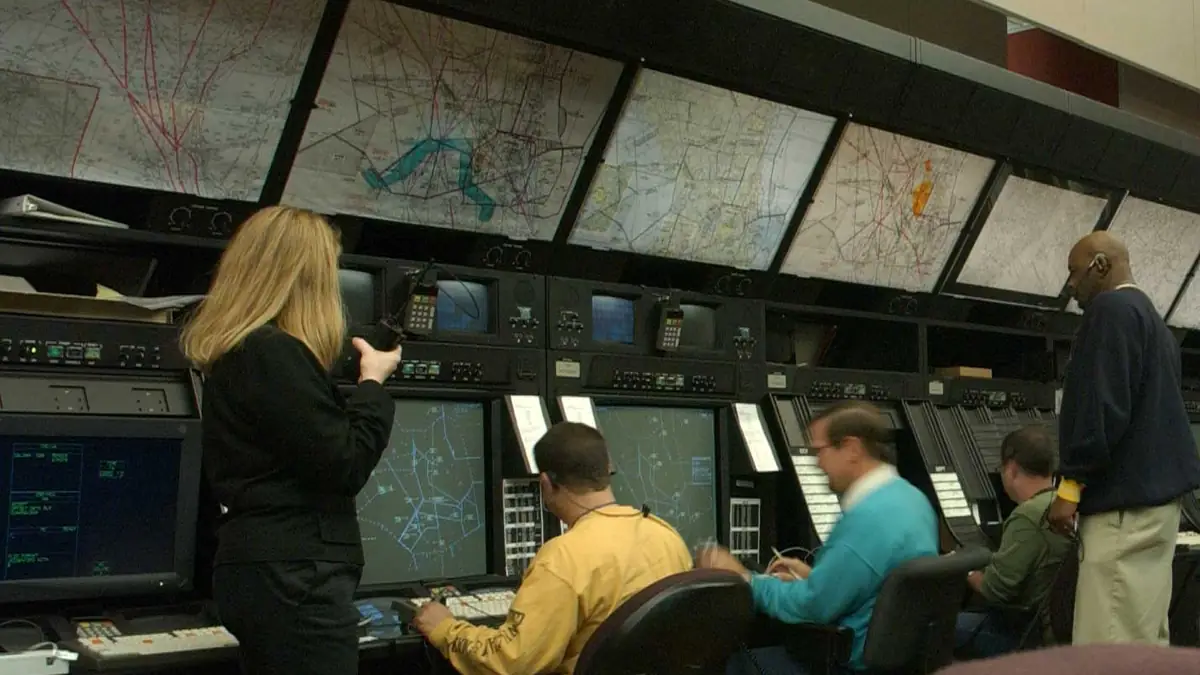
The Federal Aviation Administration halted all U.S. departures Friday at 3:36 p.m. ET after air traffic control centers lost radar and communications consistency. The culprit: telecommunications routers handling controller-pilot radio frequencies overloaded when new equipment was added to the legacy network. The ground stop — the longest since 9/11 — lifted at 8:15 p.m. ET. By Saturday, FlightAware tracked 6,200+ delays and 3,400+ cancellations. Nearly 10,000 flights canceled Friday (Flightradar24). 1.5 million passengers affected.
For the business traveler whose Friday meeting became a Saturday scramble, or the logistics manager watching perishable cargo sit on a tarmac in Anchorage, the ground stop’s lift changes nothing — the planes and crews are still out of position. Airlines owe zero compensation because the FAA, not the carrier, failed. The next 48 hours will be a game of musical chairs: whoever rebooks first via app gets the seat; everyone else waits for the Thanksgiving rush to clear the backlog.
Why the System Broke While Being Fixed
Transportation Secretary Sean Duffy said the outage began when “new technology being added to the nation’s air traffic control system overloaded antiquated parts of it.” The FAA has been replacing 1980s copper lines with fiber and upgrading radio systems — a $12.5 billion start on a $50 billion overhaul Duffy now demands. But the modernization effort itself triggered the failure: L3Harris Technologies oversees the telecommunications network carrying critical ATC radio frequencies. When new routers were integrated, data overload created “inconsistencies” that forced a total shutdown, Duffy told reporters.
Homeland Security Secretary Markwayne Mullin ruled out cyberattack or AI malfunction: “Zero evidence… mechanically driven.” The NSA is assisting the investigation. This mirrors the January 2023 NOTAM outage — caused by contractor error — but the root cause differs: then, files were deleted; now, routers were overwhelmed by the very upgrades meant to prevent failure. Our previous coverage of the 2023 FAA ground stop detailed the NOTAM system failure.
**International Ripple Effects**
The disruption wasn’t contained to U.S. borders. British Airways, Air Canada, Qantas, and Ethiopian Airlines flights were diverted or delayed. Cargo carriers including FedEx activated contingency plans. Indian carriers reported knock-on delays for U.S.-bound routes. The single-point-of-failure in the L3Harris network exposed a global vulnerability: one U.S. telecommunications backbone carries ATC comms for international flights entering U.S. airspace. Similar single-point failures have disrupted global tech infrastructure recently.
The FAA didn’t just “have a glitch” — they broke their own system while trying to fix it. Duffy explicitly stated the outage occurred because “new technology being added… overloaded antiquated parts of it.” The modernization effort *caused* the failure it was meant to prevent. Upgrading legacy infrastructure in-place creates single-point-of-failure cascades no redundancy can catch. Spain’s recent train crash showed how maintenance backlogs in critical infrastructure can turn deadly.
**Can I get a refund for FAA ground stop delays?**
No. Department of Transportation rules explicitly exempt airlines from compensation when delays stem from air traffic control failures. Your only leverage: rebook immediately via the airline app (not the counter), request meal/hotel vouchers as goodwill, and file a complaint with DOT for data-tracking purposes only.
Senator Richard Blumenthal has demanded a “prompt, penetrating investigation” into the national security implications. Duffy says the system will be tested for Thanksgiving week, but admitted: “You will have more of these” without $50 billion in funding. The SMART AI tool — recently rolled out for traffic prediction — was explicitly ruled out as a factor by its maker, Air Space Intelligence. Check back for updates on the Congressional hearing timeline.