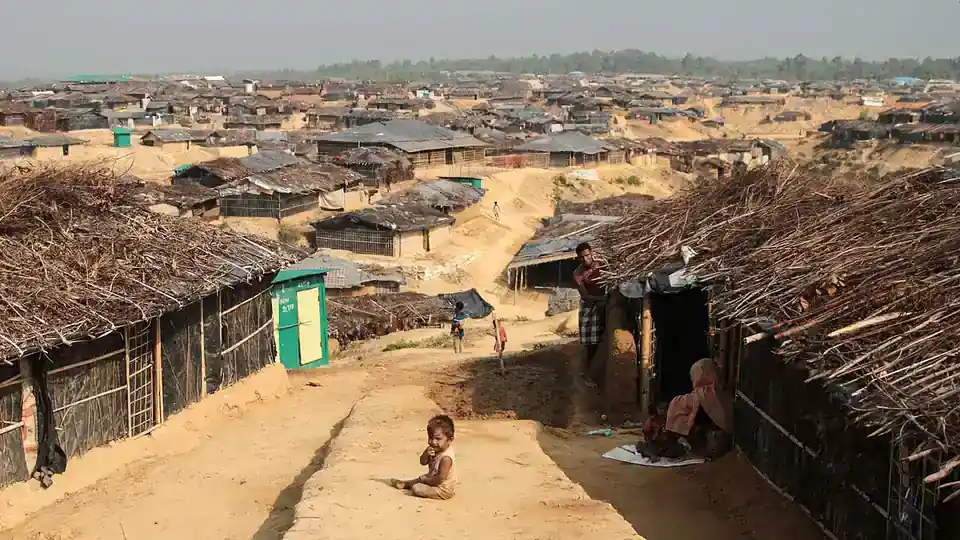
For more than one million Rohingya refugees living in bamboo shelters across Bangladesh, their suffering now has a definitive legal name. The world’s top court has recognized their persecution as genocide. For nearly a decade, survivors insisted that Myanmar’s military tried to wipe out their community. International law has formally affirmed that truth. The ruling brings overdue validation to a stateless population.
The International Court of Justice delivered the judgment on Thursday 19 November 2026 in The Hague. Judges ruled by a 9-6 majority that Myanmar committed genocide against the Rohingya minority in northern Rakhine State during 2017 military operations. ICJ president Yuji Iwasawa announced the decision from the bench.
The legal case began in November 2019 when The Gambia sued Myanmar under the 1948 Genocide Convention. That international treaty bans acts committed with intent to destroy a national, ethnic, racial, or religious group.
The decision makes history. In its 80-year existence, the court had never before held an entire state responsible for carrying out genocide.
The judgment is legally binding and final, with no option for appeal. Myanmar must now face formal legal accountability on the world stage. However, the court has no police force to enforce compliance. The finding does not automatically secure compensation or safe return for refugees. Whether Myanmar complies with the ruling will depend on sustained diplomatic pressure from foreign governments. Without political leverage, legal decrees cannot change conditions in refugee settlements.
What the Court Found and Ordered
The legal case examined the military “clearance operations” launched across northern Rakhine State in August 2017. Myanmar’s armed forces struck after the Arakan Rohingya Salvation Army, an insurgent group known as ARSA, attacked police posts. Soldiers responded by burning hundreds of villages. Almost 700,000 Rohingya fled across the border into Bangladesh.
Surveys by Doctors Without Borders, known as MSF, recorded at least 6,700 Rohingya deaths in the first month alone. Those victims included more than 730 children under five years old. In 2017, the United Nations described the military campaign as “a textbook example of ethnic cleansing.”
Myanmar argued that its actions were legitimate counter-terrorism against ARSA insurgents. The judges firmly rejected that argument. They found that the military deliberately failed to distinguish militants from civilians.
Instead, judges detailed widespread cruelty across Rakhine State. Iwasawa cited “widespread acts of sexual violence, and extreme acts of violence against children.” The court also documented deadly attacks on civilians “as they sought to flee in large numbers to Bangladesh.”
The bench concluded that the violence showed deliberate intent. Iwasawa stated that the atrocities “went well beyond what would be required to punish the population.” He added that they were “characteristic of an intent to destroy a substantial part of the group.”
Furthermore, the ICJ president delivered the court’s core finding on intent. He noted that “the only reasonable inference that can explain Myanmar’s actions is an intention to destroy a substantial part of the protected group.” Iwasawa confirmed that this meant “the Rohingya population in northern Rakhine state.”
The court drew one specific boundary in its judgment. The judges did not find that Myanmar directly and publicly incited private individuals to commit genocide.
To remedy the harm, the court issued sweeping orders. Myanmar must immediately cease continuing violations. It must enact domestic legislation giving full effect to the Genocide Convention. Authorities must also investigate and prosecute those reasonably suspected of committing crimes.
The court ordered Myanmar to provide assurances against recurrence. The government must facilitate the safe, voluntary, and dignified return of Rohingya. Myanmar must also provide reparations, which means financial compensation for the damage inflicted.
The quantum and modalities of compensation will be decided in a subsequent phase of court proceedings. Myanmar must submit a report within two years on restitution measures and compensation.
Limits of Enforcement and What Happens Next
Enforcing these orders will prove difficult. The ICJ has no police force to compel compliance. It holds Myanmar liable as a state, but the judgment does not itself punish individual commanders.
Political conditions inside Myanmar create immediate obstacles. Rakhine State remains actively contested between Myanmar’s military and the rebel Arakan Army. Fierce clashes make safe refugee returns impossible today.
Returnees also face legal barriers dating back decades. Most Rohingya were stripped of their citizenship after a 1962 military coup. A restrictive 1982 citizenship law made eligibility depend on proof of residence before 1823. Because few families possessed century-old records, the law left generations stateless.
Despite these challenges, the judgment brought emotional relief to refugee settlements. Bangladesh currently hosts more than one million Rohingya refugees in crowded border camps.
In Teknaf, Bangladesh, Rohingya leader Syed Ullah welcomed the ruling. Ullah serves as president of the United Council of Rohingyas. “The verdict proved that we are victims of genocide…we awaited it,” Ullah said.
Murshid Alam was 12 when he fled Rakhine State. He called the verdict a “turning point” for his community.
“It is the difference between being told our history was a tragedy,” Alam said. “and being told our history was a crime that must be answered for.”
Bangladesh state minister for foreign affairs Shama Obaed Islam welcomed the judgment. “Today is definitely a historic day,” Islam said. She urged international pressure on Myanmar’s government and the rebel Arakan Army to facilitate repatriation.
Can the ICJ enforce its genocide ruling? The court cannot enforce its ruling directly because it has no police force or military arm. While the judgment is legally binding, implementation depends entirely on voluntary compliance by Myanmar or coordinated diplomatic and economic pressure applied by foreign nations.
The ICJ decision establishes that Myanmar committed genocide against the Rohingya. That finding is now permanent and cannot be appealed. Next, the court will begin a separate phase to decide the quantum and modalities of compensation. Meanwhile, Myanmar faces a two-year deadline to submit its report on restitution measures. Global leaders must decide whether to hold Myanmar to that standard.