When Two Men Walk
Arm in Arm on a New York Street
Pedro Pascal and Rafael Olarra’s February 2026 public outings — from Manhattan’s Lower East Side to Beverly Hills — sparked a global conversation about visibility, modern masculinity, and what it means when Hollywood’s biggest stars live without walls.
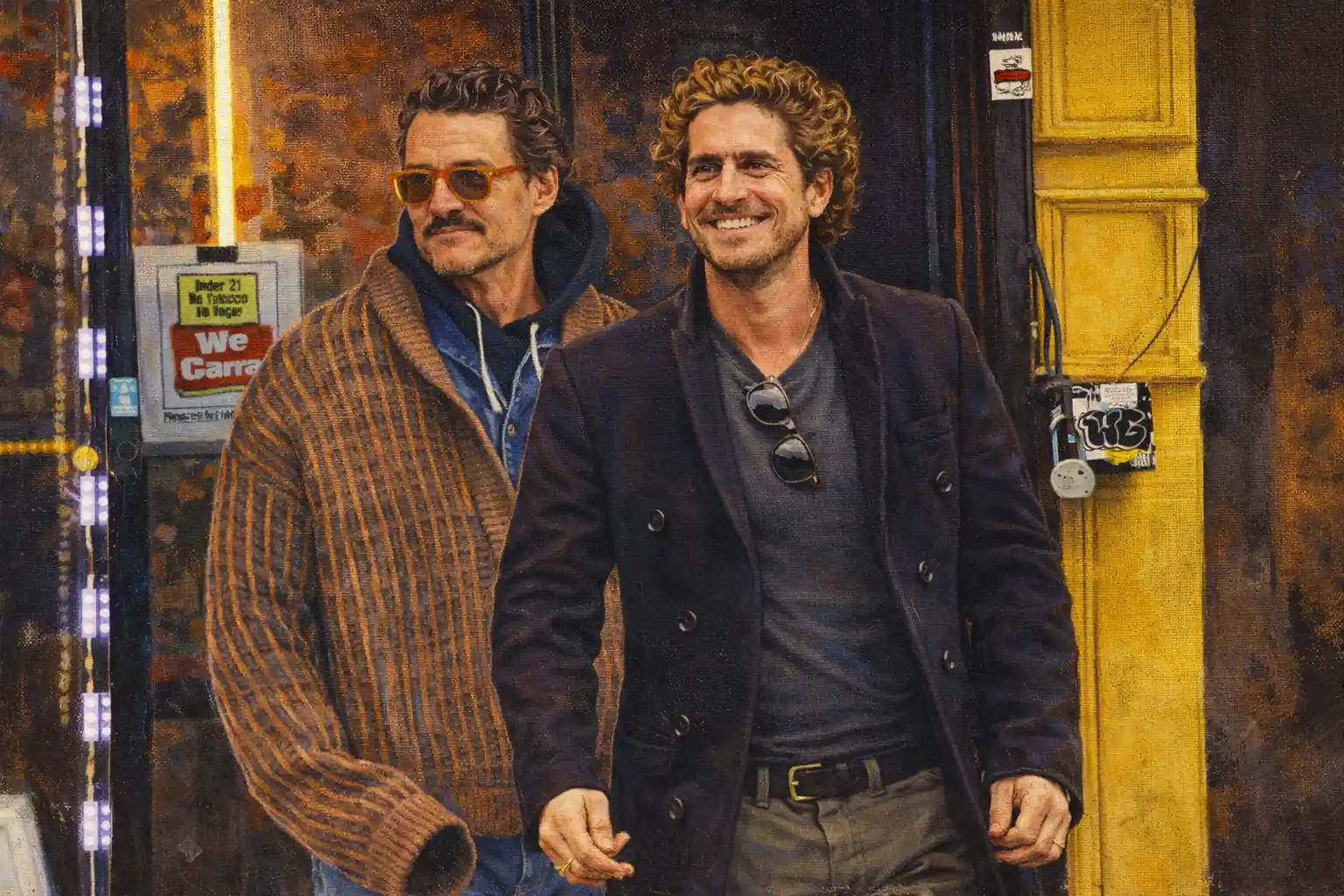
Over Valentine’s Day weekend 2026, paparazzi photographs captured Pedro Pascal — the 50-year-old actor known globally for The Mandalorian and The Last of Us — walking arm-in-arm with Rafael Olarra, a creative director at the Faena group, along Manhattan’s Lower East Side. The pair later attended a cinema screening of Wuthering Heights. On February 24, fresh photographs from Beverly Hills showed the two walking with arms wrapped around each other’s waists. Neither Pascal nor Olarra has made a statement about their relationship. The images, documented by photo agencies and reported widely, have been cited by cultural and LGBTQ+ advocacy figures as a moment worth noting — not for what it confirmed, but for what it showed.
TAP A DATE TO EXPAND DETAILS
A February to Remember
A documented sequence of public outings — New York to Los Angeles
- Internationally recognised for The Last of Us and The Mandalorian
- Chilean-American; born in Santiago de Chile
- Publicly supportive of his sister Lux Pascal, who is transgender, and co-star Bella Ramsey
- Told Wired: “My entire heart is set on the marginalized underdog. It’s not a choice.”
- Has historically kept his private life away from public comment
- Art Director at Faena since 2015 — a luxury arts and hospitality group
- Has collaborated with director Baz Luhrmann and architect Rem Koolhaas through Faena
- Profiled by Orlebar Brown for his work in hospitality and editorial design
- Previously publicly linked to actor Luke Evans; their split was confirmed by Evans in a January 2021 interview
- Argentine-born; based between Miami and New York
Pascal has never made a public statement about his sexual orientation, and no one is pressing him to. But the symbolic weight of these photographs — of a globally recognized A-list actor openly displaying affection with another man on a public street — has prompted responses from LGBTQ+ advocates and cultural commentators. That conversation is happening because of the images, not because of any declaration.
“If two men can openly express their affection and closeness in the street, it means we’re doing something right as a society.”
— Óscar Muñoz, Co-Director, Business Network for LGBTI Diversity & Inclusion (REDI), via EL PAÍSPascal’s advocacy has always been visible and direct. His support for his sister Lux Pascal has been widely covered, and his Wired interview directly addressed his stance: he called LGBTQ+ allyship “the barest minimum” and said he doesn’t believe he “does nearly enough.” For years, industry observers have noted that a major gay or lesbian star reportedly couldn’t sell a film — an era that appears to be shifting, as evidenced by careers like Jonathan Bailey’s. The wider cultural landscape has also changed considerably in recent years.
Actor Jorge Suquet, speaking to EL PAÍS, called the photographs “worthy of daily celebration,” while simultaneously noting it was “paradoxical” that this remains a topic of conversation at all. He added that in the acting industry, “fear” around sexual orientation remains real and shapes casting decisions — many actors still keep it private because it limits the roles they’re offered.
Statements from named individuals, sourced to primary interviews and publications.
How This Story Sits in a Broader Picture
Contextual indicators based on documented coverage and cited expert commentary
The sightings of Pedro Pascal and Rafael Olarra across New York City and Los Angeles throughout February 2026 were documented through photographs from Backgrid, WireImage, and TMZ-published galleries. The two were seen linking arms on the Lower East Side, attending a cinema screening of Wuthering Heights, and later in Beverly Hills in a more affectionate posture. No statement has been issued by Pascal or Olarra regarding the nature of their relationship, and none was expected. Coverage documented expert commentary from LGBTQ+ advocates and cultural observers on the broader context of male visibility in public life. Other high-profile celebrity relationships and public appearances have similarly attracted attention in recent years, but the specific cultural conversation this one prompted — around LGBTQ+ visibility and shifting norms of masculinity — marked it as distinct.
Rafael Olarra’s professional profile at Faena, his prior public relationship with Luke Evans, and Pascal’s documented advocacy record were covered in this piece. The reporting drew from photo agency records, primary social profiles, and named expert interviews published in EL PAÍS and WIRED.