On Thanksgiving Day, Thursday 26 November, President Trump said the United States “would absolutely hit Pickaxe Mountain,” an underground site inside Iran that few Americans had heard of before this week. The remarks drew attention to an underground facility thrust into the spotlight during a nine-month-old conflict, and to a diplomatic process that has stalled.
Two events, two messages
Trump spoke at two separate events that day at Mar-a-Lago in Palm Beach, Florida. The first was a set of video and phone calls with deployed US troops. There he said, “We have victory at hand. It’s going to be whenever, sort of, whatever I want it to be,” and that the US was giving Iran “every chance to make a deal and save a lot of lives.” The Pickaxe Mountain remarks came separately, during a press availability with reporters.
In that exchange, a reporter asked about working with Israel’s incoming leadership after Netanyahu’s party lost its governing majority in the October 2026 elections. Trump confirmed he had spoken with Netanyahu, then answered about a country whose military had been “decimated,” an apparent mix-up of Israel and Iran that coverage noted. The key passage reads: “They haven’t been able to do anything with their nuclear sites that we wiped out. But if we did anything, we would hit Pickaxe. I mean, we can tell them because they can’t do anything about it. We would absolutely hit Pickaxe Mountain, but we haven’t seen any real activity there.” News18’s transcript of the remarks quotes key passages from the day, and Firstpost’s account of the exchange covers the context around the Netanyahu call.
What Pickaxe Mountain is
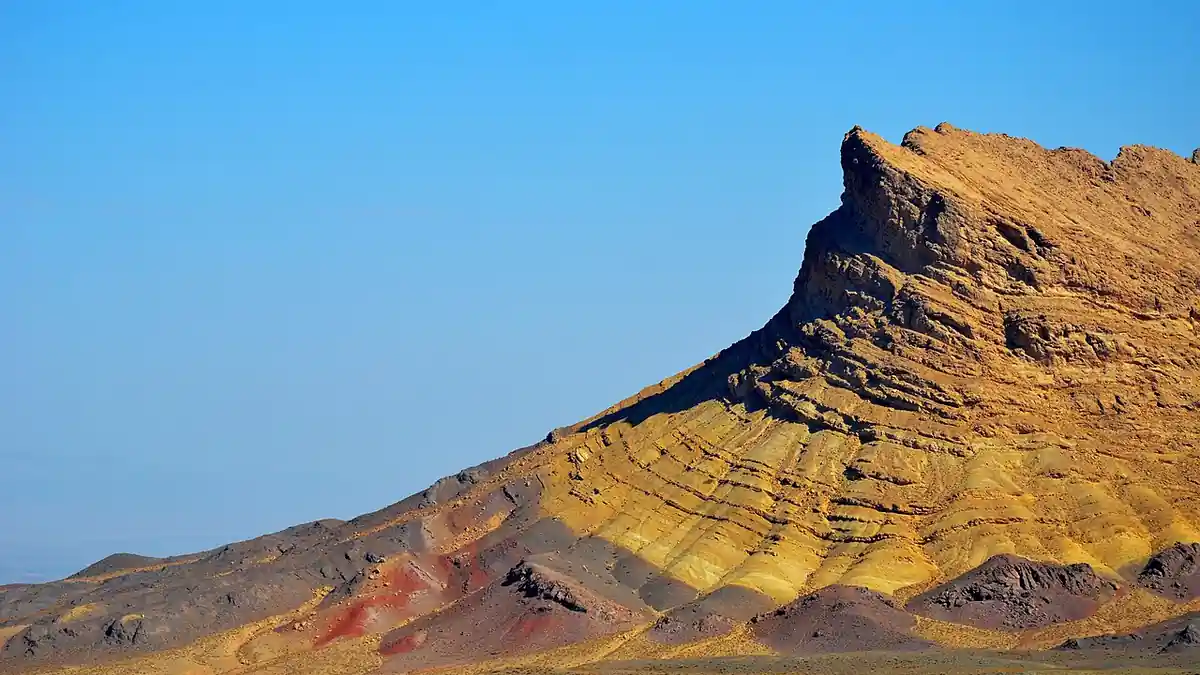
Pickaxe Mountain is the English nickname for Kuh-e Kolang Gaz La, a ridge about 1,608 metres above sea level immediately south of Iran’s Natanz enrichment plant, inside an adjoining double security perimeter. Construction began in fall 2020 to replace a destroyed above-ground centrifuge assembly workshop. The site is a deep underground tunnel complex with four excavated portals, at least 100 metres deep, roughly 145 metres below the ridge on the east side and around 100 metres on the west. The Institute for Science and International Security, a Washington-based research group, assessed in July 2026 that the facility was not yet operational and had not been struck in the 2025 or 2026 wars. That assessment matters: the threat concerns a site that independent analysts describe as unfinished and untouched.
Many of Trump’s other claims are his own and have not been independently confirmed. He said Iran’s air force, navy and anti-aircraft defences had been “wiped out,” and that Tehran has missiles able to reach Europe but not the United States. He also warned of a “nuclear holocaust” if Iran attacked Israel or other Middle Eastern states. Separately, he told Marines in the UAE that the US had launched 150 missiles to stop enemy missiles and drones hitting commercial ships in the Strait of Hormuz. Reporting notes that this claim could not be independently verified.
Deadlock, Israel, and what it means for US readers
Diplomacy is stuck. Major fighting, which began on 28 February 2026, has largely eased into the naval blockade in the Strait of Hormuz, sanctions and limited strikes. Iranian Foreign Minister Seyed Abbas Araghchi told IRNA that Qatar and Pakistan continue to mediate, but Tehran’s priorities remain countering sanctions and keeping trade routes open. Israel’s position adds friction. Military spokesman Effie Defrin told Kan broadcaster that Israel was ready to strike “at any moment, including on our own, without the Americans.” US envoy Jared Kushner said in a podcast on Wednesday that Israel “needs to get out of the constant wartime mindset and focus on economic diplomacy.” Negotiating personnel have also shifted, as CruxBuzz has reported on how Trump pulled J.D. Vance off Iran talks.
For American readers, the effects are practical. Energy comes first: Brent crude has been trading around $94 to $96 a barrel and WTI around $82 to $85, and threats of escalation feed into fuel prices. US naval forces remain deployed in the Strait of Hormuz, so American personnel stay in a contested waterway. Congress is the other lever. TIME reported that Trump indicated he would defer major new strike decisions until after 1 January 2027, saying “We’ve got time.” Democrats, who won Congress in the 3 November midterms, are preparing war-funding restrictions before they take office in January. Over the coming months, the outcome may depend less on threats like the Pickaxe warning than on how Washington handles war funding and war-powers limits.