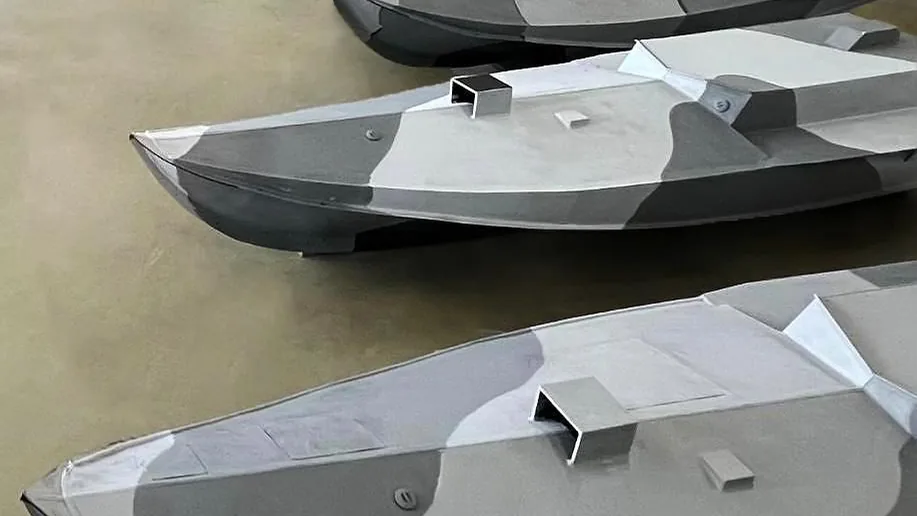
Ukrainian officials have confirmed their role in the weekend strike against Russian naval assets in North Africa. Following earlier reports of an explosion and an inquiry into drone activity, President Volodymyr Zelenskyy announced that Ukrainian forces carried out the attack. He confirmed on Monday 23 November 2026 that Ukrainian forces had sunk a Russian warship stationed at Benghazi port. The statement provides official confirmation after initial reports of the blast at Benghazi port.
Zelenskyy described the mission as an exemplary Ukrainian operation in response to Russia’s war. He stated that the targets set by military planners were achieved off the coast of Libya. Satellite images released by AFP and Vantor show a capsized Russian ship at Benghazi port following the strike on 22 November 2026. The images show the damage to a Russian warship inside the North African port.
The long-range attack carries immediate diplomatic and military consequences across the Mediterranean basin. For readers following the war, the strike shows that Ukraine can reach Russian naval assets far from the Black Sea. The loss of the corvette deprives the Russian navy of a modern warship deployed far from its home waters.
Details of the Drone Operation
In his public address, Zelenskyy explained how Ukrainian forces executed the maritime strike. He revealed that Ukraine launched seven domestically built naval drones to reach the Russian vessels. The primary target of the drone strike was the Russian navy corvette Merkury. Zelenskyy said the corvette is one of Russia’s newest ships, having been commissioned in 2023 during the full-scale war. The warship sank after being struck by the uncrewed craft.
The destruction of the corvette resulted in additional losses for Russian forces in Benghazi. A Ka-27 combat helicopter was also destroyed along with the vessel. Ukrainian drones also engaged a second vessel during the same mission. Zelenskyy identified this target as the Russian dry cargo vessel MV Angara. He stated that Russia used the vessel to transport weapons, describing the final outcome of that strike simply as target hit.
The operation stands out because it was launched from roughly 1,000 miles away against a warship Russia had stationed at a foreign naval base. Traveling across the Mediterranean required technical planning to reach vessels docked in an overseas harbor. The long journey confirms that Russian combat ships stationed in foreign ports remain vulnerable to attacks executed far beyond the Black Sea.
The incident drew swift diplomatic criticism from international bodies and local authorities. The UN mission in Libya expressed grave concern regarding the strike. The mission warned that Libya should not be allowed to become an arena for external conflicts. In Tripoli, officials argued that maritime attacks inside domestic harbors violate the country’s sovereignty and put maritime traffic in danger.
In Dymer, 45 km north of Kyiv, rescuers pulled a seven-year-old boy alive from rubble after a Russian strike killed at least 11 people.
Did Ukraine sink a Russian warship in Libya? Yes, President Zelenskyy confirmed that Ukrainian forces launched seven naval drones that sank the corvette Merkury and struck the cargo vessel MV Angara in Benghazi.
The confirmation from Kyiv clarifies the cause of the Benghazi explosion. Ukraine has claimed responsibility for sinking the corvette Merkury and striking the cargo ship MV Angara. Legal and diplomatic action remains the immediate focus as international bodies assess the attack.