On January 30, 2026, the
DOJ published approximately 3.5 million pages
of Epstein-related materials, calling the release compliant with the Act.
But congressional investigators cross-referenced those files against the evidence manifest provided to
Ghislaine Maxwell’s defense team before her 2021 sex-trafficking trial
and found serial-number gaps pointing to missing FBI FD-302 interview memoranda.
Of the 325 FBI 302 records listed in that manifest, more than 90 do not appear in the DOJ’s public Epstein library. Of 15 discovery documents catalogued for Jane Doe 4 specifically, only 7 are publicly accessible. Trump has consistently denied wrongdoing in connection with Epstein, and no evidence has placed him in Epstein’s trafficking operation.
Rep. Robert Garcia (D-Calif.), ranking member of the
House Oversight Committee,
reviewed unredacted evidence logs at the DOJ on Monday under Congressional privilege and said:
“Oversight Democrats can confirm that the DOJ appears to have illegally withheld FBI interviews with this survivor who accused President Trump of heinous crimes.”
The DOJ, in a public statement, countered that “NOTHING has been deleted” and that any unlisted files are “duplicates, privileged, or part of an ongoing federal investigation.”
In a February 14 letter to Congress,
AG Pam Bondi and Deputy AG Todd Blanche formally asserted no records were withheld for “embarrassment, reputational harm, or political sensitivity.”
The facts on both sides, the data gaps in the DOJ database, and the survivor filings asking courts to intervene are examined below.
By the Numbers
The Scale of What the DOJ Database Is Missing
Each number below is drawn directly from the Maxwell discovery manifest and the
DOJ Epstein Library.
Congressional investigators matched unique serial numbers stamped on each FBI document against entries in the evidence logs to identify the gaps.
📄 What Is an FD-302 — and Why Does a Missing One Matter?
An FD-302 is the standard FBI interview memorandum. Every time an FBI agent interviews a witness or victim, the agent files an FD-302 recording what was said, the date, location, and the agents present. It is typically the primary written record of any FBI interview and a central piece of evidence in criminal discovery.
In federal criminal cases, FD-302s are turned over to defense attorneys as discovery material — making them legally accountable documents with a paper trail.
Each document is stamped with a sequential serial number. A gap in those serial numbers in the public database points directly to a missing file.
Former FBI Deputy Director Andrew McCabe: “It’s the most basic and important brick in the wall that becomes the investigation.”
The Maxwell discovery manifest lists serial numbers for about 325 FD-302s; more than 90 serial numbers have no matching document in the public DOJ Epstein Library.
The U.S. Department of Justice published roughly 3.5 million pages of Epstein-related materials on January 30, 2026, under the mandate of the Epstein Files Transparency Act (P.L. 118-21). Congressional investigators say more than 90 FBI interview records listed in the Maxwell evidence manifest are absent from that public release. Image: Public domain / DOJ.
Timeline
From Epstein’s Arrest to the Document Dispute — A Chronology
Each entry below is sourced directly from government filings and official statements. Click any item to read the full detail.
July 6 – July 24, 2019
Jeffrey Epstein arrested. A woman calls the FBI hotline on July 10, 2019 and reports abuse by Epstein beginning when she was approximately 13 years old. FBI agents interview her on July 24, 2019 at her attorney’s office — the only one of four interviews now in the public DOJ database.
The woman told agents Epstein had repeatedly abused her at a South Carolina home after she responded to a babysitting ad. During the July 24 interview, when she showed agents a well-known photo of Trump and Epstein, her attorney noted she was “concerned about implicating additional individuals, and specifically any that were well known, due to fear of retaliation.” This first 302 — the only one published — does not contain direct allegations against Trump. Source: DOJ Epstein Library (FD-302, July 24, 2019).
August – October 2019
Three additional FBI interviews with the same accuser are conducted and documented in 302s. All three are logged in the Maxwell discovery manifest. None appear in the public DOJ database.
The Maxwell Non-Testifying Witness Material log lists three follow-up 302s and three sets of accompanying interview notes for this survivor dated August and October 2019. Cross-referencing their serial numbers against the DOJ public library returns no results for any of those documents. Only photographs she provided to the FBI and records of attorney correspondence are publicly available for her file.
December 29, 2021
Ghislaine Maxwell convicted of sex trafficking by a federal jury in the Southern District of New York. Evidence logs used during the trial form the basis of the current document-gap analysis.
Maxwell was convicted on five of six counts, including the most serious — sex trafficking of a minor. The discovery materials provided to her legal team before trial include the evidence manifest that congressional investigators later used to identify missing FBI 302s. Case 1:20-cr-00330 (USA v. Maxwell) — SDNY. She is currently serving a 20-year sentence.
November 2024
Congress passes the Epstein Files Transparency Act (P.L. 118-21), signed by President Trump, mandating the DOJ publicly release all files in its possession related to the federal Epstein case.
The Act, available at Congress.gov — P.L. 118-21, defines three exemption categories: duplicates, privileged materials, and records tied to an ongoing federal investigation. Critics of the DOJ’s current production argue that documents already turned over in criminal discovery — such as the Maxwell 302s — cannot retroactively be withheld as “privileged.”
January 30, 2026
DOJ publishes approximately 3.5 million pages of Epstein materials — the bulk release under the Transparency Act. The public library begins showing intermittent document removals and restorations in subsequent days and weeks.
The DOJ press release of January 30, 2026 states the department produced all responsive documents. In the weeks that followed, observers noted that files were removed from and restored to the library on multiple occasions. DOJ attributed at least one such removal — an evidence log that went offline — to “victim redactions,” saying it was “temporarily removed for victim redactions” before being restored. Congressional investigators compared the initial dataset to later snapshots and found the gaps.
February 14, 2026
AG Pam Bondi and Deputy AG Todd Blanche send a formal letter to Congress asserting no records were withheld for political reasons.
The letter, available via DOJ.gov, states: “No records were withheld or redacted on the basis of embarrassment, reputational harm, or political sensitivity, including to any government official, public figure, or foreign dignitary.” The letter restates the three permitted exemption categories but does not address specific serial numbers raised by congressional investigators.
February 24, 2026
Rep. Robert Garcia (D-Calif.) reviews unredacted evidence logs at DOJ on-site under Congressional privilege. House Oversight Democrats open a parallel investigation into DOJ’s withholding of the specific documents.
In a press release posted to the House Oversight Democrats website, Garcia stated: “For the last few weeks, Oversight Democrats have been investigating the FBI’s handling of allegations from 2019 of sexual assault on a minor made against President Donald Trump by a survivor. Oversight Democrats can confirm that the DOJ appears to have illegally withheld FBI interviews with this survivor who accused President Trump of heinous crimes.” Separately, Reps. Dan Goldman (D-NY) and Ted Lieu (D-CA) sent a formal letter to Deputy AG Todd Blanche requesting the appointment of a special counsel to investigate whether AG Bondi’s congressional testimony was false. Details available via Goldman’s press releases.
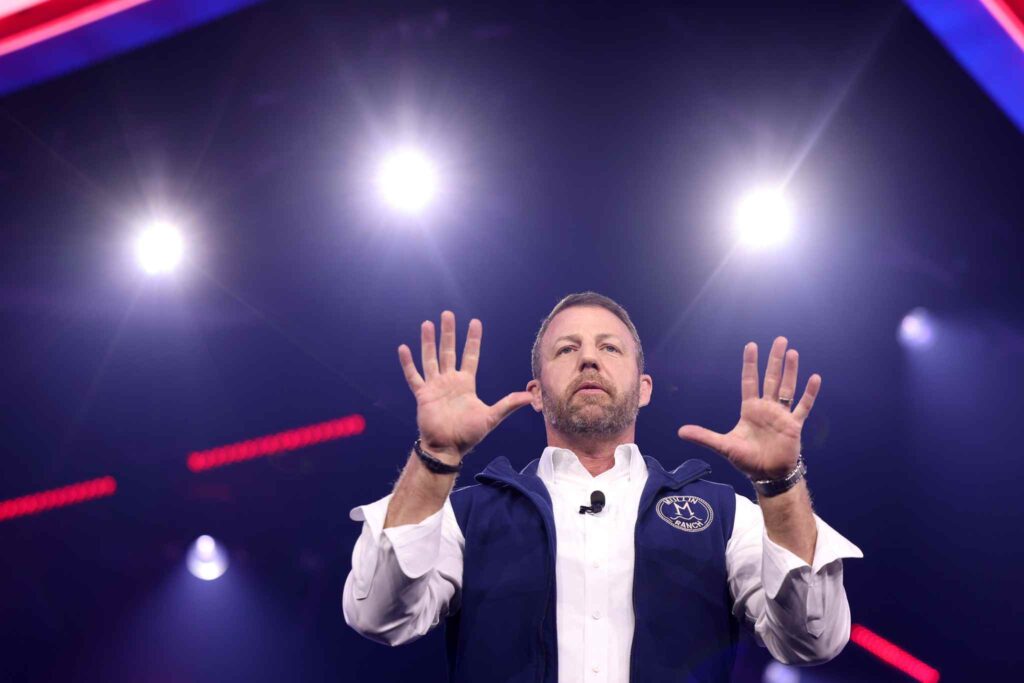
The House Oversight and Accountability Committee has opened a parallel investigation into the DOJ’s handling of the Epstein file release. Rep. Robert Garcia (D-Calif.) reviewed unredacted evidence logs at the Department of Justice on February 24, 2026 under privileges afforded to members of Congress. Image: Wikimedia Commons / Public domain.
Evidence Gap
Maxwell Discovery Manifest vs. DOJ Public Database
The table below maps what was logged in the evidence manifest provided to Maxwell’s defense team against what is currently accessible in the DOJ Epstein Library. The matching method: serial number from the manifest → expected file ID in the public library → result.
📋 FBI Document Accountability — Evidence Manifest vs. Public Database (Feb 2026)
Document Category
Listed in Manifest
Publicly Available
Status
Total FBI FD-302 Interview Records
~325
~235
~90 Missing
Jane Doe 4 — Total Discovery Files
15
7
8 Absent
FBI 302s for Jane Doe 4 (Trump Accuser)
4 interviews
1 (July 24, 2019)
3 Missing
Interview notes accompanying Jane Doe 4’s 302s
3 sets
0
All Absent
Key prosecution witness materials (Maxwell trial)
Multiple
Partial
Partially Restored
Pages related to Trump allegations (across full release)
FBI 302 Records — Logged in Manifest vs. Publicly Available
The chart below maps the four primary document categories where gaps between the Maxwell evidence manifest and the DOJ public database have been identified.
The following is drawn exclusively from documents in the
DOJ’s public Epstein release and the
Maxwell discovery materials.
These are the facts as recorded in official government documents. No editorial interpretation has been added.
Trump has consistently denied wrongdoing in connection with Epstein.
A woman identified as Jane Doe 4 in civil court records called the FBI’s National Threat Operations Center hotline on July 10, 2019 — several days after Epstein’s arrest. She reported that Epstein had repeatedly abused her at a South Carolina home after she responded to a babysitting ad. The abuse began when she was approximately 13 years old. FBI agents interviewed her on July 24, 2019 at her attorney’s office. At one point in the interview, when she showed agents a well-known photograph of Trump and Epstein, her attorney stated she was “concerned about implicating additional individuals, and specifically any that were well known, due to fear of retaliation.”
— FBI FD-302, July 24, 2019 (the one interview in DOJ’s public database) · DOJ Epstein Library
A 2025 FBI internal slide deck on “prominent names” in the Epstein and Maxwell investigations includes an allegation from a redacted individual that around 1983, when she was approximately 13 years old, Epstein introduced her to Trump. The allegation in the slide deck states Trump “subsequently forced her head down to his exposed penis which she subsequently bit. In response, Trump punched her in the head and kicked her out.” The White House described these allegations as “false and sensationalist.” Trump has consistently denied wrongdoing. Out of more than 3 million pages released by the DOJ, this specific allegation appears only in copies of the FBI list of claims and in the DOJ slide deck.
A civil lawsuit against the Epstein estate lists a plaintiff with biographical details that match the woman’s FBI account — identified as Jane Doe 4. The lawsuit states Epstein flew her to New York City three or four times and “brought Jane Doe 4 to intimate gatherings with other prominent, wealthy men” who sexually assaulted her. Jane Doe 4 was “deemed ineligible to receive compensation” by the Epstein Victims’ Compensation Program in a court record dated May 2021. She voluntarily dismissed her lawsuit in December 2021 and, according to public reports, received a financial settlement from the Epstein estate. An FBI internal email included in the released files notes that “one identified victim claimed abuse by Trump but ultimately refused to cooperate.”
Survivor Haley Robson wrote to a federal judge in January 2026 pressing for full compliance with the Epstein Files Transparency Act: “As survivors, this failure is not merely procedural — it is deeply personal. Continued noncompliance perpetuates the same secrecy that allowed these crimes to continue unchecked for years.” Survivor Jess Michaels, who was assaulted by Epstein at age 22, stated: “All of us have been looking for our victim statements.” She described heavily redacted and missing interview reports as evidence that “this Department of Justice is actually gaslighting the entire country.”
The FBI conducted four interviews with the survivor known as Jane Doe 4 between July and October 2019 — logging them in the official Serial Report and Non-Testifying Witness Material provided to Maxwell’s defense team. Only the first interview (July 24, 2019) is currently accessible in the DOJ’s public database. The remaining three 302s and all accompanying interview notes are absent. Image: FBI / Public domain.
Official Record
What Key Figures Have Said — Verbatim from Official Statements
All quotes below are drawn from official press releases, congressional statements, court filings, and government letters. No paraphrasing from media outlets.
⚖️
Rep. Robert Garcia
Ranking Member, House Oversight Committee (D-Calif.)
“For the last few weeks, Oversight Democrats have been investigating the FBI’s handling of allegations from 2019 of sexual assault on a minor made against President Donald Trump by a survivor. Oversight Democrats can confirm that the DOJ appears to have illegally withheld FBI interviews with this survivor who accused President Trump of heinous crimes.”
“Covering up direct evidence of a potential assault by the President of the United States is the most serious possible crime in this White House cover up.”
“No records were withheld or redacted on the basis of embarrassment, reputational harm, or political sensitivity, including to any government official, public figure, or foreign dignitary.”
DOJ statement: “NOTHING has been deleted. ALL responsive documents have been produced unless a document falls within one of the following categories: duplicates, privileged, or part of an ongoing federal investigation.”
“Just as President Trump has said, he’s been totally exonerated on anything relating to Epstein. And by releasing thousands of pages of documents, cooperating with the House Oversight Committee’s subpoena request, signing the Epstein Files Transparency Act, and calling for more investigations into Epstein’s Democrat friends, President Trump has done more for Epstein’s victims than anyone before him.”
White House official statement
🗣️
House Oversight Republicans
Committee Majority Spokesperson
“In the course of their witch hunt, they’ve cherry-picked and doctored documents to mislead the public and released images with no context to create a false narrative.”
“The partisan attack on the congresswoman is a pathetic and deliberate distortion of the facts. The Congresswoman has never visited Jeffrey Epstein’s island and has been clear in condemning his abhorrent behavior and has a long history of fighting against the sexual exploitation of women.”
“It is imperative that we do not allow politically motivated distractions to pull the focus away from the actual bad actors who perpetrated and enabled these crimes.”
Plaskett spokesperson statement
📋
Haley Robson — Survivor, Court Filing
Letter to Federal Judge, January 2026
“As survivors, this failure is not merely procedural—it is deeply personal. Continued noncompliance perpetuates the same secrecy that allowed these crimes to continue unchecked for years.”
📜 What the Epstein Files Transparency Act Actually Requires
Passed as Public Law 118-21 in November 2024 and signed by President Trump — the Act mandates the public release of all DOJ files in its possession related to the federal Epstein case.
The DOJ may withhold items that are: (1) duplicates, (2) privileged materials, or (3) records tied to an ongoing federal investigation.
Critics argue that documents already turned over to Maxwell’s defense team as criminal discovery — making them part of a publicly filed case record — cannot be withheld as “privileged” under these exemptions.
The Epstein grand jury files remain a separate category of contested disclosure, with 69% of Americans polled questioning DOJ transparency.
Open Questions
Five Things the Public Record Has Not Resolved
These are factual questions that remain open as of February 25, 2026. Click each to read the documented background.
Each FBI document in the DOJ release carries a unique sequential serial number stamped on the page. Congressional investigators and independent researchers cross-referenced those serial numbers against the two evidence logs included in the Maxwell discovery materials — a Serial Report and a Non-Testifying Witness Material list. Where a serial number appears in the log but no matching document exists in the DOJ’s Epstein Library, that document is considered absent. For Jane Doe 4: four interviews are logged, one is public; three interview-note sets are logged, zero are public.
Legal privilege — specifically attorney-client or work-product privilege — is typically waived when documents are voluntarily disclosed in litigation. The Maxwell 302s were provided to her defense team as part of criminal discovery before her 2021 trial at the U.S. District Court for the Southern District of New York. Critics argue that disclosure in that context waived any subsequent privilege claim over those documents. The DOJ has not publicly addressed this argument directly; it has stated only that withheld documents fall within one of the three Act exemptions.
Reps. Dan Goldman (D-NY) and Ted Lieu (D-CA) formally asked Deputy AG Todd Blanche to appoint a special counsel to investigate whether AG Pam Bondi made false statements to Congress. The basis: during her testimony before the Senate Judiciary Committee on her nomination hearing, Bondi said there is “no evidence” in the Epstein documents that Trump committed a crime. Goldman and Lieu pointed to the allegation in the FBI’s own 2025 slide deck — which is in the public release — as contradicting that statement. Bondi, when directly accused of lying during the hearing, responded: “don’t you ever accuse me of a crime.” Details: Goldman press releases.
The DOJ Epstein Library has seen multiple document removals and restorations since the January 30, 2026 bulk release. A DOJ spokesperson stated files are “temporarily pulled for victim redactions or to redact Personally Identifiable Information, then those documents are promptly restored online.” At least one of the two evidence logs also went offline temporarily. DOJ stated it was removed for the same reason. In both cases the department said the removals were procedural, not substantive. However, the three FD-302s and three interview-note sets for Jane Doe 4 identified as missing have not been restored as of the time of this publication.
Survivor Haley Robson filed a letter to a federal judge in January 2026 — available via Khanna.house.gov — asking the court to require DOJ to publish victim interview reports with names appropriately redacted. As of February 25, 2026, no court had issued an order compelling DOJ to expand its release. The U.S. District Court for the Southern District of New York (Case 1:20-cr-00330) continues to hold related Maxwell case records. A separate House Oversight Democrats investigation — which will lack subpoena power given the party’s minority status — has also been opened.
Where Things Stand — February 25, 2026
The Record to Date: Files, Gaps, and Congressional Action
The DOJ’s Epstein file release and the subsequent review of Maxwell discovery logs were covered above. The evidence manifest logged approximately 325 FBI FD-302 interview records; more than 90 have not been located in the public database. For the survivor identified as Jane Doe 4, four FBI interviews were logged and three remain absent, along with all three sets of accompanying interview notes — a total of roughly 53 pages missing from the public record.
Rep. Robert Garcia’s statement after reviewing unredacted DOJ logs, the formal letters from Reps. Goldman and Lieu requesting a special counsel, and the Bondi-Blanche letter to Congress were examined. Survivor court filings — including Haley Robson’s letter to a federal judge and statements by Jess Michaels — were part of the record reviewed. The DOJ’s position that all responsive documents were produced in line with the Epstein Files Transparency Act was noted, as was the department’s stated grounds for any withheld materials.
The House Oversight Democrats probe, the Attorney General’s congressional testimony, the survivor filings, and the discrepancies between the Maxwell evidence manifest and the public database were the subjects discussed. No court orders requiring expanded DOJ disclosure had been issued as of this date. The investigation by House Oversight Democrats is ongoing, and the DOJ maintains its position that all legally required disclosures were made. Trump has consistently denied wrongdoing in connection with Epstein, and the Senate Judiciary oversight proceedings relating to the DOJ’s handling of the case continue.