NYC Mayoral Race 2025: Final Countdown
With just days remaining before Election Day, this interactive dashboard provides a comprehensive analysis of where the three leading candidates stand in the most contentious mayoral race in recent New York City history.
The New York City mayoral race has entered its final phase, with Democratic nominee Zohran Mamdani maintaining a lead over independent candidate and former governor Andrew Cuomo and Republican Curtis Sliwa. What began as a shocking upset in the Democratic primary, where Mamdani defeated Cuomo, has evolved into a three-way contest filled with controversy and unprecedented campaign tactics.
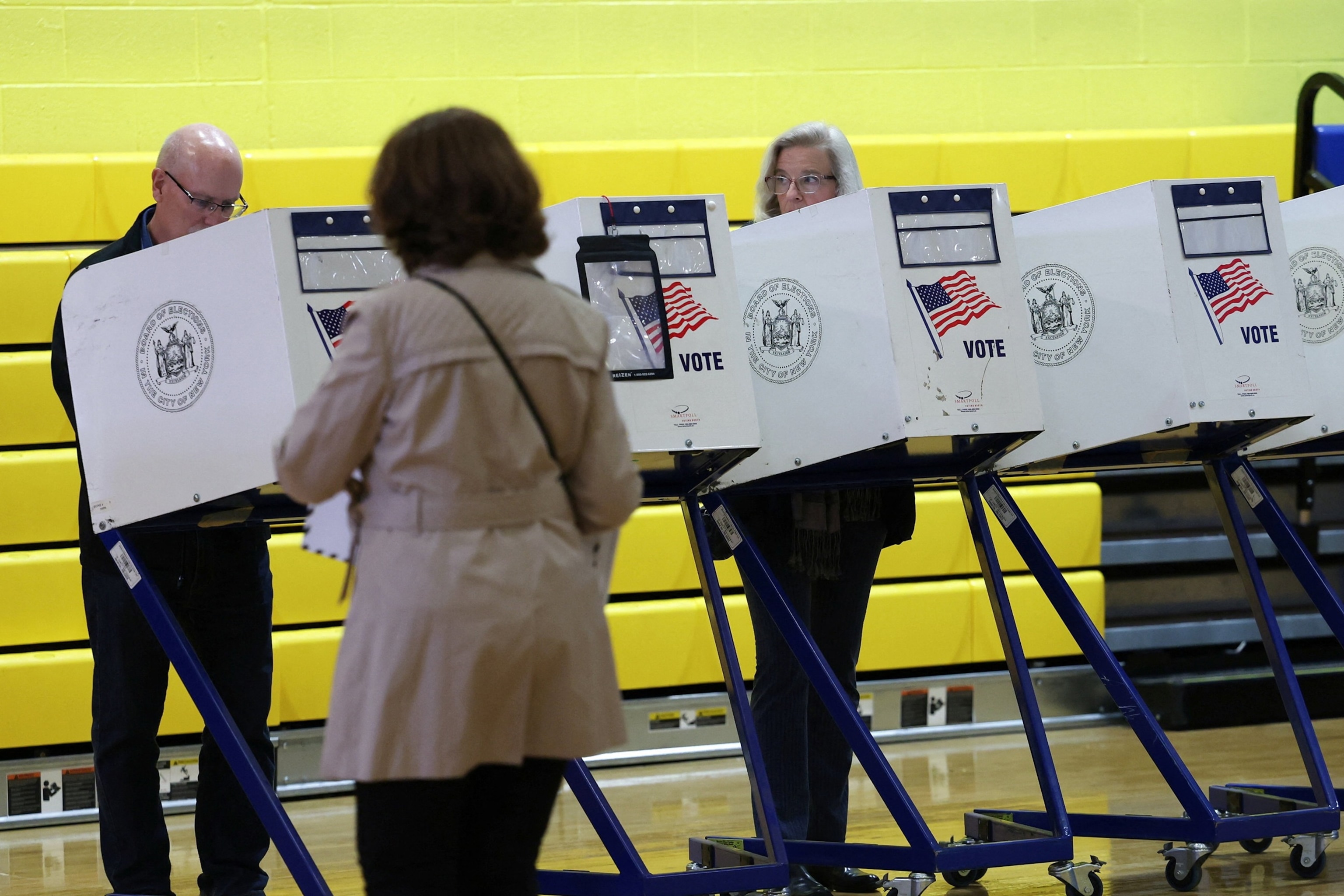
With early voting already underway and showing record turnout, the candidates are making their final appeals to undecided voters. Recent polls show Mamdani’s lead narrowing in some surveys, though he remains ahead by double digits in most. The race has been marked by contentious debates over affordability, public safety, and foreign policy, particularly regarding the Israel-Gaza conflict.
Latest Polling Trends
The most recent polls from Quinnipiac University, Marist College, and Emerson College show Mamdani maintaining a lead, though the margin varies. The latest Quinnipiac poll shows Mamdani at 43%, Cuomo at 33%, and Sliwa at 14%, while the Emerson College poll gives Mamdani a wider 25-point lead with 50% support.
A striking pattern across multiple polls is the clear generational divide. Mamdani dominates among younger voters (18-49), with support exceeding 60% in this demographic according to the latest Emerson College poll, while the race is much closer among voters over 50. Cuomo and Sliwa both perform significantly better with older voters, with Cuomo reaching 31% and Sliwa 28% support among those over 50.
Candidate Profiles
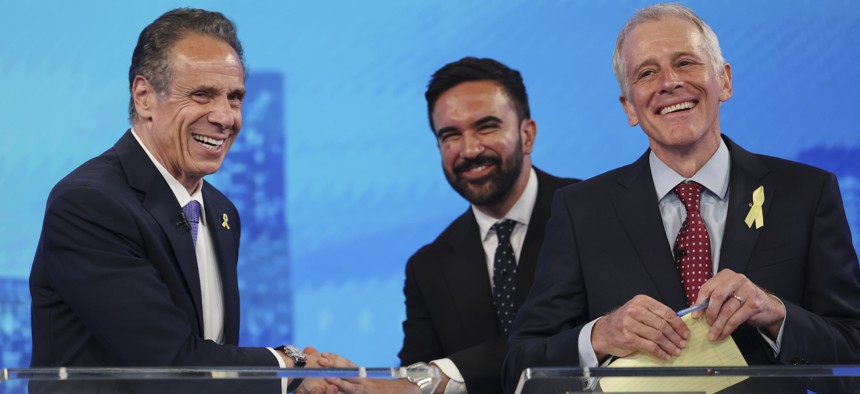
The three candidates present dramatically different visions for New York City’s future. Mamdani, a 34-year-old democratic socialist state assemblyman, is running on a progressive platform focused on affordability. Cuomo, the former three-term governor, emphasizes his executive experience and moderate approach. Sliwa, founder of the Guardian Angels and radio host, has focused primarily on crime reduction and conservative values.
- Free public buses
- Increased free childcare
- Rent freeze for stabilized units
- 2% tax on millionaires
- Raising corporate tax rate to 11.5%

- Public safety focus
- Experienced leadership
- Economic development
- Opposition to progressive tax policies
- Strong support for Israel

- Crime reduction focus
- Property tax reform
- Expanded police funding
- Opposition to progressive reforms
- Fiscal conservatism
While Mamdani leads in overall polling, Cuomo is viewed as having the most relevant experience for the mayoral role. According to the October 9 Quinnipiac poll, 73% of likely voters say Cuomo has the right kind of experience to be mayor, compared to 39% for Mamdani and 24% for Sliwa. However, Cuomo has the highest unfavorability rating at 54%, while Mamdani is viewed favorably by 45% of voters.
Key Issues & Candidate Positions
According to the latest Quinnipiac poll, crime (26%), affordable housing (19%), inflation (13%), and health care (10%) top the list of voter concerns. The candidates have staked out distinct positions on these and other issues.
The Israel-Gaza conflict has emerged as a particularly divisive issue in the campaign. According to an October 9 Quinnipiac poll, 43% of likely voters say their sympathies lie more with Palestinians, while 22% say they side more with Israelis. Mamdani’s pledge to honor a warrant from the International Criminal Court by ordering the NYPD to arrest Israeli Prime Minister Benjamin Netanyahu if he visits New York City has been opposed by 43% of voters, with 38% supporting it.
On affordable housing, Marist polling shows this issue resonates particularly with Democratic voters, with 25% citing it as their top concern compared to just 4% of Republicans.
Campaign Timeline & Key Moments
The 2025 mayoral race has been marked by unexpected twists and high-profile controversies. From Mamdani’s surprising primary victory to controversial campaign tactics and heated debates, this timeline highlights the pivotal moments that have shaped the contest.
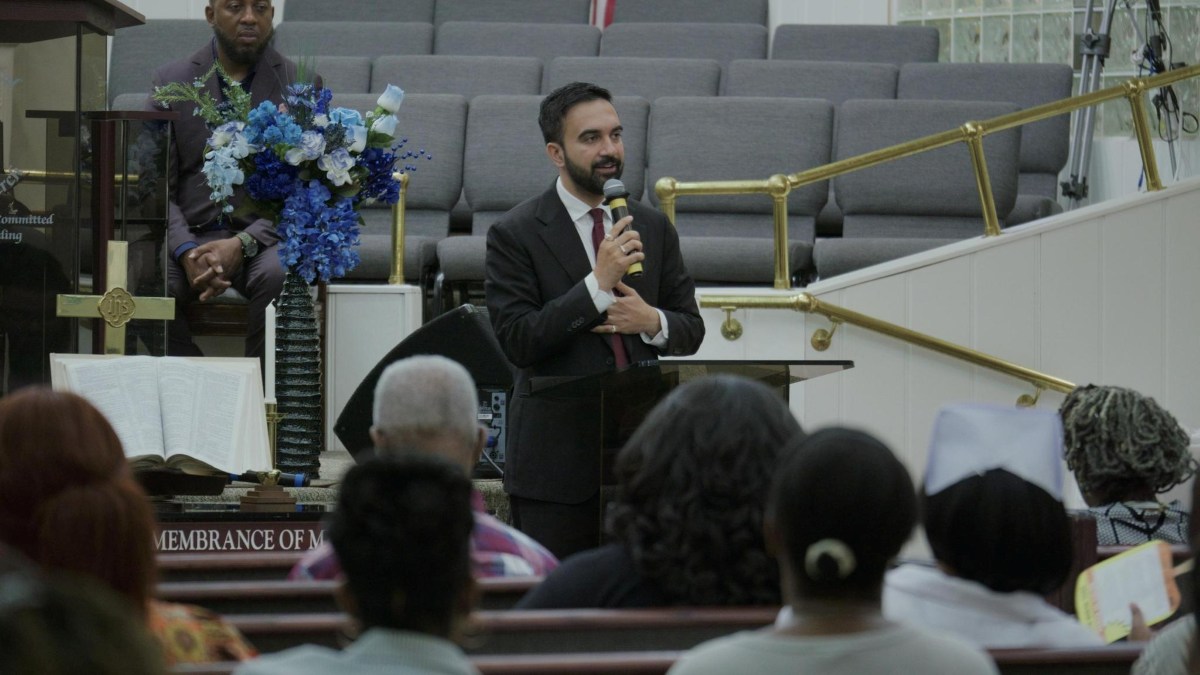
Recent controversies have centered around accusations of Islamophobia in the campaign. Mamdani, who would be the first Muslim mayor of New York City if elected, addressed these concerns in an emotional speech on October 27, saying “This is a former governor who went on a radio show. The radio show host said that if there was another 9/11, I would be cheering it. Andrew Cuomo laughed and agreed.”

Voter Demographics & Support Breakdown
The demographic breakdown of voter support reveals stark divides across age, race, and religious affiliation. According to the Emerson College poll, Mamdani has built a coalition across key demographics, particularly among younger voters and communities of color.
The generational divide is particularly striking, with Mamdani capturing 69% of voters under 50 years old, while only 37% of voters over 50 support him. Among Black voters, Mamdani’s support has increased from 50% to 71% since September, according to the most recent polling data.
The Jewish vote, historically significant in New York City politics, shows a strong preference for Cuomo, with 60% of Jewish voters supporting him compared to just 16% for Mamdani, according to Quinnipiac polling. This divide reflects the tensions over the Israel-Gaza conflict that have marked the campaign.
Hypothetical Two-Way Race Scenarios
An interesting dynamic in the race is the potential impact of a candidate dropping out. AARP/Gotham Polling found that if Sliwa were to exit the race, the contest between Mamdani and Cuomo would tighten significantly, with Mamdani at 44.6% and Cuomo at 40.7% — within the poll’s margin of error.
According to Marist polling, in a hypothetical Mamdani vs. Cuomo race, 77% of Republicans would support Cuomo while only 13% would back Mamdani. Among independent voters, Cuomo would lead Mamdani 51% to 41%. Conversely, if Cuomo dropped out, Mamdani would lead Sliwa by 26 points (59% to 33%).
These hypothetical scenarios have real-world implications, as Cuomo has publicly stated that Sliwa’s presence in the race makes it “very hard” for him to defeat Mamdani, effectively describing the Republican as a spoiler candidate.
As the election approaches its final days, the candidates are intensifying their efforts to win over undecided voters. Mamdani spent Saturday morning at the National Action Network with Reverend Al Sharpton in Harlem discussing his affordability agenda, while Sliwa hosted a voting rally on Staten Island, and Cuomo served as Grand Marshal at a parade in Cambria Heights, according to ABC7 New York.
With nearly half a million New Yorkers having already cast their ballots in early voting, the race appears to be Mamdani’s to lose. However, recent polls showing a narrowing gap suggest that the final outcome may still hold surprises. Election Day on November 4 will determine who leads America’s largest city for the next four years.
- Quinnipiac University Poll (October 29, 2025)
- Marist Poll (October 28, 2025)
- Emerson College Polling (October 27, 2025)
- Fox News Poll (October 30, 2025)
- AARP/Gotham Poll (October 20, 2025)
- Time Magazine – Polls Analysis (November 1, 2025)
- CruxBuzz – Campaign Controversies
- NBC New York – Latest Polling Data
- ABC7 NY – Campaign Updates
- CruxBuzz – Israel-Gaza Context